
How to use this material
Exam Tags & Source: Syllabus mapping for UPSC / TNPSC / SSC-RRB + clickable source link
Why in News: The news in 2–3 lines – read this first
▸ Sub-headings: Simple explanation + all facts, figures, names and years
GS Facts: Static GK linked to the news (blue box)
⚠ Exam Trap: Common confusions examiners use in options (orange box)
✎ Top 5 Quiz: Day’s 5 most important MCQs at the end, with answer key
✍ Mains Angle: Probable Mains question with value points (purple box)
★ Important One-liners: Short news under each theme + Rapid Revision table. Highlighted = must-remember
Here are the daily current affairs 5 November 2026 in English – the Cabinet’s extension of Fast Track Special Courts till 2031, the ₹2,814 crore critical mineral processing scheme, VISTAR for India’s statistical system, the ₹14,500 crore VGF for 92 GWh grid-scale energy storage, a new pathway for all Agniveers, India’s I-OECM Guidelines 2026 for the 30×30 target, the Bharatiya Vayuyan Niyam, 2026, NASA’s Swift re-entry, the stricter Schedule M norm, the Bahamas joining ISA and Tamil Nadu’s demand for a Supreme Court Bench in Chennai. Each topic comes with exam tags, GS facts, exam traps, Mains angles, one-liners, a rapid revision table and a scored quiz with a leaderboard – useful for UPSC, TNPSC, SSC, RRB and Bank exams.
POLITY
Cabinet Extends Fast Track Special Courts Scheme till 2031

Why in News: The Union Cabinet approved continuation of the Centrally Sponsored Scheme for Fast Track Special Courts (FTSCs), including exclusive POCSO Courts, for five more years – 1 April 2026 to 31 March 2031 – with an outlay of ₹3,788.04 crore. The courts speed up trials of rape and POCSO Act cases.
| Item | Details |
|---|---|
| Total outlay | ₹3,788.04 crore |
| Central share | ₹2,353.15 crore – from the Nirbhaya Fund |
| State/UT share | ₹1,434.89 crore |
| Courts | 779 → 850 FTSCs (new districts chosen by pendency) |
| Staff per court | 1 Judicial Officer + 1 Special Public Prosecutor + 6 support staff |
Background & features
- Launch: Started on 2 October 2019 under the Criminal Law (Amendment) Act, 2018, following the Supreme Court’s 25 July 2019 order (suo motu case) for exclusive special courts in districts with over 100 pending POCSO cases.
- Victim-centric: Encourages Vulnerable Witness Deposition Centres (VWDCs) and child-friendly court spaces so victims can testify without further trauma.
- New in this phase: A dedicated Special Public Prosecutor for every FTSC.
- Implementation: Department of Justice (Ministry of Law & Justice) with States/UTs; monitored through the FTSC Dashboard.
GS Facts: Child protection law
- POCSO Act, 2012 – gender-neutral law against sexual offences on children (below 18)
- Nirbhaya Fund (2013) – for women’s safety projects
- Criminal Law (Amendment) Act, 2018 – death penalty for rape of girls below 12
- Judiciary is a State subject for subordinate courts; CSS shares the cost.
⚠ Exam Trap:
- The Central share comes from the Nirbhaya Fund.
- FTSCs rise from 779 to 850 (not 1,023).
- The scheme began on 2 Oct 2019.
- Each court gets one Special Public Prosecutor and six support staff.
✍ Mains Angle
✍ MAINS ANGLE: Q. “Justice delayed is justice denied – especially for child victims.” Evaluate the Fast Track Special Courts scheme. Value points: pendency of POCSO cases; dedicated staff; VWDCs; low conviction rates; shortage of forensic labs and judges; need for victim compensation and witness protection.
SC: 1974 Ruling on States’ Power to Levy Additional Sales Tax Holds; Reference Now ‘Academic’

Why in News: On 4 November 2026, a seven-judge Constitution Bench headed by CJI Surya Kant unanimously held that a reference pending for nearly 27 years had become academic after GST, and that the 1974 five-judge ruling in S. Kodar vs State of Kerala – upholding States’ power to levy additional sales tax/surcharge – continues to hold the field.
The dispute (simple)
- The law: Section 5A, Orissa Sales Tax Act, 1947 – additional tax of 10% on dealers with turnover ₹10 lakh–₹1 crore and 15% above ₹1 crore.
- The question: Is this a tax on sale of goods (State power, Entry 54, List II) or a tax on income (Union power, Entry 82, List I)?
- Kodar (1974): A levy calculated as a percentage of sales tax is only an enhancement of the sales tax rate – not an income tax.
- Now: With laws amended and GST (2017) in force, the question has no practical significance; competence will be governed by Kodar.
- Bench: CJI Surya Kant with Justices K.V. Viswanathan (separate concurring view), S.V.N. Bhatti, Joymalya Bagchi, N.V. Anjaria, Arun Palli and V. Mohana.
GS Facts: Taxation & federalism
- Seventh Schedule – List I (Union), List II (State), List III (Concurrent)
- 101st Amendment (2016) introduced GST; Article 246A gives Centre and States simultaneous power on GST
- Entry 54, List II now covers only petroleum products, alcohol for human consumption etc.
- Constitution Bench – at least 5 judges (Article 145(3)).
⚠ Exam Trap:
- The Bench had seven judges; the precedent (Kodar, 1974) was by five.
- Entry 54 is in the State List; Entry 82 (income tax) is in the Union List.
- The Court did not decide afresh – it called the reference academic.
ECONOMY
Cabinet Approves ₹2,814 Crore Capex Scheme for Critical Mineral Processing
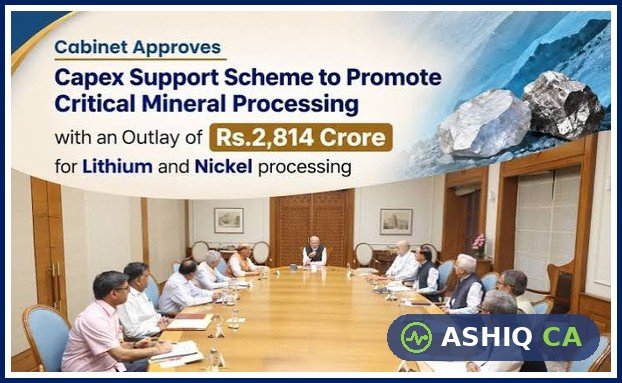
Why in News: The Union Cabinet approved the Capex Support Scheme to Promote Critical Mineral Processing with an outlay of ₹2,814 crore for FY 2026-27 to 2030-31, to build domestic plants that turn lithium and nickel ores into high-purity compounds and cut import dependence.
Why is it needed? (simple)
- The problem: Critical mineral processing is concentrated in a few countries – supply can be cut by geopolitics or price shocks.
- India’s gap: India depends heavily on imports of refined lithium, nickel and cobalt because domestic processing is at a nascent stage – high capital needs and limited technology.
- Users: Electric vehicles, battery storage (BESS), electronics, defence, specialty steel.
| Feature | Details |
|---|---|
| Subsidy | 30% of eligible capital investment |
| Plants | 2 lithium (≥30 kt each) + 2 nickel (≥50 kt each) |
| Cap per beneficiary | ₹500 crore (lithium); ₹900 crore (nickel) |
| Selection | 2-stage: technical, then financial bid – lowest capex support sought wins |
| Disbursal | 3 milestone-linked tranches; cobalt recovered as nickel by-product |
GS Facts: Critical minerals
- India’s list has 30 critical minerals (2023)
- National Critical Mineral Mission (2025) – exploration to recycling
- KABIL – JV of NALCO, HCL and MECL to acquire mineral assets abroad (e.g. lithium in Argentina)
- MMDR Amendment Act, 2023 – allowed private auction of critical minerals.
⚠ Exam Trap:
- The subsidy is 30% of eligible investment; caps are ₹500 crore (lithium) and ₹900 crore (nickel).
- Only four plants.
- Cobalt is a by-product, not a separate plant.
✍ Mains Angle
✍ MAINS ANGLE: Q. “Mining critical minerals is not enough; India must win the processing race.” Discuss. Value points: concentration of processing abroad; supply-chain risk for EVs and defence; capex subsidy; KABIL; recycling; technology partnerships (Minerals Security Partnership); environmental safeguards.
VISTAR: ₹4,371 Crore Scheme to Overhaul India’s Statistical System
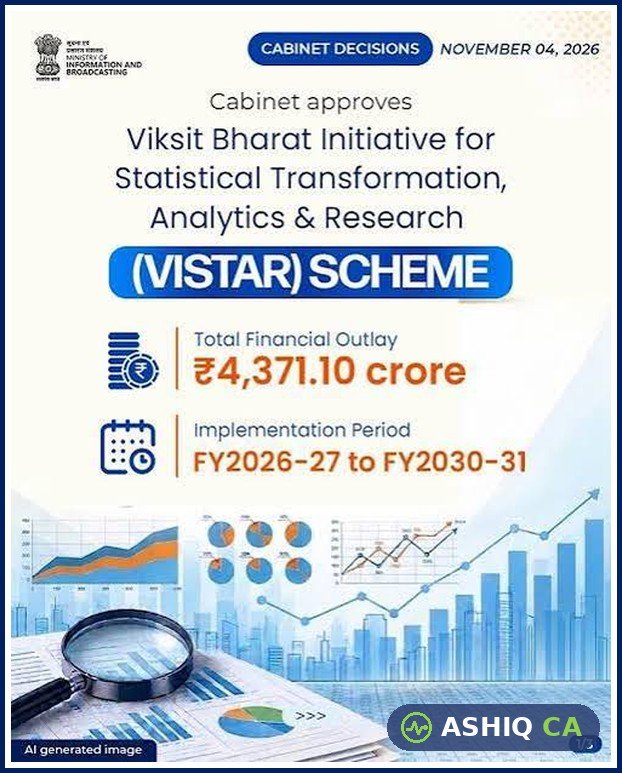
Why in News: The Union Cabinet approved VISTAR (Viksit Bharat Initiative for Statistical Transformation, Analytics & Research) for FY 2026-27 to 2030-31 with ₹4,371.10 crore, to build a real-time, granular and AI-ready official statistics system under MoSPI.
Three components
- 1. Statistical operations: 59 surveys in the 16th Finance Commission cycle (vs 43 earlier); end-to-end digitisation; AI/ML in data processing; new indices – Headline Index of Services Production and Index of Unincorporated Sector Enterprises; use of mobile-phone, scanner and e-commerce data.
- 2. Support for Statistical Strengthening (SSS 2.0): Funds for States/UTs to produce district-level and million-plus city estimates (PLFS, HCES, ASUSE), and State/District GDP and State IIP.
- 3. Economic Census: The 8th Economic Census – all non-farm establishments down to Gram Panchayat and ward level; base for a National Statistical Business Register (SBR) and for estimating the unorganised sector’s share in GDP.
GS Facts: Official statistics
- MoSPI formed in 1999 (merger of Statistics and Programme Implementation departments)
- National Statistical Office (NSO) – NSSO
- CSO merged in 2019
- 7th Economic Census – 2019-20
- National Statistical Commission (2005, on Rangarajan Committee advice).
⚠ Exam Trap:
- VISTAR is run by MoSPI; outlay ₹4,371.10 crore.
- It will conduct the 8th Economic Census.
- Surveys rise from 43 to 59.
RBI Sets Up Technical Consultative Committee for Financial Markets (TCCFM)
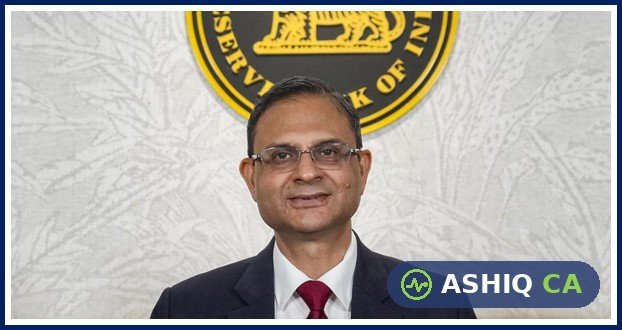
Why in News: The RBI constituted the Technical Consultative Committee for Financial Markets (TCCFM) as a forum for structured engagement with market participants on money, government securities and foreign exchange markets and their derivatives. It was announced by Governor Sanjay Malhotra in the 7 October 2026 policy statement.
Key facts
- Chair: Deputy Governor in charge of the Financial Markets Regulation Department (FMRD).
- Members: Experts incl. Ananth Narayan (ex-SEBI WTM), FIMMDA chair Shamsher Singh, and heads of markets at Axis, ICICI, Citi, CCIL and Morgan Stanley.
- Scope: Efficiency, liquidity and resilience of these markets; trading, clearing, settlement and reporting infrastructure; emerging risks and innovations; unintended frictions from RBI measures.
- Meetings: At least once a quarter.
GS Facts: Financial markets
- Money market – short-term funds (call money, T-bills, CPs, CDs)
- G-sec market – government borrowing; RBI is the debt manager of the Centre
- CCIL (2001) – central counterparty for G-secs and forex
- RBI regulates these markets under the RBI Act, 1934 and FEMA, 1999.
⚠ Exam Trap:
- TCCFM is chaired by an RBI Deputy Governor, not the Governor.
- It covers money, G-sec and forex markets – not equity (regulated by SEBI).
- Meets quarterly.
AGRICULTURE
★ Important One-liners
- SOP FOR ORGANIC CERTIFICATION OF FISHERIES IN THE NORTH-EAST LAUNCHED: Union Fisheries Minister Rajiv Ranjan Singh (Lalan Singh) visited Mangan district, Sikkim on 2 November 2026 to review the Pradhan Mantri Matsya Sampada Yojana (PMMSY). He launched the Standard Operating Procedure (SOP) for Organic Certification of Fisheries in the North-Eastern Region and inaugurated PMMSY projects worth ₹375 lakh – hatcheries, feed mills, cold storage and technologies like Biofloc and Recirculatory Aquaculture System (RAS). Kisan Credit Cards were given to fish farmers. Static: PMMSY was launched in 2020 with ₹20,050 crore – the largest investment in India’s fisheries sector; Sikkim became India’s first fully organic State in 2016. Source: PIB ↗
SCIENCE & TECH
★ Important One-liners
- MEITY UNVEILS INDIGENOUS AI FOUNDATION MODELS EKA-1, DHĪR 2B AND DHĪR 5B: MeitY unveiled three indigenous AI foundation models built under the IndiaAI Mission. EKA-1 by Bengaluru’s Soket AI is a 26-billion-parameter model for maths, coding and reasoning, trained on 7.5 trillion tokens, supporting 100+ languages, and able to run in air-gapped (offline) environments. Dhīr 2B and Dhīr 5B by ZenteiQ are mixture-of-experts models supporting English and 10 Indian languages that can run on mobile phones without internet; weights released under Apache 2.0 on AIKosh. MeitY Secretary S. Krishnan said they strengthen India’s strategic autonomy in AI. Static: IndiaAI Mission was approved in March 2024 with ₹10,371.92 crore. Source: ANI ↗
- TRAI LAUNCHES ‘NETWORK ANUBHAV’ PLATFORM: TRAI launched Network Anubhav, a geospatial and analytical platform where consumers can see location-wise network test results (download/upload speeds by operator and technology) and access Do Not Disturb (DND) services online. It combines data from TRAI’s MySpeed and MyCall apps with independent drive tests. TRAI cautioned that user-generated results are not a full assessment under standard methodology. Static: TRAI was set up in 1997 under the TRAI Act, 1997. Source: DD News ↗
- ‘STOPBLEED’ – BENGAL INNOVATOR’S 60-SECOND BLEEDING CONTROL POWDER WINS AT SLINGSHOT 2026: Sabir Hussain, a young innovator from a village in West Bengal and founder of Miracules Medsolutions, developed StopBleed – a nano-biopolymer haemostatic powder said to control severe bleeding in about 60 seconds. It absorbs blood plasma, traps blood cells in its fibrous structure and forms a hydrogel-like seal on the wound. It won the top prize in Health & Biomedical at Slingshot 2026, an international start-up competition in Singapore. Why it matters: many road-accident and battlefield deaths happen from blood loss before reaching hospital (the ‘golden hour’). Source: Education Times ↗
SPACE
NASA’s Swift Observatory Re-enters Atmosphere After 22 Years; Rescue Mission Had Failed

Why in News: NASA’s Neil Gehrels Swift Observatory (about 1,452 kg) made a fiery re-entry into Earth’s atmosphere on 4 November 2026, nearly 22 years after launch. A first-of-its-kind US mission to rescue and re-boost it with a robotic tug called LINK (by start-up Katalyst) had failed earlier.
Key facts
- Mission: Launched in 2004; a multi-wavelength observatory with three telescopes to study gamma-ray bursts – the most powerful explosions in the universe. Planned for 2 years, it worked for 22.
- Why it fell: No onboard propulsion; atmospheric drag in low orbit slowly pulled it down (it moved at ~27,359 km/h).
- Rescue attempt: LINK launched in July to latch onto Swift and tug it to a higher orbit, but began spinning uncontrollably; abandoned by mid-August. Built in nine months under a $30 million NASA contract.
- Risk: US Space Force put the odds of harm to anyone at 1 in 2,100; surviving fragments expected over the tropics.
- Wider significance: On-orbit servicing (grappling, refuelling, life-extension) is a key technology in the US–China space race, with dual-use military potential.
GS Facts: Space sustainability
- Space debris – defunct satellites and fragments; rising risk of collisions (Kessler syndrome)
- India’s Debris Free Space Missions (DFSM) goal by 2030
- ISRO’s SPADEX (2024-25) demonstrated docking, a base for servicing
- Swift data was also used in the ULX-8 black-hole study (3 Nov).
⚠ Exam Trap:
- Swift was a NASA mission (not ESA) launched in 2004.
- The rescue craft was LINK by Katalyst – it failed.
- Swift had no propulsion, which is why it could not raise its own orbit.
DEFENCE
Cabinet Creates Pathway for All Agniveers to Become Regular Soldiers

Why in News: After four years of the Agnipath Scheme, the Union Cabinet created a pathway for all Agniveers to be absorbed into the Defence Forces: the top 25% get regular jobs as planned, and the remaining 75% get a second two-year engagement, after which all willing Agniveers can become regular soldiers (subject to selection criteria).
| Stage | What happens |
|---|---|
| End of 4 years | Top 25% (merit) offered regular employment |
| Remaining 75% | Optional second tour of duty – 2 more years |
| Year 5 pay | ₹43,500 per month |
| Year 6 pay | ₹47,500 per month |
| After 6 years | All willing Agniveers enrolled as regular soldiers |
Why the change?
- Assessment: Forces’ review found outstanding performance – skills, motivation, physical fitness and technological prowess.
- Achievements listed: Wider recruitment across districts, more transparent process, high discipline, and more branches opened to women.
- Benefits: Second tour carries higher pay, an enhanced Seva Nidhi package and seniority benefits.
- Status: The Agnipath Scheme continues.
GS Facts: Agnipath Scheme
- launched in June 2022 for recruitment below officer rank
- 4-year tenure; age 17.5–21 years at entry
- Seva Nidhi – exit corpus built from contributions by the Agniveer and the Government
- Aim: a younger, tech-savvy force and lower pension burden.
⚠ Exam Trap:
- Only the top 25% get regular service directly; the other 75% get an optional two-year extension – not automatic permanence.
- Pay: ₹43,500 (5th year), ₹47,500 (6th year).
ENVIRONMENT
India Releases Guidelines for Other Effective Area-Based Conservation Measures (I-OECMs) 2026
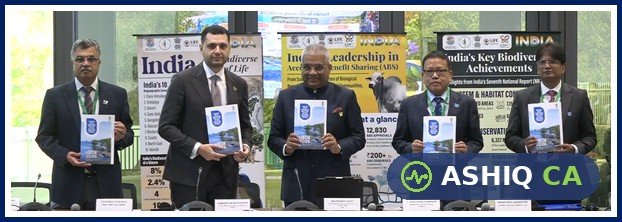
Why in News: Environment Minister Bhupender Yadav released the Guidelines for the designation of India’s Other Effective Area-Based Conservation Measures (I-OECMs) 2026 at a side event of CBD COP-17 in Yerevan, Armenia on 3 November 2026. They let India recognise areas outside protected areas that conserve biodiversity – helping meet the 30×30 target (KM-GBF Target 3).
What is an OECM? (simple)
- Meaning: An area that is not a protected area (like a National Park) but still conserves biodiversity long-term through good management – e.g. sacred groves, biodiversity parks, community irrigation tanks, seagrass/seaweed beds, seasonal fishing-ban areas.
- Prepared by: MoEFCC with the National Biodiversity Authority (NBA); covers land, inland water, coastal and marine ecosystems.
- No change in status: Recognition does not make it a protected area and does not change ownership or legal status.
Four mandatory criteria
- 1: Not a legally protected or conserved area.
- 2: Governed under Central/State frameworks or by recognised local bodies – Panchayats, Biodiversity Management Committees.
- 3: Defined boundaries; no overlap with sites already in the World Database on Protected Areas.
- 4: Recognition must not alter existing activities, governance or rules of the area.
Process & GEF-8 project
- Process: Apply to NBA → sent to State Biodiversity Board within 30 days → Board recommends within 30 days → NBA decides with MoEFCC; monitoring at least once in 5 years; sites published via UNEP-WCMC.
- GEF-8 project: USD 60.79 million (GEF grant $6.65 mn + co-finance $54.14 mn), 15 May 2026–15 May 2032; aims to add 3% more of India’s land and sea area to the conservation estate (over the existing 27%).
- 6 demonstration sites: Gori Valley (Uttarakhand), Kumbhalgarh–Mount Abu–Jaisalmer (Rajasthan), Satkosia–Kalahandi (Odisha), Srisailam–Cumbum (AP–Telangana), Sahyadri–Konkan (Maharashtra–Goa), Lakshadweep marinescape.
- Targets: 50,000 ha new conservation areas, 5,000 ha restored, 50,000 people benefited (half women).
GS Facts: Kunming-Montreal GBF (Dec 2022)
- 23 targets for 2030
- Target 3 (’30×30′) – conserve 30% of land and sea by 2030
- Target 2 – restore 30% of degraded ecosystems
- NBA – set up in 2003 under the Biological Diversity Act, 2002, HQ Chennai
- India’s updated NBSAP 2024–2030 has 23 national targets.
⚠ Exam Trap:
- OECMs are outside protected areas and their recognition does not create a protected area.
- Released at CBD COP-17, Yerevan (Armenia).
- They support Target 3 (30×30), not Target 2.
- NBA is in Chennai.
★ Important One-liners
- NITI AAYOG–GIZ AGREEMENT UNDER NDC-TIA II TO DECARBONISE ROAD FREIGHT: NITI Aayog and Germany’s GIZ signed an Implementation Agreement under the Nationally Determined Contribution – Transport Initiative for Asia Phase II (NDC-TIA II) on 3 November 2026, to accelerate decarbonisation of road freight. It is supported by Germany’s International Climate Initiative (IKI); partners include WRI India, ICCT India and Agora Energiewende. Electrification of medium and heavy freight vehicles is still at an early stage – needing charging infrastructure, innovative finance and enabling regulation. Static: India’s updated NDC (2022) targets 45% lower emissions intensity of GDP (vs 2005) and 50% non-fossil power capacity by 2030. Source: PIB ↗
GEOGRAPHY
★ Important One-liners
- EL NIÑO – BOLIVIA DECLARES NATIONAL EMERGENCY; YANGON SETS UP HEAT SHELTERS: Bolivian President Rodrigo Paz declared a national emergency to tackle the effects of El Niño – 63 communities are hit by drought and livestock face feed shortages. In Myanmar, the Yangon region set up 600+ heat relief shelters (capacity 1.5 lakh+ people) ahead of a strong El Niño. Static: El Niño is unusual warming of sea surface temperatures in the central and eastern equatorial Pacific; it weakens the trade winds and the Humboldt (Peru) current upwelling. For India, El Niño years are often linked to weak monsoons and drought; its opposite is La Niña (cooling). The Indian Ocean Dipole (IOD) can offset El Niño’s effect on the monsoon. Source: News On AIR ↗
HEALTH
Stricter ‘No Growth’ Microbial Norm Proposed for Sterile Drug Manufacturing (Schedule M)
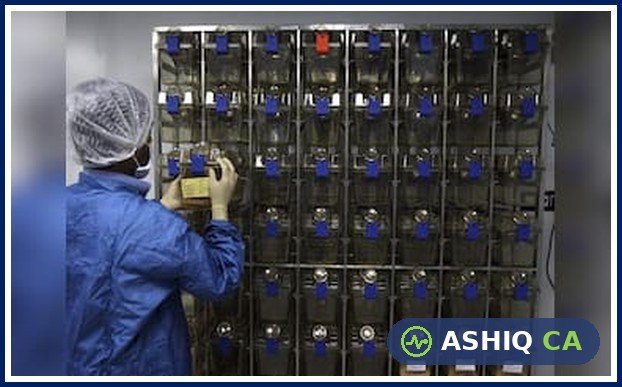
Why in News: The Union Health Ministry proposed tightening the microbial limit in Grade A areas of sterile pharmaceutical manufacturing to “no growth” – instead of less than 1 colony-forming unit (CFU) allowed so far under Schedule M (Good Manufacturing Practices) – to align with WHO standards.
Key facts
- Grade A area: The most critical zone where exposed sterile products, containers and components are handled (e.g. injectables).
- Change: Complete absence of viable microbes in routine monitoring – active air, settle plates, contact plates and glove prints; even 1 CFU will trigger an investigation.
- Related steps: A proposal requiring every manufacturer to authorise a qualified person for batch release; CDSCO rule that cough-syrup ingredient batches must be registered and cleared digitally before leaving the factory.
- Consultation: Objections invited within 30 days.
GS Facts: Drug quality regulation
- Schedule M of the Drugs Rules, 1945 prescribes Good Manufacturing Practices (GMP); revised Schedule M notified in 2023
- CDSCO headed by the DCGI
- CFU – colony-forming unit, a count of viable microbes
- Push came after deaths linked to contaminated cough syrups exported abroad.
⚠ Exam Trap:
- The new norm is ‘no growth’ (zero), replacing <1 CFU.
- It applies to Grade A (most critical) areas.
- Schedule M is part of the Drugs Rules, 1945, not the 1940 Act itself.
INFRASTRUCTURE
₹14,500 Crore VGF Scheme for 92 GWh Grid-Scale Energy Storage
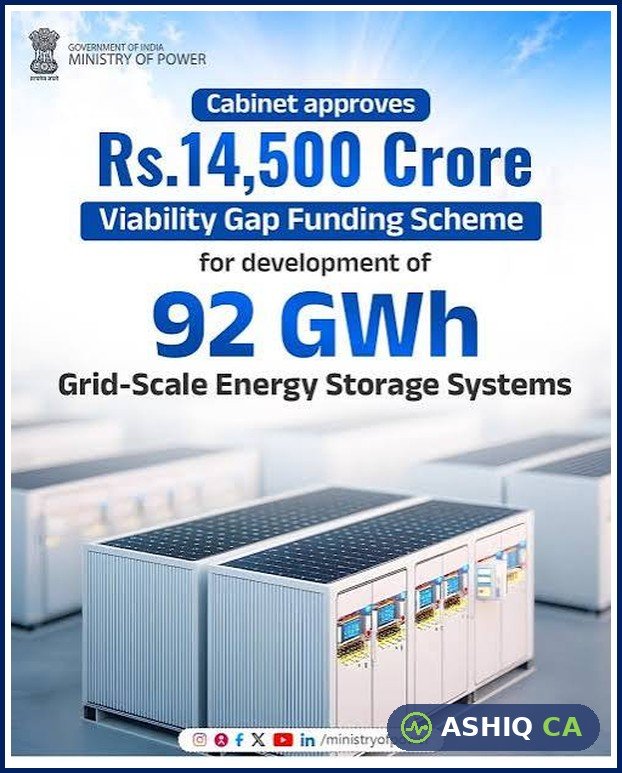
Why in News: The Union Cabinet approved a Viability Gap Funding (VGF) Scheme for Grid-Scale Energy Storage Systems with ₹14,500 crore for FY 2026-27 to 2030-31, to support 92 GWh of new storage capacity – about 170% of India’s present grid-scale storage – for round-the-clock renewable power.
| Storage type | Capacity |
|---|---|
| Hydro Pumped Storage Plants (PSP) | 60 GWh |
| Battery Energy Storage Systems (BESS) | 30 GWh |
| Alternative technologies | 2 GWh |
| Total (investment ~₹97,600 cr) | 92 GWh |
Key features
- Need: India needs about 411 GWh of grid-scale storage by 2031-32.
- Allocation: Through tariff-based competitive bidding; DISCOMs (public and private) eligible for BESS and PSP; any entity for alternative technologies.
- Make in India: BESS projects must meet a 40% Domestic Content Requirement (DCR).
- Benefits: Absorbs solar/wind variability, cuts reliance on coal for balancing, improves grid stability and energy security.
GS Facts: Energy storage
- Pumped storage – pump water uphill when power is surplus, release through turbines at peak
- VGF – one-time capital grant to make projects viable
- Earlier VGF for BESS (2023): 4,000 MWh
- India’s target: 500 GW non-fossil capacity by 2030
- Tamil Nadu’s BESS Policy 2026 (4 Nov) is a State-level parallel.
⚠ Exam Trap:
- Total support ₹14,500 crore for 92 GWh; the largest share is pumped hydro (60 GWh), not batteries (30 GWh).
- DCR of 40% applies to BESS.
- Required capacity by 2031-32 is 411 GWh.
Bharatiya Vayuyan Niyam, 2026 to Replace the Aircraft Rules, 1937

Why in News: Under the Bharatiya Vayuyan Adhiniyam, 2024, the Government notified the Bharatiya Vayuyan Niyam, 2026 – 220 rules in 8 chapters and 6 schedules – to replace the Aircraft Rules, 1937. They come into force on 1 January 2027. India’s operational airports have grown from 74 (2014) to 166 (October 2026).
Key provisions
- State of Design: Clear framework for aircraft design and type certification in India – boosts India as a ‘State of Design’.
- Fractional ownership: An aircraft can be jointly owned, with clear responsibility for operation and maintenance.
- Leasing: With the Protection of Interests in Aircraft Objects Act, 2025 (Cape Town Convention), IDERA deregistration requests must be processed within 5 working days – may cut leasing costs and airfares.
- Passengers: Booking sites and tickets must show the total fare with a breakdown; Centre may issue time-bound directions in extraordinary situations.
- Safety: Safety Management Systems, mandatory + non-punitive voluntary safety reporting, crew fatigue limits, no alcohol 12 hours before duty; ATC licence privileges up to age 60.
- Penalties: 21 offences (up to 2 years’ jail and/or ₹1 crore fine), 18 compoundable; 10 severity levels of penalty from ₹10,000 to ₹1 crore – calibrated decriminalisation.
- Connectivity: A Regional Air Connectivity Fund with a levy on domestic flights for VGF (UDAN-type routes).
GS Facts: Civil aviation
- Bharatiya Vayuyan Adhiniyam, 2024 replaced the Aircraft Act, 1934
- DGCA – safety regulator
- Chicago Convention (1944) created ICAO (HQ Montreal)
- Indian aircraft carry the nationality mark ‘VT’
- UDAN regional connectivity scheme launched in 2016.
⚠ Exam Trap:
- The new Rules (Niyam) 2026 replace the Aircraft Rules, 1937; the Act (Adhiniyam) 2024 replaced the Aircraft Act, 1934.
- In force from 1 January 2027.
- Airports: 74 → 166.
INTERNATIONAL
★ Important One-liners
- THE BAHAMAS BECOMES THE 116TH MEMBER OF THE INTERNATIONAL SOLAR ALLIANCE: The Bahamas handed over its Instrument of Accession to the ISA Framework Agreement on the sidelines of the 9th Session of the ISA Assembly in New Delhi on 4 November 2026, becoming the 116th member of the International Solar Alliance. Static: ISA was launched by India and France at COP21, Paris (2015); HQ Gurugram (Haryana); it is the first international body headquartered in India. Its initiative ‘One Sun One World One Grid’ (OSOWOG) aims at a global solar grid. Source: ProKerala ↗
- ATAL INNOVATION MISSION SETS UP A TINKERING LAB IN SRI LANKA: India’s Atal Innovation Mission (AIM) under NITI Aayog helped Nalanda College, Colombo open a Tinkering Lab at its Innovation Center, with curricula and training support – facilitated by the High Commission of India (High Commissioner Santosh Jha), with Atlas Axillia (Hemas Holdings). It extends India’s Atal Tinkering Labs model – hands-on STEM learning in thousands of schools – abroad, as development partnership and soft power. Static: AIM was set up in 2016. Source: DD News ↗
- ABDUL EL-SAYED – FIRST MUSLIM ELECTED TO THE US SENATE: Democrat Abdul El-Sayed won Michigan’s open US Senate seat in the mid-term elections (3 November 2026), becoming the first Muslim elected to the US Senate and keeping the seat (vacated by retiring Senator Gary Peters) with the Democrats. The 42-year-old former public health official ran on lowering costs for working families and reducing corporate influence. Static: The US Senate has 100 members (2 per State) with 6-year terms; about one-third face election every two years. Source: The Hindu ↗
TAMIL NADU
TN CM Urges PM to Set Up a Supreme Court Bench in Chennai

Why in News: Tamil Nadu CM C. Joseph Vijay wrote to PM Narendra Modi on 4 November 2026 urging steps to set up a Bench of the Supreme Court in Chennai – a demand the State first raised in 1980 – so that litigants from southern States get easier access to justice.
Arguments in the letter
- Constitution allows it: Article 130 – the Supreme Court sits in Delhi or any other place the CJI, with the President’s approval, decides.
- Access to justice: The Article 32 remedy has become practically available only to those near Delhi and able to bear travel and litigation costs.
- Chennai’s claim: Madras High Court (1862) is among the oldest chartered High Courts; strong Bar.
- History: Discussed at the 1979 Chief Justices’ conference; SC Full Court (7 Aug 2007) saw no reason to change its stand despite TN offering infrastructure.
- Pending case: In V. Vasanthakumar vs H.C. Bhatia (2016), the question of regional Benches was referred to a five-judge Constitution Bench.
- Federalism: Law Commission reports have backed regional Benches; control stays with the CJI, so judicial independence is not affected.
GS Facts: Supreme Court
- Article 124 – establishment; Article 130 – seat of the Court
- Article 32 – right to constitutional remedies, called the ‘heart and soul’ of the Constitution by Dr Ambedkar
- Law Commission’s 229th Report (2009) suggested a Constitution Bench in Delhi and four regional Cassation Benches.
⚠ Exam Trap:
- The seat of the SC can be changed under Article 130 by the CJI with the President’s approval – not by Parliament or the PM.
- The demand dates from 1980.
- Madras HC was set up in 1862.
AWARDS
★ Important One-liners
- NIRMALA LAKSHMAN’S ‘THE TAMILS: A PORTRAIT OF A COMMUNITY’ WINS SHARJAH AWARD: Author-journalist Nirmala Lakshman, Director of The Hindu Group, won the Sharjah Award for the Best International Book in the Best International Non-Fiction category for “The Tamils: A Portrait of a Community” (Aleph, January 2025). It was presented by Sheikha Bodour bint Sultan Al Qasimi, Chairperson of the Sharjah Book Authority. The book traces the history, society and culture of the Tamil people and their influence beyond borders. Source: The Hindu ↗
RAPID REVISION
| Topic | Key Fact to Remember |
|---|---|
| Fast Track Special Courts | Extended to 31 Mar 2031; ₹3,788.04 cr (Centre via Nirbhaya Fund); 779 → 850 courts |
| SC – additional sales tax | 7-judge Bench (CJI Surya Kant): reference academic; S. Kodar (1974) holds; Entry 54 List II |
| Critical mineral processing | ₹2,814 cr; 30% capex subsidy; 2 lithium + 2 nickel plants; caps ₹500/900 cr |
| VISTAR | ₹4,371.10 cr (MoSPI); 59 surveys; SSS 2.0; 8th Economic Census |
| RBI TCCFM | Chaired by DG (FMRD); money, G-sec, forex markets; meets quarterly |
| PMMSY – NE | SOP for organic certification of fisheries; Biofloc & RAS; Sikkim |
| AI foundation models | EKA-1 (Soket AI, 26B params, offline); Dhīr 2B/5B (ZenteiQ, on-phone) |
| Network Anubhav | TRAI geospatial platform – network test results + online DND |
| StopBleed | Nano-biopolymer powder; stops bleeding in ~60 s; Slingshot 2026 winner |
| NASA Swift | Launched 2004; re-entered 4 Nov 2026; LINK rescue (Katalyst) failed |
| Agnipath | Top 25% regular; 75% get 2-yr extension (₹43,500/₹47,500), then all willing absorbed |
| I-OECM Guidelines | Released at CBD COP-17, Yerevan; supports 30×30; NBA; GEF-8 project $60.79 mn |
| NDC-TIA II | NITI–GIZ pact to decarbonise road freight |
| El Niño | Bolivia emergency; Yangon heat shelters; warm central-east Pacific |
| Schedule M | Grade A sterile areas: ‘no growth’ (was <1 CFU); WHO alignment |
| Grid-scale storage VGF | ₹14,500 cr; 92 GWh (PSP 60, BESS 30, others 2); 40% DCR; need 411 GWh by 2031-32 |
| Bharatiya Vayuyan Niyam | 220 rules; replaces Aircraft Rules 1937; from 1 Jan 2027; airports 74 → 166 |
| ISA | Bahamas 116th member; 9th ISA Assembly, New Delhi |
| SC Bench in Chennai | TN CM’s letter; Art 130; demand since 1980 |
| Sharjah award | Nirmala Lakshman – ‘The Tamils: A Portrait of a Community’ |
TOP 5 QUIZ OF THE DAY
✎ Test yourself – 5 most important MCQs from the daily current affairs 5 November 2026. Enter your name, submit, and see your score with explanations. Your best score goes on today’s leaderboard below the quiz.
🏆 Today's Leaderboard
No attempts yet – be the first to take the quiz and top the board!
— Keep Reading, Keep Revising —
That completes the daily current affairs 5 November 2026.
Previous edition: Daily Current Affairs 4 November 2026
All editions: Daily Current Affairs 2026
Free daily PDFs: ashiqcurrentaffairs.com