
How to use this material
Exam Tags & Source: Syllabus mapping for UPSC / TNPSC / SSC-RRB + clickable source link
Why in News: The news in 2–3 lines – read this first
▸ Sub-headings: Simple explanation + all facts, figures, names and years
GS Facts: Static GK linked to the news (blue box)
⚠ Exam Trap: Common confusions examiners use in options (orange box)
✍ Mains Angle: Probable Mains question with value points (purple box)
★ Important One-liners: Short news under each theme + Rapid Revision table. Highlighted = must-remember
✎ Top 5 Quiz: Day’s 5 most important MCQs at the end, with answer key
Here are the daily current affairs for 21 October 2026 in English – exam-oriented notes for UPSC, TNPSC, SSC, RRB and Bank exams. Covers the World Bank Group’s first Digital Strategy, Global Hunger Index 2026 (India 100th), UDAN completing 10 years, India to host the first SCO Civilisational Dialogue Forum, the Green Diwali Campaign, India–UAE trade crossing USD 100 billion, the Taleju Bhawani Temple and a rare European bee-eater at the Adyar estuary – with GS Facts, Exam Traps, Mains Angles, a Rapid Revision table and a Top 5 Quiz.
ECONOMY
World Bank Group Unveils First Digital Strategy
Why in News: The World Bank Group launched its first comprehensive digital strategy in Seoul on Tuesday (20 Oct 2026). It puts AI, affordable internet and job creation at the centre of its work as 1.2 billion young people near working age in developing countries.
Why now? (Simple idea)
- The jobs gap: about 1.2 billion young people will reach working age in developing countries over the next 10–15 years, but their economies are expected to create only about 420 million jobs. Digital technology is seen as a way to raise productivity and create jobs.
- Where: infrastructure, energy, agriculture, healthcare, tourism and manufacturing.
- President Ajay Banga: the focus is practical use of technology – especially affordable AI tools that improve productivity and public services. Banga became World Bank president in June 2023 and has stressed job creation and private capital mobilisation.
Four priorities
- 1. Reliable connectivity: invest in international cables, national broadband networks and local links to homes, businesses, schools and health facilities.
- 2. Affordable devices and data: work with manufacturers, mobile operators and financial institutions to cut the cost of entry-level smartphones and broadband.
- 3. Digital services and skills: strengthen digital ID, payment systems and secure data-sharing platforms; build digital skills.
- 4. AI readiness: prepare developing economies to benefit from AI.
AI Infrastructure and Readiness Initiative; “small AI”
- Shared GPUs: emerging economies get shared, pay-as-you-go access to GPUs (graphics processing units used to build and run AI) – an alternative to costly standalone national data centres. Initial focus: Africa and Latin America.
- “Small AI”: tools adapted to specific tasks and local conditions – e.g. helping farmers identify crop diseases, health workers improve care, small businesses manage inventory.
- Safeguards: privacy, cybersecurity and fraud protection remain essential. The strategy combines financing, policy advice, private investment and guarantees. No separate funding for India was announced.
| Digital divide (World Bank) | Figure |
|---|---|
| People offline globally (2025) | more than 2 billion |
| Internet users – low-income countries | 23% |
| Internet users – high-income countries | 94% |
| Young people entering workforce | 1.2 billion (10–15 yrs) |
| Jobs projected in those economies | about 420 million |
GS Facts
- World Bank Group (HQ Washington DC; formed at Bretton Woods, 1944) has five institutions: IBRD, IDA, IFC, MIGA, ICSID. It works in more than 100 countries.
- Ajay Banga is the 14th World Bank president (Indian-origin).
- India link: India’s digital public infrastructure (Aadhaar, UPI) is often cited as a model for digital ID and payments.
- GPU = graphics processing unit, the chip used to train and run AI models.
⚠ Exam Trap:
- 1.2 billion youth vs 420 million jobs – do not swap.
- 23% (low-income) vs 94% (high-income) internet use.
- GPU-sharing initiative starts in Africa and Latin America, not India.
- This is the Bank’s first digital strategy; announced in Seoul.
✍ Mains Angle (UPSC)
Q. “Digital technology can bridge the jobs gap in developing economies.” Examine.
Value points: productivity gains, DPI (ID, payments), small AI in agriculture/health, shared compute. Risks: digital divide, affordability and skills, cybersecurity and fraud, job displacement, dependence on global tech firms.
ENVIRONMENT
★ Important One-liners
- GREEN DIWALI CAMPAIGN (20 OCT–8 NOV 2026): WWF-India’s Programme Centre – Resource Partner, supported by the Ministry of Environment, Forest and Climate Change, has launched a nationwide campaign urging people to avoid firecrackers and celebrate a clean Diwali in line with Mission LiFE (Lifestyle for Environment).
- It will reach schools, colleges, RWAs and communities, with special focus on the 130 cities under the National Clean Air Programme (NCAP).
- Green crackers were developed by CSIR-NEERI; they cut air and noise pollution by about 30–50%, release water vapour to suppress dust, avoid toxic barium salts (barium nitrate is the most dangerous ingredient in conventional crackers) and carry a green logo with a QR code.
- They use alternatives such as potassium nitrate and aluminium.
- Static: NCAP was launched in 2019; CSIR-NEERI is at Nagpur; Mission LiFE was announced by PM Modi at COP26, Glasgow (2021). Source: The Hindu ↗
HEALTH
Global Hunger Index 2026 – India Ranks 100th of 122
Why in News: In the Global Hunger Index (GHI) 2026 (released 14 Oct 2026), India ranks 100th of 122 countries with a score of 24.1 – the “serious” hunger category. Pakistan is 106th (25.5) and Afghanistan 108th (28.6).
What is the GHI? (Simple idea)
- GHI measures hunger at global, regional and country level. A lower score is better. 2026 theme: “No Security Without Food Security”.
- Published by: Welthungerhilfe, the Institute for International Law of Peace and Armed Conflict (Ruhr University Bochum) and the Swiss organisation Helvetas.
- Four indicators: Undernourishment (share of people with too little calorie intake); Child stunting (under-5s too short for their age – chronic undernutrition); Child wasting (under-5s too thin for their height – acute undernutrition); Child mortality (children dying before age five).
| Score | Category |
|---|---|
| below 10 | Low |
| 10–19.9 | Moderate |
| 20–34.9 | Serious |
| 35–49.9 | Alarming |
| 50 or above | Extremely alarming |
India in GHI 2026
- Rank and score: 100th of 122; score 24.1 (“serious”). Long-term improvement from 37.0 in 2006.
- Child stunting: fell from 50.0% (2000) to 29.3% (2026).
| Country | Rank | Score / note |
|---|---|---|
| Sri Lanka | 53rd | best in South Asia |
| Nepal | 72nd | – |
| Bangladesh | 84th | – |
| India | 100th | 24.1 |
| Pakistan | 106th | 25.5 (serious) |
| Afghanistan | 108th | 28.6 |
Pakistan and the region
- Pakistan (25.5): undernourished 16.1%, child stunting 33.6%, child wasting 9.8%, under-5 mortality 5.6%. Its category improved from “alarming” to “serious” since 2000, but since 2018 undernourishment rose from about 11% to 16% and wasting from about 7% to nearly 10%.
- Causes named: economic crisis and food inflation, floods and heavy rain (Pakistan, Bangladesh), low rainfall and heat in Afghanistan’s 2026 cereal season, and global conflicts.
- South Asia: regional score 23.5 (“serious”), down from 37.5 in 2000, but most progress came before 2018; conditions in Pakistan and Afghanistan have worsened since 2018.
- FAO: 218 million people in South Asia (including Iran) were undernourished in 2023–2025, about one-third of the world total.
Global picture
- World GHI score rose from 17.6 (2018) to 18.1 (2026) – hunger is worsening after almost two decades of improvement. Hunger has worsened in 32 countries since 2018; 57 countries are projected to miss even the “low hunger” category by 2030.
GS Facts
- Weights (general knowledge): undernourishment and child mortality count one-third each; stunting and wasting one-sixth each.
- SDG 2 – Zero Hunger targets ending hunger by 2030.
- India’s food schemes: National Food Security Act 2013 (PDS), PM Garib Kalyan Anna Yojana, POSHAN Abhiyaan (2018), mid-day meal (PM POSHAN).
- FAO (Rome) publishes the undernourishment data used in the GHI.
⚠ Exam Trap:
- 20–34.9 = serious; 35–49.9 = alarming. India (24.1) and Pakistan (25.5) are both “serious”.
- A lower rank number is better, but a lower score is also better – India (100th) is ahead of Pakistan (106th).
- Stunting = low height for age (chronic); wasting = low weight for height (acute).
- India’s stunting: 50.0% (2000) → 29.3% (2026).
✍ Mains Angle (UPSC)
Q. “India’s hunger ranking remains low despite food-grain surplus.” Discuss reasons and way forward.
Value points: access vs availability, child stunting and wasting, diet diversity, women’s nutrition, food inflation, climate shocks, PDS leakages. Way forward: nutrition-sensitive agriculture, first-1000-days focus, WASH, better data and local delivery.
INFRASTRUCTURE
UDAN Completes 10 Years – Next Phase of Regional Air Connectivity
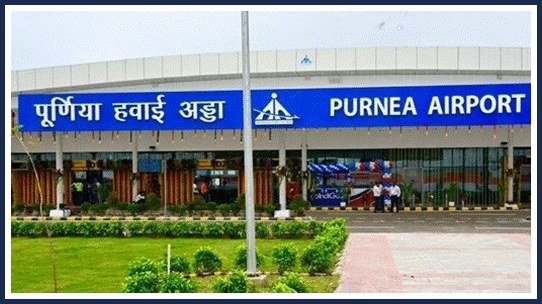
Why in News: The Regional Connectivity Scheme (RCS) – UDAN (Ude Desh ka Aam Nagrik), launched on 21 Oct 2016, completed ten years. A modified UDAN was launched on 4 July 2026 for FY 2026-27 to FY 2035-36 with an outlay of ₹28,840 crore.
What is UDAN? (Simple idea)
- Idea: make air travel affordable and viable on regional routes by connecting unserved and underserved airports. It follows the National Civil Aviation Policy 2016.
- How it works: market-based selection of airlines, airfare caps, concessions and Viability Gap Funding (VGF) – money that covers an airline’s expected loss on a regional route. ₹5,091.23 crore VGF disbursed as of 15 Oct 2026.
- First flight: Shimla–Delhi, April 2017.
The first decade in numbers
| Indicator | Figure |
|---|---|
| Regional routes operationalised | 687 |
| Aerodromes operationalised | 95 (incl. 17 heliports, 2 water aerodromes) |
| Flights operated | more than 3.68 lakh |
| Passengers carried | 1.72 crore |
| Operational airports | 74 (2014) → 166 now |
| Aviation sector jobs | 3 million (2014) → about 7.7 million (2026); potential 25 million by 2040 |
| Rank | India is the world’s 3rd-largest domestic aviation market |
North-Eastern Region
- Hilly terrain keeps the North-East under-connected. Under UDAN, 90 priority RCS routes are operational; 52 aerodromes (including heliports and water aerodromes) are identified, of which 12 are operational.
Modified UDAN (4 July 2026)
- Period and outlay: 10 years, FY 2026-27 to FY 2035-36, ₹28,840 crore. Focus: affordable travel, sustainable regional operations, aerodrome development via a Challenge Mode portal (to identify airstrips and helipads), more Centre–State/UT partnership, and an ecosystem for Made in India civil aircraft.
| Component | Plan and outlay |
|---|---|
| Aerodrome development (CAPEX) | 100 airports from existing unserved airstrips; ₹12,159 crore over 8 years (about ₹100 crore each) |
| Operation & maintenance | 3 years of support for about 441 aerodromes; ₹2,577 crore; cap ₹3.06 crore/airport/yr and ₹0.90 crore/heliport or water aerodrome/yr |
| Modern helipads | 200 helipads at about ₹15 crore each; total ₹3,661 crore over 8 years |
| VGF for airlines | ₹10,043 crore over 10 years; up to 5 years per route, tapered from year 3; route exclusivity limited to 3 years |
| Atmanirbhar Bharat | ₹400 crore for 2 HAL Dhruv helicopters (Pawan Hans) and 2 HAL Dornier aircraft (Alliance Air) |
GS Facts
- Ministry: Civil Aviation; airports are managed by the Airports Authority of India (AAI).
- Original UDAN (2016): the fare cap was about ₹2,500 for a one-hour flight (~500 km), with a share of seats at capped fares.
- Helicopters: Pawan Hans is a helicopter service company; Alliance Air is the regional airline.
- HAL (Bengaluru) makes the Dhruv helicopter and Dornier 228 aircraft.
⚠ Exam Trap:
- Launched 21 Oct 2016; next phase launched 4 July 2026 – do not mix the dates.
- 74 → 166 airports (since 2014); 687 routes; 95 aerodromes (17 heliports, 2 water).
- VGF to airlines: up to 5 years per route; the ₹10,043 crore is spread over 10 years.
- CAPEX is for 100 airports; 441 aerodromes get O&M support; 200 helipads.
✍ Mains Angle (UPSC)
Q. “UDAN has widened air access but sustaining regional routes remains a challenge.” Discuss.
Value points: regional development, tourism and jobs, NE connectivity, helipads and water aerodromes, indigenous aircraft. Challenges: route viability after subsidy ends, airline finances, low load factors, State-level support and land, safety and infrastructure.
INTERNATIONAL
India to Host First SCO Civilisational Dialogue Forum
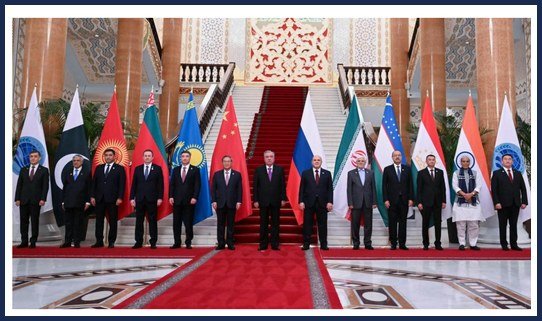
Why in News: Defence Minister Rajnath Singh announced at the SCO Council of Heads of Government meeting in Dushanbe (Tajikistan) on 20 Oct 2026 that India will host the first SCO Civilisational Dialogue Forum by the end of 2026 and invited all member countries.
What happened in Dushanbe
- Meeting: the 25th SCO Council of Heads of Government (CHG), a two-day meeting of the member countries’ Prime Ministers. Singh represented India. Earlier he met Tajikistan’s PM Qohir Rosulzoda and spoke of India–Tajikistan civilisational and people-to-people ties.
- Outcomes: Heads of Delegation adopted the Joint Communiqué of the 25th CHG, the SCO budget for 2027, financial and administrative decisions and the PMTEC Action Plan 2026–2030.
- CHG role: the mechanism for economic and other practical cooperation among members. India has been a full member since 2017.
Civilisational Dialogue Forum
- Proposal: PM Modi proposed it at the SCO Summit of the Council of Heads of State in Tianjin (2025) to strengthen people-to-people ties and share the richness of ancient civilisations, art, literature and traditions.
- Next: India hosts the first Forum by end-2026. Singh also noted the SCO’s 25-year journey, highlighted at the Bishkek summit, where Modi spoke of security, connectivity and opportunity.
India’s global initiatives pitched
- International Solar Alliance (ISA) and Coalition for Disaster Resilient Infrastructure (CDRI) – affordable clean energy and climate-resilient development.
- Mission LiFE – sustainable lifestyles and responsible consumption; Global Biofuel Alliance – cleaner energy.
GS Facts
- SCO: founded 15 June 2001 (successor of the 1996 “Shanghai Five”); Secretariat in Beijing; RATS (anti-terror body) in Tashkent; official languages Chinese and Russian.
- Members (10): China, India, Kazakhstan, Kyrgyzstan, Pakistan, Russia, Tajikistan, Uzbekistan, Iran, Belarus. India and Pakistan joined in 2017.
- Two top bodies: Council of Heads of State (summit) and Council of Heads of Government (PMs, economic issues).
- ISA: launched 2015 at COP21 Paris (HQ Gurugram); CDRI: 2019; Global Biofuel Alliance: Sept 2023 (G20, New Delhi). PMTEC = Programme of Multilateral Trade and Economic Cooperation.
⚠ Exam Trap:
- CHG (Prime Ministers, economy) ≠ CHS (Heads of State, summit). Rajnath Singh attended the CHG at Dushanbe.
- Forum was proposed at Tianjin (2025); India hosts the first edition in 2026.
- SCO HQ = Beijing; RATS = Tashkent.
✍ Mains Angle (UPSC)
Q. “Evaluate India’s role in the SCO as a platform for connectivity, security and cultural diplomacy.”
Value points: soft power through civilisational dialogue, Central Asia outreach, ISA/CDRI leadership. Challenges: China–Pakistan dynamics, terrorism language in communiqués, connectivity access (BRI concerns).
★ Important One-liners
- INDIA–UAE TRADE CROSSES USD 100 BILLION SINCE CEPA: EAM S. Jaishankar, welcoming UAE Deputy PM and Foreign Minister Sheikh Abdullah bin Zayed Al Nahyan in Mumbai (Tuesday, 20 Oct), said bilateral trade has crossed USD 100 billion since the Comprehensive Economic Partnership Agreement (CEPA).
- He said ties live up to their promise as a Comprehensive Strategic Partnership, with defence, energy and technology cooperation turning strategic.
- He voiced “deep concern” over the Gulf situation, called for dialogue and diplomacy, and backed the free, safe and unimpeded flow of trade, energy and fertilizer.
- He called 2026 a year of intensive leadership engagement – UAE President Sheikh Mohamed bin Zayed Al Nahyan visited India in January, and Abu Dhabi Crown Prince Sheikh Khaled bin Mohamed bin Zayed Al Nahyan attended the AI Impact Summit (Feb) and the 18th BRICS Summit.
- Static: India–UAE CEPA was signed 18 Feb 2022 and in force 1 May 2022; the UAE joined BRICS in 2024; capital Abu Dhabi.
ART & CULTURE
★ Important One-liners
- TALEJU BHAWANI TEMPLE OPENS ON MAHA NAVAMI, BADA DASHAIN (NEPAL): Bada Dashain is Nepal’s biggest and most important festival.
- On Maha Navami, the ninth day, the historic Taleju Bhawani Temple in Kathmandu opens to devotees; it opens to the public only once a year, drawing long queues.
- It lies within the Hanuman Dhoka Durbar complex and is dedicated to Goddess Taleju Bhawani, the revered tutelary deity of Nepal’s Malla kings.
- Static: Dashain lasts about 15 days and matches India’s Navaratri/Vijayadashami; the Kathmandu Valley (including Hanuman Dhoka Durbar Square) is a UNESCO World Heritage Site (1979).
TAMIL NADU
★ Important One-liners
- RARE EUROPEAN BEE-EATER SIGHTED AT ADYAR ESTUARY, CHENNAI: Birders R V Ramanan (member, Madras Naturalists’ Society) and his son Shreyas were looking for the Eurasian wryneck when they spotted the European bee-eater (Merops apiaster) – the first sighting in Chennai in decades.
- It was uploaded to eBird, a global birders’ database, and confirmed by Bharath Ravikumar.
- It was a juvenile, told apart from the common blue-tailed bee-eater by its broad dark trailing edge, completely yellow throat and pale blue-green plumage.
- The nearest earlier sightings in the State were in Tirupur, Salem and Coimbatore; the bird had avoided even Pallikaranai.
- The wryneck was later found perched beneath it.
- Static: the European bee-eater is a migratory bird of Europe, western Asia and parts of Africa (IUCN: Least Concern); Pallikaranai Marsh is a Ramsar site (2022).
RAPID REVISION
| Topic | Key fact |
|---|---|
| World Bank digital strategy | First; announced in Seoul (20 Oct 2026); 4 priorities; 1.2 bn youth vs 420 mn jobs |
| AI initiative | Shared pay-as-you-go GPUs; Africa and Latin America first; “small AI” |
| Digital divide | 2 bn+ offline (2025); internet use 23% low-income vs 94% high-income |
| GHI 2026 | India 100th of 122, score 24.1 (serious); Pakistan 106th (25.5); Afghanistan 108th (28.6); stunting 50.0% → 29.3% |
| GHI region/world | South Asia 23.5; world 18.1 (17.6 in 2018); Sri Lanka 53rd, Nepal 72nd, Bangladesh 84th |
| Green Diwali | WWF-India + MoEFCC; 20 Oct–8 Nov 2026; 130 NCAP cities; green crackers by CSIR-NEERI cut pollution 30–50% |
| UDAN | Launched 21 Oct 2016; first flight Shimla–Delhi (Apr 2017); 687 routes, 95 aerodromes, 1.72 crore passengers |
| Modified UDAN | 4 July 2026; FY 2026-27 to 2035-36; ₹28,840 crore; 100 airports, 200 helipads, VGF ₹10,043 crore |
| Airports and jobs | 74 (2014) → 166; jobs 3 mn → 7.7 mn; NE: 90 routes |
| SCO CHG, Dushanbe | 25th meeting, 20 Oct 2026; SCO budget 2027, PMTEC Action Plan 2026–2030 |
| SCO Civilisational Dialogue Forum | Proposed by Modi at Tianjin 2025; India hosts first by end-2026 |
| India–UAE | Trade over USD 100 bn since CEPA (in force 1 May 2022); Jaishankar–Sheikh Abdullah, Mumbai |
| Taleju Bhawani Temple | Opens once a year on Maha Navami; Hanuman Dhoka, Kathmandu; Malla kings’ deity |
| European bee-eater | First Chennai sighting in decades; Adyar estuary; juvenile; confirmed via eBird |
TOP 5 QUIZ OF THE DAY
✎ Test yourself – 5 most important MCQs of the day
Q1. About the World Bank’s digital strategy, consider:
1. It has four priorities, including affordable devices and data and AI readiness.
2. Its AI Infrastructure and Readiness Initiative proposes shared, pay-as-you-go access to GPUs.
3. The initial focus of the initiative is South Asia.
Which of the statements given above is/are correct?
- (a) 1 and 2 only
- (b) 2 and 3 only
- (c) 1 and 3 only
- (d) 1, 2 and 3
Q2. Regarding green crackers, consider:
1. They were developed by CSIR-NEERI.
2. They avoid toxic barium salts and carry a green logo with a QR code.
3. They completely eliminate air and noise pollution.
Which of the statements given above is/are correct?
- (a) 2 and 3 only
- (b) 1 and 2 only
- (c) 1 and 3 only
- (d) 1, 2 and 3
Q3. About the Global Hunger Index, consider:
1. It uses four indicators – undernourishment, child stunting, child wasting and child mortality.
2. A score of 20–34.9 is classed as “alarming”.
3. India’s 2026 score of 24.1 falls in the “serious” category.
Which of the statements given above is/are correct?
- (a) 1 and 2 only
- (b) 2 and 3 only
- (c) 1, 2 and 3
- (d) 1 and 3 only
Q4. Under the next phase of UDAN, consider:
1. 100 airports will be developed from existing unserved airstrips.
2. 200 modern helipads will be developed.
3. Viability Gap Funding to an airline on a route is available for up to ten years.
Which of the statements given above is/are correct?
- (a) 2 and 3 only
- (b) 1 and 3 only
- (c) 1, 2 and 3
- (d) 1 and 2 only
Q5. About the SCO, consider:
1. India has been a full member since 2017.
2. The 25th meeting of the SCO Council of Heads of Government was held at Dushanbe.
3. The SCO headquarters is in Tashkent.
Which of the statements given above is/are correct?
- (a) 2 and 3 only
- (b) 1 and 3 only
- (c) 1 and 2 only
- (d) 1, 2 and 3
ANSWER KEY & EXPLANATIONS
Q1 – (a): The initial focus is Africa and Latin America, not South Asia. The announcement also gave no separate funding for India.
Q2 – (b): Green crackers only cut air and noise pollution by about 30–50%; they do not eliminate it.
Q3 – (d): Scores of 20–34.9 are “serious”; “alarming” is 35–49.9.
Q4 – (d): VGF support is available for up to five years (tapered from the third year); ₹10,043 crore is allocated over ten years for the scheme.
Q5 – (c): The SCO Secretariat is in Beijing; Tashkent hosts its Regional Anti-Terrorist Structure (RATS).
— Keep Reading, Keep Revising —
Free daily PDFs: ashiqcurrentaffairs.com