
How to use this material
Exam Tags & Source: Syllabus mapping for UPSC / TNPSC / SSC-RRB + clickable source link
Why in News: The news in 2–3 lines – read this first
▸ Sub-headings: Simple explanation + all facts, figures, names and years
GS Facts: Static GK linked to the news (blue box)
⚠ Exam Trap: Common confusions examiners use in options (orange box)
✍ Mains Angle: Probable Mains question with value points (purple box)
★ Important One-liners: Short news under each theme + Rapid Revision table. Highlighted = must-remember
✎ Top 5 Quiz: Day’s 5 most important MCQs at the end, with answer key
Here are the daily current affairs for 20 October 2026 in English – exam-oriented notes for UPSC, TNPSC, SSC, RRB and Bank exams. Covers the India–New Zealand FTA coming into force, the upgraded Agri Welfare Portal, JAXA’s MMX launch to Mars’ moon Phobos, Sirpur on UNESCO’s Tentative List, Europe’s autumn of protests, the 61st CIML meeting, Exercise AUSTRAHIND 2026, Arshi Gupta’s karting title and more – with GS Facts, Exam Traps, Mains Angles, a Rapid Revision table and a Top 5 Quiz.
NATIONAL
★ Important One-liners
- 61ST CIML MEETING – INDIA HOSTS FOR THE FIRST TIME (26–28 OCT 2026, NEW DELHI): India will host the 61st meeting of the International Committee of Legal Metrology (CIML) – the principal decision-making body of the International Organization of Legal Metrology (OIML).
- The OIML is an intergovernmental organisation set up in 1955 to harmonise “legal metrology” rules across the world, i.e. rules for measuring instruments used in trade, industry, healthcare, safety and environmental protection.
- The CIML’s annual meeting is the global platform for policy, technical developments and cooperation.
- It is organised by the Department of Consumer Affairs with the OIML, and an international seminar on “Evolutions in Legal Metrology” is held on 26 Oct 2026.
- Static: in India, weights and measures are governed by the Legal Metrology Act, 2009 (it replaced the Standards of Weights and Measures Act, 1976); the OIML’s secretariat (BIML) is in Paris.
ECONOMY
India–New Zealand FTA Enters into Force (20 Oct 2026)
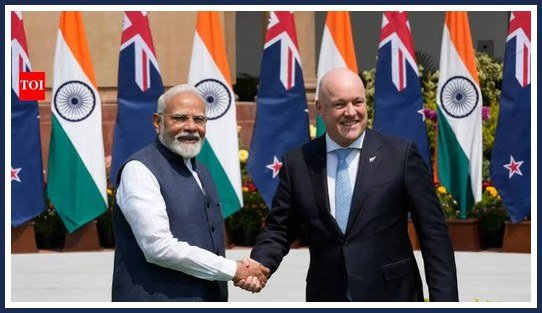
Why in News: The India–New Zealand Free Trade Agreement (FTA) came into force on 20 October 2026 (Vijayadashami). Commerce Minister Piyush Goyal and NZ Trade Minister Todd McClay announced it at a virtual meet. India’s exporters now get 100% duty-free access to the NZ market.
What is an FTA? (Simple idea)
- FTA: two countries agree to cut or remove import duties (tariffs) on most goods traded between them, and often open services, investment and movement of professionals too. “Entry into force” means the deal now legally applies and traders can use the lower duties.
- Why 20 Oct? The date, Vijayadashami, was chosen as a day symbolising “victory and new beginnings”.
- Timeline: talks launched 16 Mar 2025 → concluded 22 Dec 2025 (within 9 months) → signed 27 Apr 2026 → in force 20 Oct 2026.
- First export: the first-ever export of a JCB machine from India to NZ was flagged off by the Minister; flag-offs of agri, gems & jewellery, engineering, sporting goods, footwear and leather products were also planned. Rajesh Agrawal is Secretary, Department of Commerce.
Market access – what India gains
- 100% tariff lines: NZ removes customs duty on all 8,284 tariff lines for Indian goods from day one. Old NZ tariffs were 0–10% (average 2.2%); peak tariffs of up to 10% disappear.
- Who benefits: textiles, apparel, leather, footwear, gems & jewellery, engineering goods, autos & auto parts, chemicals, pharma, agri products, processed foods. Wooden logs, coking coal, metal waste and scrap also come duty-free – helps manufacturing and MSME supply chains.
- Pharma & medical devices: NZ will accept GMP and GCP inspection reports from comparable regulators such as US FDA, EMA and UK MHRA – faster approvals.
| Sector | Old peak tariff | Key Indian exports (now 0%) |
|---|---|---|
| Textiles & apparel | up to 10% | garments, fabrics, yarn, carpets |
| Leather & footwear | up to 10% | footwear, bags, belts, finished leather |
| Engineering goods | up to 10% | auto parts, machinery, tools |
| Pharmaceuticals | up to 5% | generics, APIs, medical devices, AYUSH |
| Agriculture & allied | up to 5% | fruits, vegetables, spices, cereals |
| Marine products | up to 5% | shrimp, fish, processed seafood |
| Plastics & rubber | up to 10% | pipes, packaging, rubber goods |
| Electronics | up to 10% | components, wiring, instruments |
| Chemicals | up to 5% | industrial & specialty chemicals |
Services, jobs and students
- Best services offer: NZ’s best-ever in any trade deal – access in about 118 sectors; Most-Favoured-Nation (MFN) commitments in about 139 sub-sectors.
- AYUSH: for the first time NZ gives dedicated access in Health & Traditional Medicine Services (Ayurveda, Yoga, other AYUSH systems).
- Visas every year: 5,000 Temporary Employment Entry visas (IT, healthcare, engineering, specialised workers; stay up to 3 years) and 1,000 Working Holiday visas.
- Students: no numerical cap; work up to 20 hours/week; post-study work up to 3 years for STEM Bachelor’s and Master’s, up to 4 years for doctoral scholars.
Agricultural Productivity Partnership (APP)
- Beyond tariffs: brings NZ technology, training and best practices to Indian farmers. Action Plans for kiwifruit, apples and honey; cooperation also in horticulture, forestry, livestock and fisheries. NZ gives technical help to set up Centres of Excellence.
| Crop | Centres of Excellence (location) |
|---|---|
| Kiwifruit | Phase I: Pfutsero (Nagaland) and Magra (Uttarakhand) |
| Apples | Proposed: Himachal Pradesh and Uttarakhand |
| Honey | Proposed: Uttar Pradesh and West Bengal |
- TRQs linked to farmer welfare: all Tariff Rate Quotas for apples, kiwifruit and Mānuka honey are formally tied to delivery of the Action Plans, under a Joint Agriculture Productivity Council. (TRQ = a fixed quantity enters at low duty; beyond it, normal duty applies.)
- States present at the event: Himachal Pradesh, Nagaland, Uttarakhand, Uttar Pradesh, Arunachal Pradesh.
What India offers – balanced and calibrated
| Category | Share of lines | Examples |
|---|---|---|
| Immediate elimination | 30.00% | wood, wool, sheep meat, raw hides |
| Phased elimination (3, 5, 7, 10 yrs) | 35.6% | petroleum oils, vegetable oils, malt extract, some machinery |
| Tariff reduction (not full removal) | 4.37% | pharma drugs, polymers, aluminium, iron/steel articles |
| Tariff rate quotas | 0.06% | Mānuka honey, apples, kiwifruit, albumins incl. milk albumin |
| Exclusion | 29.97% | dairy, animal products (except sheep meat), onions, chana, peas, corn, almonds, sugar, artificial honey, fats & oils, arms & ammunition |
- Net picture: India gives access on about 70% of lines and keeps about 30% excluded to protect sensitive sectors. Robust rules of origin, a bilateral safeguard mechanism and anti-circumvention provisions ensure benefits go only to genuine exporters.
Investment, MSMEs and trade snapshot
- Investment: NZ will facilitate USD 20 billion investment into India (agriculture, manufacturing, infrastructure, start-ups). NZ’s total overseas investment is USD 422.6 billion.
- MSMEs & GIs: zero duty and faster customs cut landed costs; special focus on women- and youth-owned firms. NZ will help register Indian Geographical Indications (GIs).
- Trade today: merchandise trade USD 1.3 bn (2024-25), up 49%; India’s services exports to NZ USD 634 mn (2024); Indian diaspora in NZ about 3 lakh (nearly 5%); NZ is India’s 2nd-largest trading partner in Oceania; India’s exports to NZ grew 130% over 10 years (2015-16 to 2024-25).
- Target: double trade to NZ$7 billion (₹35,000 crore) by 2030 under the India–NZ Strategic Partnership: Roadmap to 2030; the FTA also supports Viksit Bharat 2047.
GS Facts
- FTA vs CEPA: an FTA mainly cuts tariffs on goods; a CEPA/CETA is wider (services, investment, IPR).
- Other recent Indian pacts: India–UAE CEPA (in force 1 May 2022); India–Australia ECTA (29 Dec 2022); India–EFTA TEPA (in force 1 Oct 2025; EFTA = Iceland, Liechtenstein, Norway, Switzerland).
- Terms: GMP = Good Manufacturing Practice; GCP = Good Clinical Practice; MFN = treat all partners equally; Rules of Origin = tests to decide if a product is truly made in the partner country.
- NZ: capital Wellington; currency NZ dollar; famous for kiwifruit, apples and Mānuka honey.
⚠ Exam Trap:
- NZ opens 100% of its tariff lines; India opens about 70% – do not swap.
- Only apples, kiwifruit, Mānuka honey (0.06% lines) get TRQs; dairy is fully excluded, not quota-based.
- 5,000 = Temporary Employment Entry visas; 1,000 = Working Holiday visas.
- Signed 27 Apr 2026 ≠ in force 20 Oct 2026; talks concluded 22 Dec 2025.
- Kiwifruit centres: Nagaland & Uttarakhand; apples: HP & Uttarakhand; honey: UP & West Bengal.
✍ Mains Angle (UPSC)
Q. “India’s FTAs with developed economies reflect a new trade strategy.” Discuss with reference to the India–NZ FTA.
Value points: market access for MSMEs and labour-intensive exports; sensitive sectors (dairy, sugar) protected; mobility of professionals and students; technology transfer via APP; investment pledge; link to Viksit Bharat. Challenges: low trade base (USD 1.3 bn), FTA utilisation by small firms, standards/non-tariff barriers, rules-of-origin compliance.
AGRICULTURE
Agri Welfare Portal Upgraded – Single Window for Farmers
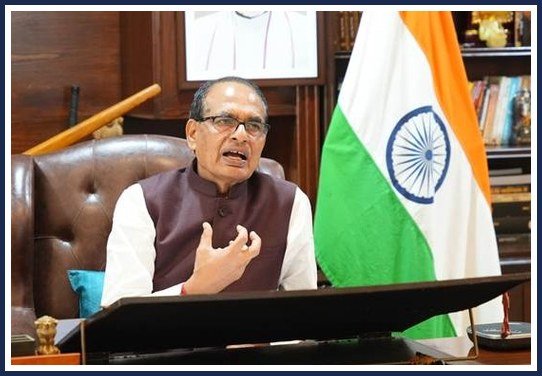
Why in News: Union Agriculture Minister Shivraj Singh Chouhan launched the upgraded Agri Welfare Portal on Monday (19 Oct 2026). It gives farmers single-window access to schemes, financial help and farm information on a mobile-friendly platform.
What is it?
- Idea: one digital gateway of the Ministry of Agriculture & Farmers’ Welfare where a farmer can see scheme details, check eligibility, apply online and receive money by Direct Benefit Transfer (DBT) – no need to visit many offices or websites.
- Aim: cut procedural hurdles and the role of intermediaries; deliver on PM Modi’s Digital India vision – “technology must reach farms and rural communities”.
Key features
- Schemes covered: single-window gateway to PM-KISAN, AgriStack and PM Fasal Bima Yojana (PMFBY), plus subsidies, rules and digital services.
- Farm information: authentic data on weather, scientific farming practices, seed and fertiliser availability and market prices – designed for rural connectivity.
- Accessible: secure, mobile-friendly, supports screen readers and simple navigation for persons with disabilities.
- Standards: built as per MeitY’s Digital Brand Identity Manual 3.0 and Guidelines for Indian Government Websites (GIGW) 3.0.
Who is connected and how it will reach farmers
- One platform for the ecosystem: Farmer Producer Organisations (FPOs), Primary Agricultural Credit Societies (PACS), agricultural scientists, researchers and startups.
- Training: a special campaign through Krishi Vigyan Kendras (KVKs) across the country will teach farmers to use the portal and other digital tools.
- Minister’s directions: keep information accurate and regularly updated; use simple language and processes for small and marginal farmers with limited formal education.
- Present at launch: Agriculture Secretary Atish Chandra, Additional Secretary Pramod Meherda, officials of the Digital Agriculture Division and the National Informatics Centre (NIC).
GS Facts
- PM-KISAN: launched Feb 2019; ₹6,000 a year in three instalments of ₹2,000 by DBT to farmer families; fully Centre-funded.
- PMFBY: crop insurance from 2016; farmer premium 2% (kharif), 1.5% (rabi), 5% (commercial/horticulture).
- AgriStack: digital public infrastructure for agriculture – Farmer Registry, Geo-referenced Village Maps, Crop Sown Registry.
- KVK: farm science centres under ICAR; the first KVK started at Puducherry in 1974.
- DBT: money goes straight to bank accounts, reducing leakage (JAM = Jan Dhan–Aadhaar–Mobile).
⚠ Exam Trap:
- The portal is a gateway/platform, not a new scheme; it does not replace PM-KISAN.
- GIGW 3.0 and the Digital Brand Identity Manual come from MeitY, not the Agriculture Ministry.
- KVKs work under ICAR; do not link them with NABARD or PACS.
✍ Mains Angle (UPSC)
Q. “Digital public infrastructure can transform farm governance, but only if it includes the last farmer.” Discuss.
Value points: transparency, DBT, fewer middlemen, real-time prices and weather advice, convergence of schemes. Challenges: digital literacy, rural connectivity, tenant farmers without land records, data privacy, language barriers.
SPACE
Japan’s MMX Launched – First Sample Return from a Mars Moon
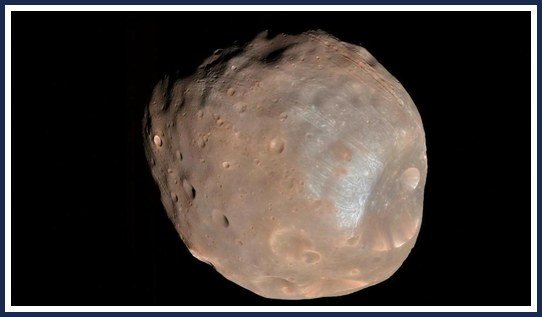
Why in News: Japan’s space agency JAXA launched the Martian Moons eXploration (MMX) probe on 20 Oct 2026 on an H3 rocket from the Tanegashima Space Center. It aims to be the first mission to bring back samples from a moon of Mars (Phobos).
Mission snapshot
| Item | Detail |
|---|---|
| Partners | JAXA with NASA, ESA, CNES (France), DLR (Germany) and the Australian Space Agency; Mitsubishi Electric; about 20 universities and institutes |
| Launch | 20 Oct 2026, about 4:41 am JST (≈1:11 am IST), H3 rocket, Tanegashima |
| Size & cost | Five-ton spacecraft; about USD 578 million |
| Arrival | Around August 2027; enters a quasi-satellite orbit around Phobos |
| Landings | Two landings on Phobos in 2029 |
| Sample | At least 10 g from at least 2 cm below the surface; lander spends only about 2 hours drilling |
| Return | Leaves Mars region Nov 2030; capsule lands in Australia, July 2031 |
| Design | Three modules – propulsion, exploration, sample return; 13 scientific instruments |
Why study Phobos and Deimos?
- Mystery of origin: nobody knows how the moons formed. Capture hypothesis – they are asteroids pulled in by Mars’s gravity (irregular shapes support this, but capture into a stable orbit is hard). Giant impact hypothesis – a large body hit Mars and the debris joined to form the moons.
- Bigger question: the answer will show how a habitable environment arose on rocky planets (Mercury, Venus, Earth, Mars).
- “Natural space station”: Phobos has gravity about 1/1,000th of Earth’s, so landing and take-off need little fuel – it could be a staging point for crewed Mars missions. MMX will also test autonomous navigation and landing in very weak gravity.
- Discovery: both moons were found in 1877 by Asaph Hall at the US Naval Observatory; they are named after the sons of Ares, the Greek god of war (Roman: Mars).
IDEFIX rover
- A small four-wheeled Franco-German rover built by CNES and DLR with JAXA, named after the dog of the comic hero Asterix. It will be the first vehicle to travel across Phobos.
- It bounces over the surface (very weak gravity) and spends 100 days studying the terrain to find safe landing and sampling sites before the main four-legged lander arrives.
Race for Mars samples
- USA: NASA’s Perseverance rover (on Mars since 2021) has collected samples, but the Mars Sample Return plan was effectively cancelled after a January vote by Congress.
- China: Tianwen-3 is planned for launch around 2028, aiming to return Mars samples as early as 2031 – possibly before MMX’s return.
- Japan’s record: Hayabusa returned samples from asteroid Itokawa (2010); Hayabusa2 brought 5.4 g from Ryugu (2020). MMX is harder as it must go deep into Mars’s gravity before returning.
GS Facts
- Names: Phobos = “fear”, Deimos = “dread”. Phobos (about 22 km wide) is the larger and orbits much closer to Mars.
- India: ISRO’s Mars Orbiter Mission (Mangalyaan) launched 5 Nov 2013, reached Mars orbit 24 Sep 2014 – India was the first country to do so on its first attempt.
- Other sample returns: NASA’s OSIRIS-REx brought samples from asteroid Bennu (2023).
- H3 is Japan’s flagship launch vehicle (successor to H-IIA).
⚠ Exam Trap:
- MMX lands only on Phobos; Deimos gets flybys only.
- It is a sample return from a Mars moon, not from Mars’s surface.
- IDEFIX is the small rover; the main craft is a stationary lander.
- Hayabusa = Itokawa (2010); Hayabusa2 = Ryugu (2020).
DEFENCE
★ Important One-liners
- AUSTRAHIND 2026 (5TH EDITION) BEGINS AT THIRUVANANTHAPURAM: The India–Australia joint Army exercise runs 19 Oct–1 Nov 2026 at the Foreign Training Node, Thiruvananthapuram (Kerala) with about 120 personnel each.
- The Indian contingent is led by the Garhwal Rifles with other arms and services; the Australian contingent is from the 13 Brigade.
- Theme: “Joint Sub-Conventional Operations in Island and Coastal Environment under Chapter VII of the UN Mandate”.
- Instituted in 2022, it rotates annually between the two countries; the 4th edition was held at Irwin Barracks, Perth (13–26 Oct 2025).
- Static: Chapter VII of the UN Charter deals with action on threats to peace and acts of aggression; the Garhwal Rifles Regimental Centre is at Lansdowne (Uttarakhand); India–Australia also hold AUSINDEX (naval) and meet in Malabar (Quad).
INTERNATIONAL
Europe’s Autumn of Protests – Fuel, Schools and Housing
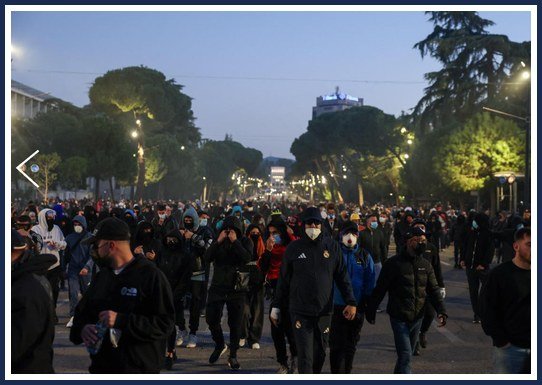
Why in News: A wave of street protests has hit Europe over fuel prices, poor schools, weak public services and a housing crisis. There have been arrests, looting and violence in France, Italy and Albania, and tent camps in Spain and Portugal.
Why are people angry?
- Everyday costs: rising fuel and living costs, dilapidated schools, shrinking public services and unaffordable rents. Sociologist María Silvestre (University of Deusto, Spain) says young people feel disappointed with the social model and powerless – a “spark” can then push them onto the streets.
- Political backdrop: France, Italy and Spain are close to pivotal elections; far-right parties have gained in Germany; Europe faces a critical moment on Ukraine support (Trump making overtures to Putin) and Russia is blamed for hybrid attacks in NATO countries.
- Trump’s post (19 Oct): he blamed migrants (“The migrants have taken over France…”). French authorities and police have not blamed immigrants; black-clad masked agitators fomented some violence.
France
- High-schoolers have held blockades for 3+ weeks demanding more resources for understaffed schools, especially in poorer areas. The CGT union and activists then joined, widening demands to living costs and public services.
- Weekend unrest (17–18 Oct): hundreds of thousands marched peacefully, but 2,400 arrests, looting in Paris, Marseille, Lyon, Bordeaux; in Limoges the 19th-century City Hall was nearly destroyed; some schools set on fire; firebombs and tear gas; hundreds injured.
- President Emmanuel Macron condemned the violence and, in a rare televised address (18 Oct), accused far-left activists of trying to cause chaos.
Spain and Portugal
- Teachers’ strike: school teachers began an indefinite strike in Madrid for better pay and conditions.
- Puerta del Sol camp (Madrid): tents for weeks after the eviction of Maricarmen Abascal (87), who later died in hospital. Smaller camps in other cities; big protests in Barcelona (overtourism).
- Politics: the government’s affordable-housing measures failed in Parliament, so PM Pedro Sánchez announced a snap election for November; a general strike in November will be the first in 14 years.
- Numbers: minimum wage €1,221; average rent for an 80 sq m flat about €1,130. Portugal: similar housing protests in Lisbon and Porto.
Italy
- “Italia in Piazza” (Italy in the Streets): demands for jobs, healthcare, education, housing and higher wages. Inflation hit 4.2% in September vs the eurozone’s 3.8%.
- Violence in Turin, Bologna and Milan; in Milan 271 arrested in two days (mostly minors) and 14 security personnel injured. A new “Oct. 17 Movement” plans protests every Saturday at 3 pm, starting in Milan.
Albania and Serbia
- Albania: protests in Tirana entered a 6th day (18 Oct). Students joined the “Flamingo” movement demanding PM Edi Rama resign; it is named after a flamingo habitat where the government allowed a luxury tourism project linked to Jared Kushner. Rama says protesters were “radicalized” by antifa; they demand an end to corruption and protection of healthcare, education and pensions.
- Serbia: students who led anti-corruption protests for nearly two years challenge Aleksandar Vučić in early parliamentary elections on 25 Oct; the Students’ List is believed to be close, raising fears of violence.
GS Facts
- Eurozone = EU countries using the euro. Albania and Serbia are not EU members (candidates); Albania joined NATO in 2009.
- 15-M / Indignados: the 2011 anti-austerity protests also began at Puerta del Sol, Madrid.
- CGT (Confédération Générale du Travail) is a major French trade union federation. Snap election = early election before the term ends.
- Capitals: Paris, Rome, Madrid, Lisbon, Tirana, Belgrade.
⚠ Exam Trap:
- “Flamingo” = Albania; “Italia in Piazza” and “Oct. 17 Movement” = Italy.
- Puerta del Sol is in Madrid (Spain), not Portugal.
- Spain’s general strike is the first in 14 years; Serbia votes on 25 Oct.
✍ Mains Angle (UPSC)
Q. “Youth-led protests across Europe point to a crisis of the social model.” Discuss.
Value points: cost-of-living squeeze, housing unaffordability, education and public-service decline, rise of far-right and populism, security and Ukraine pressures, impact on EU unity and on India (trade, students, diaspora, travel advisories).
ART & CULTURE
Sirpur on UNESCO’s Tentative List
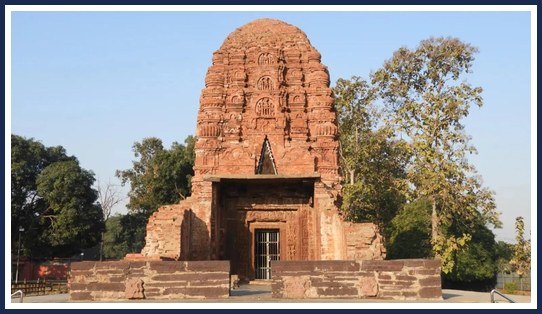
Why in News: Sirpur (Chhattisgarh), an ancient site with Hindu, Buddhist and Jain remains from the 5th to 12th century CE, has been added to UNESCO’s Tentative List. This brings it one step closer to World Heritage Site status.
Where and what is Sirpur?
- Location: eastern bank of the Mahanadi, Mahasamund district, about a two-hour drive from Raipur.
- History: once a flourishing capital of Dakshina Kosala under the Panduvanshi and later the Somavamshi kings.
- Rare mix: one of the few places in India where Hindu, Buddhist and Jain monuments stand within one urban setting – 22 Shiva temples, 5 Vaishnava temples, 10 Buddhist viharas, 3 Jain viharas, plus palaces, markets, homes, stupas, meditation cells and water-management systems.
- Lakshmana Temple: dedicated to Vishnu, built around the 7th century; one of India’s finest brick temples.
What is the Tentative List? What next?
- Simple idea: it is the first, preliminary stage. A country must put a site on its Tentative List before it can nominate it. The site must show Outstanding Universal Value (OUV).
- Next steps (ASI): within about one year prepare a detailed dossier – buffer zones, conservation plans, management systems, OUV, authenticity, integrity. India may invite an advisory mission of UNESCO/ICOMOS/IUCN; public consultation helps. After technical review in India, the dossier goes to UNESCO’s World Heritage Centre for evaluation.
Development plans
- Four thematic clusters: Buddhist monastic, Hindu temple, civic–administrative and Riverine Sacred Landscape, joined by a primary heritage pathway with secondary “last-mile” paths to each monument.
- Visitor plans: only battery-operated vehicles; eco-friendly lawns, gardens and tree-lined avenues; promotion of local art, crafts and performances.
- Officials quoted: Dhammshil Ganvir (CEO, Special Area Development Authority, Sirpur), M Kalimuthu (Superintending Archaeologist, ASI Raipur circle), Rahul Tiwari (Asst. Superintending Archaeological Engineer).
GS Facts
- World Heritage Convention: adopted by UNESCO in 1972; sites are cultural, natural or mixed.
- Sirpur was earlier called Sripura. The Lakshmana Temple was built by Queen Vasata, mother of the Panduvanshi king Mahashivagupta Balarjuna.
- The Chinese pilgrim Xuanzang is believed to have visited Dakshina Kosala in the 7th century.
- Mahanadi rises in Chhattisgarh (Sihawa, Dhamtari) and flows through Odisha to the Bay of Bengal.
⚠ Exam Trap:
- Tentative List ≠ World Heritage Site – it is only the first step.
- Sirpur’s Lakshmana Temple (brick, Vishnu, 7th c.) is different from the Lakshmana Temple at Khajuraho (stone, Chandela, 954 CE).
- Dakshina Kosala = present-day Chhattisgarh region; river = Mahanadi.
SPORTS
★ Important One-liners
- ARSHI GUPTA, 10, BECOMES WORLD’S YOUNGEST TO WIN THE ROTAX MAX CHALLENGE MINI TITLE: The Faridabad karter won the Mini Max category of the FMSCI RMC India National Karting Championship 2026 at Bengaluru (19 Oct), after her 2025 Micro Max title – making her one of the rare drivers to win two successive Rotax MAX Challenge categories in consecutive years.
- She is India’s youngest National Karting Champion and spoke at a press conference in New Delhi.
- Static: FMSCI (Federation of Motor Sports Clubs of India) is India’s national motorsport body affiliated to the FIA; the Rotax MAX Challenge is a global karting series using Rotax engines.
RAPID REVISION
| Topic | Key fact |
|---|---|
| CIML 61st meeting | India hosts for the first time, 26–28 Oct 2026, New Delhi; OIML founded 1955 |
| India–NZ FTA | In force 20 Oct 2026; NZ opens 100% (8,284) lines; India about 70% |
| FTA timeline | Launched 16 Mar 2025 → concluded 22 Dec 2025 → signed 27 Apr 2026 |
| FTA people/investment | 5,000 TEE + 1,000 Working Holiday visas; USD 20 bn investment; NZ$7 bn trade goal by 2030 |
| APP centres | Kiwifruit: Pfutsero (Nagaland), Magra (Uttarakhand); Apples: HP, Uttarakhand; Honey: UP, West Bengal |
| Agri Welfare Portal | Launched 19 Oct 2026 by Chouhan; PM-KISAN, AgriStack, PMFBY; KVK training |
| JAXA MMX | Launched 20 Oct 2026 on H3; arrives Aug 2027; at least 10 g from Phobos; back July 2031 |
| IDEFIX | CNES + DLR rover; first vehicle on Phobos; 100 days |
| AUSTRAHIND 2026 | 5th edition; 19 Oct–1 Nov; Thiruvananthapuram; Garhwal Rifles & 13 Brigade |
| Europe protests | France 2,400 arrests; Spain snap poll Nov + general strike; Italy inflation 4.2%; Albania “Flamingo”; Serbia votes 25 Oct |
| Sirpur | UNESCO Tentative List; Mahanadi, Mahasamund (Chhattisgarh); Lakshmana Temple 7th c.; dossier in 1 yr |
| Arshi Gupta | Aged 10, Faridabad; Mini Max 2026, Micro Max 2025 |
TOP 5 QUIZ OF THE DAY
✎ Test yourself – 5 most important MCQs of the day
Q1. With reference to the India–New Zealand FTA, consider:
1. New Zealand eliminates duties on all its tariff lines for Indian goods from entry into force.
2. India has extended concessions on all its tariff lines to New Zealand.
3. Dairy products and sugar are excluded from India’s concessions.
Which of the statements given above is/are correct?
- (a) 1 and 2 only
- (b) 2 and 3 only
- (c) 1, 2 and 3
- (d) 1 and 3 only
Q2. Regarding the upgraded Agri Welfare Portal, consider:
1. It was launched by the Union Agriculture and Farmers’ Welfare Minister.
2. It brings FPOs, PACS, scientists, researchers and startups onto a common platform.
3. It replaces the PM-KISAN scheme.
Which of the statements given above is/are correct?
- (a) 2 and 3 only
- (b) 1 and 3 only
- (c) 1, 2 and 3
- (d) 1 and 2 only
Q3. About the MMX mission, consider:
1. It aims to bring back samples from Phobos.
2. It will land on both Phobos and Deimos.
3. The IDEFIX rover is jointly developed by CNES and DLR.
Which of the statements given above is/are correct?
- (a) 1 and 2 only
- (b) 2 and 3 only
- (c) 1 and 3 only
- (d) 1, 2 and 3
Q4. Consider the pairs (Protest movement – Country):
1. “Flamingo” movement – Albania
2. “Italia in Piazza” – France
3. Puerta del Sol camp – Portugal.
How many of the pairs given above are correctly matched?
- (a) Only one pair
- (b) Only two pairs
- (c) All three pairs
- (d) None of the pairs
Q5. About Sirpur, consider:
1. Its Lakshmana Temple is a brick temple dedicated to Vishnu.
2. It was once the capital of Dakshina Kosala under the Panduvanshi and later the Somavamshi kings.
3. Inclusion in the Tentative List means it is now a World Heritage Site.
Which of the statements given above is/are correct?
- (a) 1 and 2 only
- (b) 2 and 3 only
- (c) 1 and 3 only
- (d) 1, 2 and 3
ANSWER KEY & EXPLANATIONS
Q1 – (d): India offers access on about 70% of tariff lines and keeps about 30% (dairy, sugar, edible oils, onions, chana etc.) excluded, so (2) is wrong.
Q2 – (d): The portal is only a single-window gateway to schemes such as PM-KISAN, AgriStack and PMFBY – it does not replace them.
Q3 – (c): MMX will land only on Phobos (two landings in 2029); Deimos will be observed through flybys.
Q4 – (a): Only pair 1 is correct. “Italia in Piazza” is Italy; Puerta del Sol is in Madrid, Spain.
Q5 – (a): The Tentative List is only a preliminary stage; World Heritage status comes after nomination and evaluation.
— Keep Reading, Keep Revising —
Free daily PDFs: ashiqcurrentaffairs.com