How to use this material
Exam Tags & Source: Syllabus mapping for UPSC / TNPSC / SSC-RRB + clickable source link
Why in News: The news in 2–3 lines – read this first
▸ Sub-headings: Simple explanation + all facts, figures, names and years
GS Facts: Static GK linked to the news (blue box)
⚠ Exam Trap: Common confusions examiners use in options (orange box)
✎ Top 5 Quiz: Day’s 5 most important MCQs at the end – tap a question to reveal the answer
✍ Mains Angle: Probable Mains question with value points (purple box)
★ Important One-liners: Short news under each theme + Top 5 Quiz + Rapid Revision
Here are the daily current affairs of 20 November 2026 in English for UPSC, TNPSC, SSC, RRB and Bank exams: the UNFPA State of World Population 2026 (India at 147.66 crore), the IEA World Energy Outlook 2026 (India to lead oil demand growth), Goyal’s TRUST agenda for India–US ties, India concluding talks to join Horizon Europe, the Climate Risk Index 2027 (India 10th) and the black carbon peer network at COP31. Each topic comes with exam tags, GS facts, exam traps, a Mains angle, a rapid revision table and a quiz – useful for UPSC, TNPSC, SSC, RRB and Bank exams.
Quick Answer – Top Current Affairs Today (20 Nov 2026)
- UNFPA SWOP 2026: India is the most populous country at 147.66 crore; TFR 1.9 (replacement level 2.1); 26% of Indians are aged 10–24.
- IEA WEO 2026: India will lead global oil demand growth – about 3% a year to 2035, adding 1.3 million barrels per day.
- TRUST agenda: Piyush Goyal’s five-point India–US economic partnership agenda; $1 trillion export target for FY 2026-27.
- Horizon Europe: India and the EU concluded negotiations for India’s association (Pillar II).
- Climate Risk Index 2027: India is 10th most affected over 1996–2025 and 12th for 2025 (Germanwatch, COP31).
- Black carbon: Mexico, Panama and Cambodia joined the peer network, now 12 countries.
- BSIP study: Himalayan marmot droppings work as a biological archive of past vegetation and climate.
SOCIAL ISSUES
UNFPA State of World Population 2026: India at 147.66 Crore; ‘Youth Moment’ as 1 in 4 Indians Are 10–24
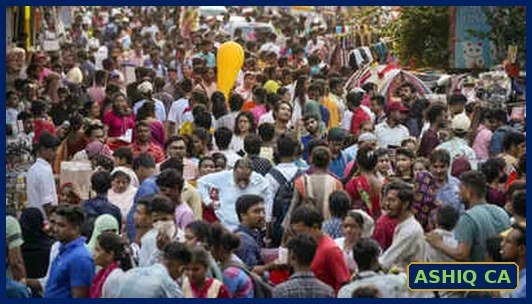
Why in News: The UN Population Fund (UNFPA) released the State of World Population (SWOP) Report 2026. India remains the most populous country with 147.66 crore (1.47 billion) people; more than 1 in 4 Indians are aged 10–24 – India’s “youth moment”. India’s population will rise to about 170 crore before it starts falling, around 40 years from now.
Key terms made easy
- Total Fertility Rate (TFR): Average number of children a woman has in her lifetime
- Replacement level: TFR 2.1 – the level at which a population just replaces itself; below it, population will eventually fall
- Demographic dividend: Economic boost when the working-age share (15–64) is large – the ‘window’ must be used by investing in health, education and jobs
- Doubling time: Years needed for the population to double at current growth – India 81 years, world 84 years
India vs China vs World (2026)
| Indicator | India / China / World |
|---|---|
| Population | 147.66 cr / 141.29 cr / 8.3 billion |
| TFR | 1.9 / 1.0 / – |
| Life expectancy (M/F) | 71 / 74 / 76 / 82 / 71 / 76 |
| Age 15–64 | 69% / 70% / – |
| Age 65+ | 8% / 15% / – |
| India – age group | Share |
|---|---|
| 0–14 | 24% |
| 10–19 | 17% |
| 10–24 | 26% |
| 15–64 | 69% |
| 65+ | 8% |
Health and gender data (NFHS-5 → NFHS-6)
| Indicator | Value |
|---|---|
| Maternal Mortality Ratio | 87 per 1 lakh live births (2022–24) |
| Births by skilled personnel | 89.4% → 91.3% |
| Unmet need for family planning | 9.4% → 8.5% |
| Modern contraceptive use | 56.4% → 52.7% (fell) |
| Traditional method use | 10.3% → 16.4% (rose) |
| Intimate partner violence (past 12 months) | 29.2% → 22.3% |
| Women with own mobile phone | 64% (urban 77.6%, rural 57.4%) |
| UHC service index (2023) | 69/100 |
| TFR across States (NFHS-6) | From 1.0 (Sikkim) to 2.7 (Bihar); national 2.0 |
Demographic Futures Survey 2026
- Coverage: 108,000+ adults in 73 countries, incl. 1,722 in India
- India findings: 83% feel positive about the future; women 18–39 say the ideal family size is 2.1 children; ~85% of childless people aged 35–39 want to be parents
GS Facts
- UNFPA – UN agency for sexual and reproductive health, est. 1969, HQ New York
- India overtook China as the most populous nation in 2023
- SDG 3.1: global MMR below 70 per 1 lakh by 2030
- India’s National Population Policy, 2000
- NFHS is conducted by IIPS, Mumbai for MoHFW.
⚠ Exam Trap
- UNFPA puts India’s TFR at 1.9 (below replacement 2.1); NFHS-6 national TFR is 2.0. Sikkim has the lowest TFR (1.0), Bihar the highest (2.7). Modern contraceptive use fell while traditional method use rose. China’s TFR is only 1.0.
✍ Mains Angle
Q. India’s demographic dividend is a time-bound opportunity. Discuss with reference to the UNFPA State of World Population Report 2026.
Value points: 26% aged 10–24, 69% working age; TFR 1.9 – window closing in 3–4 decades; need for skills, health, jobs, women’s workforce participation; regional gaps (Bihar 2.7 vs Sikkim 1.0); ageing (8% 65+) and future care needs; youth-friendly SRH services; falling modern contraceptive use.
★ Important One-liners
- WORLD TOILET DAY – 19 NOVEMBER: World Toilet Day is observed on 19 November – an official UN observance since 2013 – to raise awareness of the global sanitation crisis and support SDG 6 (clean water and sanitation for all by 2030). Theme 2026: ‘Safe toilets. Equal futures.’ Static: India’s Swachh Bharat Mission (Gramin) launched on 2 October 2014; aim of SBM-G Phase II (ODF Plus): keep villages open-defecation free and manage solid and liquid waste; the day was started by the World Toilet Organization (founded 2001 by Jack Sim, Singapore). Source: News on AIR ↗
ECONOMY
IEA World Energy Outlook 2026: India to Lead Global Oil Demand Growth – 3% a Year Till 2035

Why in News: The International Energy Agency (IEA), in its World Energy Outlook (WEO) 2026, said India will lead global oil demand growth over the next decade – rising about 3% a year to 2035 and adding 1.3 million barrels per day (mb/d), about half of the total increase in emerging and developing economies.
Key concept
- STEPS: Stated Policies Scenario – IEA’s projection based on the policies governments have actually announced (not ideal targets)
Key numbers
| Indicator | Projection |
|---|---|
| India oil demand growth | 3% a year to 2035 (Africa 2.8%, SE Asia 1.4%) |
| India energy demand growth | 2.5% a year – triple the global rate |
| Global oil demand | 102 mb/d (2025) → 106 mb/d by 2035; dips in 2026 due to West Asia war |
| Advanced economies | Oil demand falls 0.7% a year; steepest fall in the EU (EVs) |
- India’s drivers: 12,000+ new cars a day, 33% more built space, 200 million more air-conditioners, more iron, steel and cement
- Hormuz shock: IEA chief Fatih Birol: the Strait of Hormuz crisis is a huge shock; energy world will not return to the old normal – security and affordability now matter more
GS Facts
- IEA – set up in 1974 after the 1973 oil crisis, under the OECD framework, HQ Paris; India is an Association country (2017), not a full member
- India imports about 85% of its crude oil
- Strategic Petroleum Reserves at Visakhapatnam, Mangaluru and Padur (ISPRL)
- Strait of Hormuz links the Persian Gulf with the Gulf of Oman.
⚠ Exam Trap
- India will add the most to oil demand, but the US may also see a rise; the EU sees the steepest fall. India’s energy demand grows at 2.5%, oil demand at 3%. IEA is not a UN body.
✍ Mains Angle
Q. Rising oil demand and geopolitical shocks make energy security India’s central challenge. Discuss.
Value points: 3% annual oil demand growth, 85% import dependence; Hormuz crisis; strategic reserves and diversification of suppliers; EVs, green hydrogen, biofuels (E20), solar; cooling demand (200 million ACs) and efficiency; balancing affordability with climate goals.
Piyush Goyal’s Five-Point ‘TRUST’ Agenda for India–US Economic Partnership; $1 Trillion Export Target

Why in News: At the 23rd Indo-US Economic Summit (by the Indo-American Chamber of Commerce – IACC, New Delhi; theme ‘One Shared Future’), Commerce Minister Piyush Goyal called India and the US natural partners in trusted supply chains and set out a five-point TRUST agenda.
TRUST agenda
- T – Trusted supply chains: Turn supply chains into reliable, values-based networks
- R – Raising talent: Dual degrees, university links; US universities to come to India
- U – Unlocking Bharat beyond metros: Take growth to the Northeast and eastern States (Bihar, Jharkhand, UP, AP, Odisha, Chhattisgarh)
- S – Speaking candidly: Business and government to talk openly about problems
- T – Tracking outcomes: Monitor results; industry to hold government accountable
Export and trade numbers
| Item | Figure |
|---|---|
| Export target FY 2026-27 | $1 trillion (~16% growth) |
| Exports Apr–Sep 2026 | $480 billion |
| Exports FY 2025-26 (record) | $863 billion |
| October 2026 | Highest-ever monthly exports – ~$90 billion |
| India–Italy trade | $12 bn now → target €20 bn by 2029; €50 bn after India–EU FTA |
| India–Egypt | To explore a Preferential Trade Agreement / FTA |
- Other points: First Quad Business Leaders’ Forum in early 2027; US firms setting up Global Capability Centres (GCCs); JAM trinity and UPI plug leakages; India–EU FTA expected to be implemented in the first half of 2027; US marks its 250th year of independence (1776–2026)
GS Facts
- JAM trinity = Jan Dhan bank accounts + Aadhaar + Mobile – base of Direct Benefit Transfer
- GCC – offshore unit of a multinational doing tech, R&D or business work (India has 1,700+ GCCs)
- India–US government tech initiative is also called TRUST (2025; earlier iCET) – different from Goyal’s TRUST agenda.
⚠ Exam Trap
- Goyal’s TRUST here is a 5-point business agenda (Trusted supply chains, Raising talent, Unlocking Bharat, Speaking candidly, Tracking outcomes). The export target $1 trillion is for FY 2026-27 (goods + services). India–Italy target is in euros (€20 bn).
★ Important One-liners
- ANTHROPIC’S IPO RAISES $81.31 BILLION – LARGEST STOCK-MARKET DEBUT ON RECORD: US AI company Anthropic raised $81.31 billion in its Initial Public Offering (IPO), priced at $83 a share – above the expected range – overtaking SpaceX’s June 2026 IPO to become the largest stock-market debut on record. It values the company at about $1.5 trillion; it is also raising $26 billion through a private placement. It is the first major frontier AI model developer to go public. Concept: An IPO is when a private company sells shares to the public for the first time and gets listed on a stock exchange. Source: DD News ↗
- AMAZON TO INVEST ADDITIONAL $7 BILLION IN INDIA’S RENEWABLE ENERGY BY 2030: Amazon will invest an additional $7 billion in renewable energy in India by 2030, on top of $4 billion already committed. It announced 4 new projects of 934 MW: 234 MW wind in Karnataka (its largest wind project in Asia), 200 MW wind-solar hybrid (Karnataka), 300 MW solar (Madhya Pradesh) and 200 MW solar (Rajasthan) – via power purchase agreements (PPAs). Its contracted projects will exceed 2 GW, equal to the yearly use of 35 lakh+ Indian homes. Portfolio: 14 utility-scale projects + 43 on-site solar installations. Concept: A PPA is a long-term contract to buy electricity from a power producer at a fixed price. Static: India’s goal – 500 GW non-fossil capacity by 2030, net zero by 2070. Source: The Hindu ↗
AGRICULTURE
★ Important One-liners
- 14TH INDIAN FISHERIES AND AQUACULTURE FORUM BEGINS AT ICAR-CIFA, BHUBANESWAR: The 14th Indian Fisheries and Aquaculture Forum (14IFAF), a major international scientific conference, began at ICAR–Central Institute of Freshwater Aquaculture (ICAR-CIFA), Bhubaneswar (Odisha) (18–20 November 2026). Organisers: Asian Fisheries Society Indian Branch (AFSIB), ICAR-CIFA, Department of Fisheries (GoI), National Fisheries Development Board (NFDB), Odisha’s FARD Department and the Association of Aquaculturists. Static: India is the 2nd-largest fish producer and 2nd in aquaculture in the world; PM Matsya Sampada Yojana (2020) – Aim: boost fish production, exports and fishers’ incomes (Blue Revolution); NFDB HQ – Hyderabad; World Fisheries Day – 21 November. Source: PIB ↗
SCIENCE & TECH
India Concludes Negotiations to Join EU’s Horizon Europe Research Programme
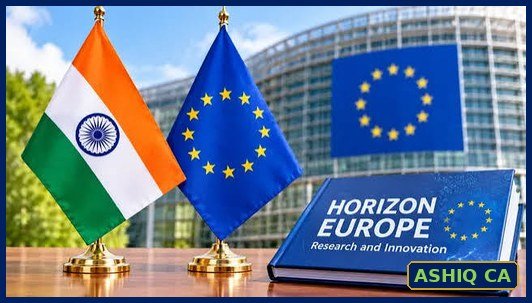
Why in News: India and the European Union have completed negotiations for India’s association with Horizon Europe – the EU’s flagship research and innovation programme. Indian researchers, institutions and companies will be able to apply directly for EU funding and lead multinational research projects.
About Horizon Europe
- Aim: Fund research and innovation to solve global challenges and boost Europe’s industrial competitiveness
- Period: 2021–2027; budget about €95.5 billion – the world’s largest research funding programme
- India’s part: Pillar II – ‘Global Challenges and European Industrial Competitiveness’ – the largest pillar
- Pillar II clusters: Health; digital (AI, semiconductors), industry and space; climate, energy and mobility; food and bioeconomy
What India gains
- Direct funding: Eligible Indian entities get money directly from the European Commission – not only as junior partners
- Access: European research consortia and cutting-edge infrastructure; talent mobility; co-development of critical technologies and standards
Timeline
| Date | Step |
|---|---|
| 27 Jan 2026 | India–EU Summit – exploration of association launched |
| 15 Jul 2026 | Formal negotiations began after the Trade and Technology Council (TTC) ministerial, Brussels |
| Nov 2026 | Negotiations concluded |
GS Facts
- India–EU Agreement on Science & Technology Cooperation – signed 2001
- India–EU Trade and Technology Council (TTC) – announced 2022; EU’s second TTC after the one with the US
- EU – 27 member countries; HQ Brussels
- Viksit Bharat 2047 – vision of a developed India by the 100th year of independence.
⚠ Exam Trap
- India joins Pillar II only (not the whole programme). Horizon Europe runs 2021–2027. Formal talks began after the TTC meeting (Brussels, July 2026), not at the G20.
DEFENCE
★ Important One-liners
- INDIA–MALAYSIA JOINT MILITARY EXERCISE HARIMAU SHAKTI 2026 BEGINS AT IPOH: The 6th edition of India–Malaysia joint military exercise HARIMAU SHAKTI began at Ipoh, Malaysia (19–30 November 2026) with 120 personnel from each side. Aim: practise sub-conventional (counter-terrorism) operations under Chapter VII of the UN Charter, in jungle and semi-urban terrain, using emerging technologies to improve interoperability. Held alternately in India and Malaysia; first edition – October 2012, Kuala Lumpur. Static: ‘Harimau’ means tiger in Malay; Chapter VII of the UN Charter allows the Security Council to take action (incl. force) against threats to peace; India–Malaysia naval exercise – Samudra Laksamana. Source: PIB ↗
- ISRAEL’S RAFAEL UNVEILS ‘SUPER ICE’ CRUISE MISSILE: Israel’s Rafael Advanced Defense Systems unveiled ‘Super Ice’, the next generation of its Ice Breaker cruise missile (2021–22). It carries a 1,000-pound warhead (four times Ice Breaker’s 250 pounds) yet is faster with longer range, and can be fired from Israel’s F-35, F-16 and F-15 jets. Concept: A cruise missile flies at low altitude like a small unmanned plane using wings and a jet engine (unlike a ballistic missile, which follows a high arc). Static: Rafael also makes Iron Dome and co-developed Barak missiles. Source: Jerusalem Post ↗
ENVIRONMENT
Climate Risk Index 2027: India 10th Most Affected Country by Extreme Weather in 30 Years

Why in News: The Climate Risk Index (CRI) 2027, released by Germanwatch at COP31 (Antalya, Türkiye), ranks India 10th most affected by extreme weather over 1996–2025 and 12th for 2025 alone. All countries ranked above India are much smaller in population.
How CRI is calculated (simple)
- Measures: Deaths, people affected and economic losses from extreme weather events
- Data: Disaster data from EM-DAT (International Disaster Database) + socio-economic data from the IMF and World Bank
Rankings
| List | Top countries |
|---|---|
| Most affected 1996–2025 | Dominica, Myanmar, Honduras (India 10th) |
| Most affected in 2025 | Jamaica, Sri Lanka, Spain, then Thailand, Philippines, Pakistan (India 12th) |
India’s 30-year record
| Indicator | Value |
|---|---|
| Extreme events | 436 |
| People affected | 1.2 billion |
| Economic loss | $170 billion |
- Major events: 1998 Gujarat and 1999 Odisha cyclones; Hudhud (2014), Amphan (2020); Uttarakhand floods (2013); floods in 13 States (2019); heatwaves near 50°C in 1998, 2002, 2003, 2015
- Insight: 9 of the top 10 long-term sufferers were hit repeatedly by tropical cyclones; Bahamas is the only high-income country in the top 10
GS Facts
- Germanwatch – German NGO (Bonn); also publishes the Climate Change Performance Index (CCPI) – India 28th in CCPI 2027
- EM-DAT is maintained by CRED, University of Louvain (Belgium)
- Loss and Damage Fund – agreed at COP27 (Sharm el-Sheikh, 2022)
- India’s NDMA – set up under the Disaster Management Act, 2005, chaired by the PM.
⚠ Exam Trap
- India is 10th for the 30-year period but 12th for 2025. CRI is by Germanwatch (not UNEP or IPCC). The top three long-term are Dominica, Myanmar, Honduras; the top three for 2025 are Jamaica, Sri Lanka, Spain.
Mexico, Panama and Cambodia Join Global Peer Network on Black Carbon at COP31
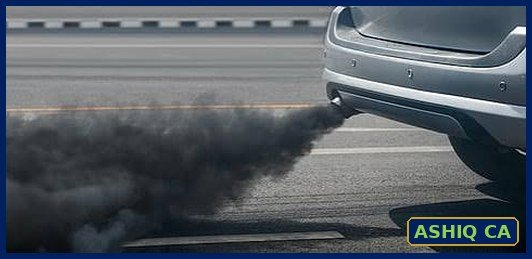
Why in News: Mexico, Panama and Cambodia joined the Peer Network on Sectoral Action on Black Carbon at COP31, taking the network to 12 countries. It coordinates action on black carbon and helps countries learn from each other. COP31 also saw $480 million announced to tackle super pollutants (+ $25 million for national programmes).
What is black carbon?
- Meaning: Soot – tiny black particles from incomplete burning of fuels and biomass
- Sources: Household cooking/heating fuels, wildfires, waste burning, transport (diesel), shipping
- Harm: Causes lung disease and asthma; absorbs sunlight and warms the air; darkens snow and ice so glaciers melt faster
- Super pollutants: Black carbon, methane, HFCs, tropospheric ozone – short-lived climate pollutants that, together, cause about half of global warming; cutting them gives quick climate benefits
Country actions
- Mexico: First country to include black carbon in its NDC – target 51% cut by 2030
- Others: Canada – electrification strategy; Nigeria – curbs on farm burning and clean cooking in NDC; Uganda – drafting a National Black Carbon Action Plan
- Nepal’s warning: Foreign Minister Shisir Khanal described a ‘Himalayan Tsunami’ of glacier collapse and urged cuts in short-lived pollutants
GS Facts
- Climate and Clean Air Coalition (CCAC) – launched 2012 by UNEP and six countries to cut short-lived climate pollutants; India joined in 2019
- Kigali Amendment (2016) to the Montreal Protocol phases down HFCs; India’s target: freeze 2028, cut 85% by 2047
- India’s PM Ujjwala Yojana (2016) reduces black carbon from cooking.
⚠ Exam Trap
- Black carbon is a particle (aerosol), not a gas; it stays in the air only days to weeks. Mexico was first to put it in its NDC. The network now has 12 members (9 + 3).
★ Important One-liners
- NEW PUC CERTIFICATE RULES: LONGER VALIDITY FOR NEWER BS-VI VEHICLES: MoRTH amended sub-rule (7) of Rule 115 of the Central Motor Vehicles Rules, 1989, linking the validity of the Pollution Under Control Certificate (PUCC) to a vehicle’s age and emission standard (in force from 19 November 2026). New validity: BS-I, BS-II, BS-III – 3 months; BS-IV – 6 months; BS-VI non-transport – 3 years (up to 6 years old), 1 year (6–10 years), 6 months (10+ years); BS-VI transport – 2 years (up to 6 years), 1 year (6–10 years), 6 months (10+ years). Aim: test older, more polluting vehicles more often and reduce the burden on owners of newer, cleaner vehicles. Existing PUCCs follow the new rules at their first renewal after 19 Nov 2026. Static: BS = Bharat Stage emission norms (based on Euro norms); India jumped from BS-IV to BS-VI on 1 April 2020, skipping BS-V; Motor Vehicles Act – 1988. Source: The Hindu ↗
GEOGRAPHY
Himalayan Marmot Droppings Reveal Climate Clues from the High Himalaya: BSIP Study

Why in News: Scientists of the Birbal Sahni Institute of Palaeosciences (BSIP), Lucknow (autonomous institute under DST) studied pollen grains, fungal spores and elements in the faeces of the Himalayan marmot (Marmota himalayana) to learn about vegetation and climate change in the higher Himalaya. The study was published in PLOS ONE.
Concepts made easy
- Palaeo-environment: What the environment was like in the past; usually studied from lake sediments, peat and soil
- New idea: Marmot droppings act as a natural ‘biological archive’ – useful in dry, remote mountains where lakes and peat are rare
- Palynology: Study of pollen and spores; here combined with FESEM–EDS (electron microscope that also finds elements)
- Indicator species: A species whose condition signals changes in its environment – the marmot can indicate shifts in alpine vegetation and climate
Findings
- Diet: Mainly Artemisia, Asteroideae, Caryophyllaceae, Chenopodiaceae, Poaceae, Cyperaceae – typical alpine-steppe plants
- Study areas: Pensila Pass and Rimkhim areas of the Himalaya
- Use: Gives a modern reference for future studies of past climate and of coprolites (fossil dung); helps conserve the snow leopard, for which marmots are key prey
Himalayan marmot – quick facts
| Item | Detail |
|---|---|
| IUCN Red List | Least Concern |
| Wildlife (Protection) Act, 1972 (amended 2022) | Schedule I (highest protection) |
| CITES | Appendix III (listed by India) |
| Altitude | 3,000–5,500 m – alpine meadows, cold deserts (above tree line, below snow line) |
| States/UTs | Ladakh, J&K, Himachal Pradesh, Uttarakhand, Sikkim, Arunachal Pradesh |
GS Facts
- BSIP – founded in 1946 by palaeobotanist Birbal Sahni, Lucknow
- CITES Appendix III – species protected in at least one country that asks others for help in controlling trade
- After the 2022 amendment, the Wildlife Act has 4 schedules (I – highest protection; IV – CITES species)
- Snow leopard – IUCN Vulnerable; Schedule I.
⚠ Exam Trap
- The marmot is Least Concern on IUCN but in Schedule I of the Wildlife Act. It is on CITES Appendix III (not I or II). BSIP is under DST, not MoEFCC or ICAR.
INTERNATIONAL
★ Important One-liners
- MALAYSIA TO END VISA-FREE ENTRY FOR INDIANS FROM 1 JANUARY 2027: The Immigration Department of Malaysia (JIM) announced that the 30-day visa exemption for Indian nationals will end from 1 January 2027; Indians will need a visa before arrival, applying via the MyVISA portal from 1 December 2026 (fees non-refundable). The exemption was introduced on 1 December 2023 and extended to end-2026. In September, the Indian High Commission in Kuala Lumpur warned Indians not to use visa-free entry to seek jobs after agents made false job promises. Static: Malaysia – capital Kuala Lumpur; administrative capital Putrajaya; member of ASEAN. Source: The Hindu ↗
TAMIL NADU
★ Important One-liners
- TVK MLA V.S. BABU, WHO DEFEATED M.K. STALIN IN KOLATHUR, PASSES AWAY: Tamilaga Vettri Kazhagam (TVK) MLA V.S. Babu (75), who defeated DMK president and former CM M.K. Stalin in the Kolathur constituency in the 2026 Assembly election, died of cardiac arrest on 19 November 2026 in Chennai. He was first elected from Purasawalkam (2006, DMK); after the 2008 delimitation, Purasawalkam ceased to exist and its areas went largely to the new Kolathur seat. He later joined the AIADMK (2016) and TVK (2026). Static: A by-election to fill a vacant seat must be held within 6 months – Section 151A, Representation of the People Act, 1951 (unless the remaining term is less than one year); Delimitation is done by the Delimitation Commission (last based on Census 2001). Source: The Hindu ↗
APPOINTMENTS
★ Important One-liners
- ITU ELECTIONS: DOREEN BOGDAN-MARTIN RE-ELECTED SECRETARY-GENERAL; ADEL DARWISH ELECTED DEPUTY: At the ITU Plenipotentiary Conference 2026 (PP-26) in Doha, Qatar (till 27 November), member States re-elected Doreen Bogdan-Martin (USA) as ITU Secretary-General and elected Adel Darwish (Bahrain) as Deputy Secretary-General (90 of 177 votes). Elections also for directors of the three bureaux (Radiocommunication, Standardization, Development), the 12-member Radio Regulations Board and the 48-seat ITU Council. Static: ITU – UN agency for digital technologies / ICT; founded 1865 (oldest UN agency); HQ Geneva; 194 member States; allocates radio spectrum and satellite orbits; Bogdan-Martin is the first woman to head ITU (since 2023). Source: ITU ↗
- MANU BHAKER ELECTED TO ISSF ATHLETES COMMITTEE FOR 2026–2030: Double Olympic medallist pistol shooter Manu Bhaker was elected to the International Shooting Sport Federation (ISSF) Athletes Committee for 2026–2030. Her priorities: keep the men’s 25m rapid-fire pistol event in the Olympics and seek better prize money at ISSF World Cups. Static: Bhaker won two bronze medals at Paris 2024 (10m air pistol and 10m air pistol mixed team) – first Indian to win two medals at a single Olympics after independence; ISSF HQ – Munich, Germany. Source: ThePrint ↗
AWARDS
★ Important One-liners
- GRAÇA MACHEL RECEIVES INDIRA GANDHI PRIZE FOR PEACE, DISARMAMENT AND DEVELOPMENT 2025: Mozambican politician and women’s and children’s rights advocate Graça Machel received the 2025 Indira Gandhi Prize for Peace, Disarmament and Development (citation + ₹1 crore) on 19 November 2026 – Indira Gandhi’s 109th birth anniversary – at Jawahar Bhawan, New Delhi, from Sonia Gandhi (head of the Indira Gandhi Memorial Trust). Jury head: former NSA Shivshankar Menon. She was Mozambique’s first Minister of Education and Culture after independence (1975); wrote the landmark 1996 UN report on the impact of armed conflict on children; she is the only woman to have been First Lady of two countries – Mozambique (Samora Machel) and South Africa (Nelson Mandela, married 1998). Static: The prize was started in 1986 by the Indira Gandhi Memorial Trust. Source: The Hindu ↗
SPORTS
★ Important One-liners
- NINE INDIAN SPORTS STARS IN TIME100 NEXT INDIA LIST – FIRST INDIA EDITION: Nine Indian sports stars are in the first-ever TIME100 Next India list: Innovators – Vaibhav Sooryavanshi, Mirabai Chanu, Kumkum Mohod (Asian Games gold, archery); Phenoms – Lovlina Borgohain, D. Gukesh (world chess champion), Vithya Ramraj (women’s 400m hurdles national record); Leaders – Savita Punia (hockey goalkeeper); Advocates – Sania Mirza, Harmanpreet Kaur (women’s World Cup-winning captain). Source: News on AIR ↗
RAPID REVISION
| Topic | Key Fact to Remember |
|---|---|
| UNFPA SWOP 2026 | India 147.66 cr; TFR 1.9; 26% aged 10–24; 65+ = 8%; MMR 87; China 141.29 cr (TFR 1.0); world 8.3 bn |
| NFHS-6 (in SWOP) | TFR 2.0 (Sikkim 1.0 – Bihar 2.7); modern contraception 52.7% (↓); IPV 22.3% (↓) |
| World Toilet Day | 19 Nov; ‘Safe toilets. Equal futures.’; SDG 6 |
| IEA WEO 2026 | India oil demand +3%/yr to 2035 (+1.3 mb/d); energy demand 2.5%/yr; global oil 106 mb/d |
| TRUST agenda | Goyal: Trusted supply chains, Raising talent, Unlocking Bharat, Speaking candidly, Tracking outcomes |
| Export target | $1 trillion in FY27; FY26 – $863 bn; Apr–Sep FY27 – $480 bn |
| Anthropic IPO | $81.31 bn – largest ever; $83/share; valuation ~$1.5 trillion |
| Amazon RE | $7 bn more by 2030 (+$4 bn); 4 projects, 934 MW (Karnataka, MP, Rajasthan) |
| 14th IFAF | ICAR-CIFA, Bhubaneswar, 18–20 Nov |
| Horizon Europe | India joins Pillar II; EU’s flagship R&I (2021–27); direct EU funding |
| HARIMAU SHAKTI | India–Malaysia army; 6th edition; Ipoh, 19–30 Nov; UN Chapter VII |
| Super Ice | Rafael (Israel) cruise missile; 1,000-lb warhead |
| Climate Risk Index 2027 | Germanwatch; India 10th (1996–2025), 12th (2025); top: Dominica, Myanmar, Honduras |
| Black carbon | Mexico, Panama, Cambodia join peer network (now 12); Mexico – first to put BC in NDC (51% cut by 2030) |
| PUC rules | Rule 115(7) CMVR; BS-I–III 3 months; BS-IV 6 months; BS-VI non-transport ≤6 yrs – 3 years |
| Himalayan marmot | BSIP study – faeces as climate archive; IUCN LC; WPA Schedule I; CITES App. III |
| Malaysia visa | 30-day visa-free for Indians ends 1 Jan 2027; MyVISA portal |
| ITU PP-26 | Doha; Doreen Bogdan-Martin re-elected SG; Adel Darwish (Bahrain) – Deputy SG |
| Indira Gandhi Prize 2025 | Graça Machel (Mozambique); ₹1 crore |
| Sports | Manu Bhaker – ISSF Athletes Committee; 9 athletes in TIME100 Next India |
| TN | TVK MLA V.S. Babu (Kolathur) passes away |
TOP 5 QUIZ OF THE DAY
✎ Test yourself – 5 most important MCQs from the daily current affairs 20 November 2026. Tap a question to reveal the answer and explanation.
Q1. As per the UNFPA State of World Population Report 2026, consider the following statements about India: 1. India’s Total Fertility Rate is below the replacement level. 2. More than one in four Indians are in the 10–24 age group. 3. People aged 65 and above make up more than 15% of India’s population. Which of the statements given above are correct?
(a) 1 and 2 only (b) 2 and 3 only (c) 1 and 3 only (d) 1, 2 and 3
Answer: (a). TFR 1.9 (< 2.1); 26% aged 10–24. The 65+ share is only 8% (China’s is 15%).
Q2. According to the IEA’s World Energy Outlook 2026, which region/country is projected to see the fastest growth in oil demand till 2035?
(a) Africa (b) Southeast Asia (c) China (d) India
Answer: (d). India – about 3% a year, adding 1.3 mb/d by 2035; Africa (2.8%) and Southeast Asia (1.4%) follow.
Q3. Which of the following is NOT generally classified as a short-lived climate pollutant (super pollutant)?
(a) Black carbon (b) Methane (c) Hydrofluorocarbons (d) Carbon dioxide
Answer: (d). CO₂ is a long-lived greenhouse gas. Short-lived climate pollutants: black carbon, methane, HFCs, tropospheric ozone.
Q4. With reference to the Himalayan marmot (Marmota himalayana), consider the following statements: 1. It is listed as ‘Least Concern’ on the IUCN Red List. 2. It is listed in Schedule I of the Wildlife (Protection) Act, 1972. 3. It is listed in Appendix I of CITES. Which of the statements given above are correct?
(a) 1 and 3 only (b) 2 and 3 only (c) 1 and 2 only (d) 1, 2 and 3
Answer: (c). It is Least Concern (IUCN) and Schedule I (WPA), but listed in CITES Appendix III (by India), not Appendix I.
Q5. Consider the following statements about the International Telecommunication Union (ITU): 1. It was established in 1865 and is the oldest UN specialised agency. 2. Its headquarters is in Geneva. 3. Its Plenipotentiary Conference 2026 is being held in New Delhi. Which of the statements given above are correct?
(a) 1 and 3 only (b) 1 and 2 only (c) 2 and 3 only (d) 1, 2 and 3
Answer: (b). ITU (1865, Geneva) is the oldest UN agency. PP-26 is being held in Doha, Qatar; Doreen Bogdan-Martin was re-elected Secretary-General.
FAQs – 20 NOVEMBER 2026
What are the most important current affairs for UPSC on 20 November 2026?
The top items are the UNFPA State of World Population 2026 (India at 147.66 crore), the IEA World Energy Outlook 2026 (India to lead oil demand growth), Piyush Goyal’s TRUST agenda for India–US ties, India concluding negotiations to join Horizon Europe, the Climate Risk Index 2027 (India 10th) and the black carbon peer network at COP31.
What does the UNFPA State of World Population 2026 say about India?
India remains the most populous country with 147.66 crore people, a total fertility rate of 1.9 (below the replacement level of 2.1), and more than 1 in 4 Indians aged 10–24. The population will rise to about 170 crore before it starts falling, around 40 years from now.
What is Piyush Goyal’s TRUST agenda?
At the 23rd Indo-US Economic Summit, Commerce Minister Piyush Goyal set out a five-point TRUST agenda: Trusted supply chains, Raising talent, Unlocking Bharat beyond metros, Speaking candidly, and Tracking outcomes.
Where does India rank in the Climate Risk Index 2027?
India ranks 10th most affected by extreme weather over 1996–2025 and 12th for 2025 alone. The index is published by Germanwatch and was released at COP31.
What was concluded between India and the EU on Horizon Europe?
India and the European Union completed negotiations for India’s association with Horizon Europe (Pillar II), so Indian researchers, institutions and companies can apply directly for EU funding.
— Keep Reading, Keep Revising —
That completes the daily current affairs 20 November 2026.
Previous edition: Daily Current Affairs 19 November 2026
All editions: Daily Current Affairs 2026
Monthly magazine: AshiqPedia October 2026 (free PDF)
Free daily PDFs: ashiqcurrentaffairs.com