
How to use this material
Exam Tags & Source: Syllabus mapping for UPSC / TNPSC / SSC-RRB + clickable source link
Why in News: The news in 2–3 lines – read this first
▸ Sub-headings: Simple explanation + all facts, figures, names and years
GS Facts: Static GK linked to the news (blue box)
⚠ Exam Trap: Common confusions examiners use in options (orange box)
✍ Mains Angle: Probable Mains question with value points (purple box)
★ Important One-liners: Short news under each theme + Rapid Revision table. Highlighted = must-remember
✎ Top 5 Quiz: Day’s 5 most important MCQs at the end, with answer key
POLITY
Form 6 Row: Supreme Court to Examine Who Modified the Voter Enrolment Form
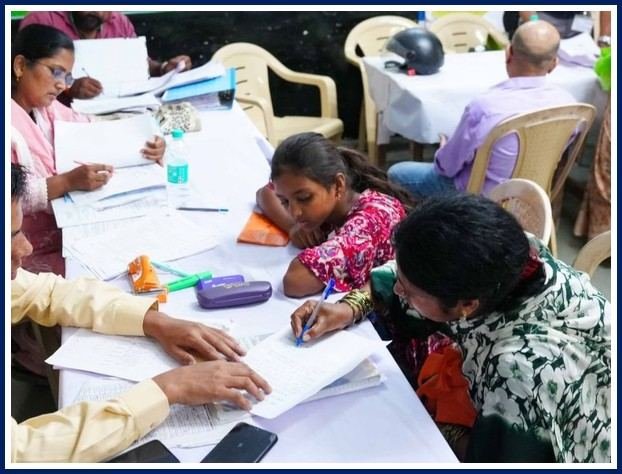
Why in News: Chief Justice of India Surya Kant said on Monday (5 October 2026) that the Supreme Court had not approved ‘any’ of the modifications to Form 6. A three-judge bench headed by the CJI, hearing petitions against Chief Election Commissioner Gyanesh Kumar, said the Court will examine who modified the form after receiving a report from the Election Commission (EC).
Background of the Controversy
- 12 July 2026: A media report revealed that the online version of Form 6 on ECINET carried a new declaration – introducing Special Intensive Revision (SIR) related questions into the form.
The new declaration asked applicants to choose one of three statements:
Their own name appeared in the electoral roll of the last SIR (early 2000s); or
A parent’s or grandparent’s name appeared in that roll; or
Neither their name nor their parents’ names appeared in it.
- Those whose names appeared were asked to give the Assembly Constituency number, part number (polling booth number) and serial number at which their father or mother was registered in the last SIR.
- Mismatch: The downloadable Form 6 on the EC portal did not have this declaration – only the online version did.
- 23 September 2026: An investigation reported that two Election Commissioners had flagged the changes as ‘illegal’ and ‘unauthorised’.
- Petitioners’ charge: The CEC allegedly manipulated the electoral roll deliberately, which falls outside official immunity and amounts to personal criminal liability.
- Related development: The first instance of bulk pre-printed Form 7s (used for objection/deletion) surfaced in Musheerabad constituency, Hyderabad on 1 October 2026.
Why is the Change Legally Questionable?
- Form 6 is a statutory form prescribed in the Registration of Electors Rules, 1960, framed by the Central Government in consultation with the EC under Section 28 of the Representation of the People Act, 1950.
- So, adding new eligibility questions through an online version, without amending the Rules, raises questions of legality and transparency.
What is Form 6?
- Statutory form for persons who have newly become eligible voters – after turning 18 years or acquiring Indian citizenship – and for deleted voters who want to apply afresh.
- It asks for the name and EPIC number of family members with whom the applicant currently resides.
Important Election Forms – Quick Table
| Form | Purpose |
|---|---|
| Form 6 | Inclusion of name of a new voter |
| Form 6A | Registration of overseas (NRI) electors |
| Form 6B | Submission of Aadhaar number (voluntary) |
| Form 7 | Objection to inclusion / deletion of a name |
| Form 8 | Correction, shifting of residence, replacement EPIC, marking as PwD |
Key Terms
- SIR (Special Intensive Revision): A fresh, door-to-door preparation of the electoral roll in which every elector’s details are verified through enumeration forms – unlike the routine annual Summary Revision.
- ECINET: The EC’s single integrated digital platform that brings together its many apps (Voter Helpline, cVIGIL, etc.).
- ERONET: The electoral roll management system used by Electoral Registration Officers (EROs).
Constitutional and Legal Framework
- Article 324: Superintendence, direction and control of elections vested in the Election Commission.
- Article 325: No person can be excluded from the electoral roll on grounds of religion, race, caste or sex.
- Article 326: Elections on the basis of adult suffrage (voting age reduced from 21 to 18 by the 61st Amendment Act, 1988).
- RP Act, 1950: Preparation of electoral rolls; RP Act, 1951: Conduct of elections.
- CEC and Other ECs (Appointment, Conditions of Service and Term of Office) Act, 2023: Selection Committee of PM + Leader of Opposition in Lok Sabha + a Union Cabinet Minister nominated by the PM; Section 16 protects CEC/ECs from legal proceedings for acts done in the discharge of official duties.
- Removal of CEC: In the same manner and on the same grounds as a Supreme Court judge [Art. 324(5)].
GS Facts: Election Commission of India
- Constituted on 25 January 1950 (hence National Voters’ Day since 2011)
- Multi-member body: briefly in 1989, permanently since 1993
- Present CEC: Gyanesh Kumar (26th CEC)
- HQ: Nirvachan Sadan, New Delhi.
⚠ Exam Trap: Form 6 is not created by the EC on its own – it is prescribed in the Registration of Electors Rules, 1960. Don’t confuse Form 6 (new voter) with Form 7 (objection/deletion) and Form 8 (correction/shifting).
✍ Mains Angle (UPSC)
Q. ‘Accuracy of electoral rolls must not come at the cost of inclusion.’ Examine in the context of roll-revision exercises like SIR.
Value points: Art. 326 right to vote, burden of documentary proof on the poor and migrants, transparency of form changes, role of judiciary and EC’s independence.
ECONOMY
Cabinet Approves ₹10,000 crore SME Growth Fund (SGF)
Why in News: The Union Cabinet, chaired by PM Narendra Modi, approved the Government of India’s commitment of ₹10,000 crore for establishing the SME Growth Fund (SGF) – to provide growth-oriented equity capital to India’s Small and Medium Enterprises (SMEs), as announced in Para 28 of the Union Budget 2026-27 by Finance Minister Nirmala Sitharaman.
What is the SME Growth Fund? (Simple Explanation)
- A growth-equity vehicle operating under the Alternative Investment Fund (AIF) framework.
- Provides ‘patient’ equity capital – i.e., long-term money invested as ownership stake (not loans), which does not demand quick returns.
- Targets high-potential SMEs with proven business viability and scalability, at critical inflection points of growth.
Why was it Needed?
- Existing equity funds mostly focus on early-stage enterprises and cover mainly Micro enterprises.
- A structural gap exists in long-term risk capital for SMEs that want to scale, innovate, expand internationally, adopt advanced technology or make acquisitions.
- Credit access has improved through various schemes, but equity (risk) capital remains scarce – often called the ‘missing middle’ problem.
Key Features
- Government commitment: Aggregate ₹10,000 crore to the AIF set up under the SGF framework.
- Priority: Majority allocation to small and medium manufacturing-focused enterprises.
- Regional focus: SMEs in industrial clusters of Tier-II and Tier-III cities will also be considered.
- Budget link: Part of the Union Budget 2026-27 package of equity, liquidity and professional support for the MSME ecosystem.
Expected Outcomes
- Help SMEs expand capacity, adopt advanced technology, enter international markets and integrate into Global Value Chains (GVCs).
- Improve productivity and export competitiveness; support balanced regional industrial development and local supply chains.
- Create a pipeline of ‘champion’ Indian companies – aligned with Viksit Bharat 2047.
What is an AIF?
- A privately pooled investment fund that collects money from investors to invest as per a defined policy; regulated under SEBI (AIF) Regulations, 2012.
- Category I: Venture capital, SME funds, social venture, infrastructure funds | Category II: Private equity, debt funds | Category III: Hedge funds (complex trading).
Related Government Funds
- Fund of Funds for Startups (FFS), 2016: ₹10,000 crore, managed by SIDBI – for startups.
- Self-Reliant India (SRI) Fund, 2020: ₹50,000 crore fund-of-funds (₹10,000 crore from Government) through NSIC Venture Capital Fund Ltd – equity for MSMEs.
GS Facts: MSME Sector
- Governed by the MSMED Act, 2006
- Registration on Udyam portal (since 1 July 2020)
- Contributes nearly 30% of GDP and about 45% of exports
- International MSME Day: 27 June
- Nodal: Ministry of MSME.
⚠ Exam Trap: SGF provides equity (ownership capital), not loans. It targets Small and Medium enterprises at the growth stage – not early-stage startups or micro units. The ₹10,000 crore is the Government’s commitment to the AIF.
✍ Mains Angle (UPSC)
Q. Access to equity, not just credit, is key to MSMEs ‘growing up’. Discuss.
Value points: Missing middle, high cost of debt, collateral constraints, role of AIFs and SME exchanges, scaling for GVC integration.
★ Important One-liners
- WORLD BANK RAISES INDIA’S FY27 GROWTH FORECAST TO 7.1%: In its latest India Development Update (6 October 2026), the World Bank raised India’s GDP growth forecast for FY27 (2026-27) to 7.1% – up 0.5 percentage points from 6.6% (April)
- Reason: better-than-expected first-quarter growth; growth held up despite trade and geopolitical uncertainties
- World Bank: set up in 1944 (Bretton Woods Conference), HQ Washington DC;
- SEBI LAUNCHES ‘SAMAJH SE INVESTING SIMPLE’ UNDER PROJECT JAGROOK: SEBI launched the campaign to improve
investor awareness, simplify investing and protect people from financial fraud
- Launched at Panjab University, Chandigarh on 5 October 2026, coinciding with start of World Investor Week 2026 (5–11 October; 10th edition; under the aegis of IOSCO)
- Project Jagrook: nationwide financial-literacy programme – multilingual, multi-channel (physical
- digital)
- Partners (Securities Market Partners): NISM, BSE, NSE, MCX, CDSL, NSDL, AMFI
DEFENCE
DRDO’s High-Altitude Platform (HAPS) Reaches 21 km in Flight Trial
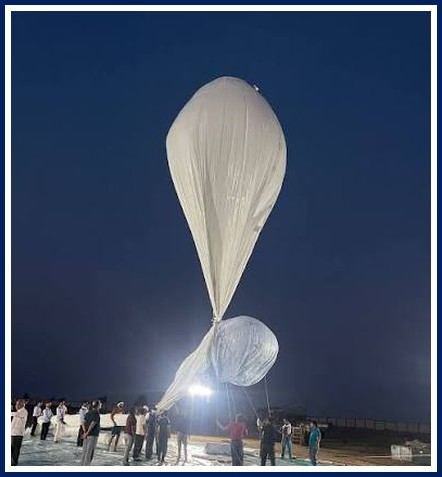
Why in News: The Defence Research and Development Organisation (DRDO) successfully flight-tested its indigenously developed High-Altitude Platform (HAPS). The experimental flight reached 21 km above mean sea level (AMSL) and stayed at 20 km AMSL for more than 30 minutes before being commanded to descend.
What is HAPS?
- A lighter-than-air system (like a large airship/balloon) designed as a long-endurance stratospheric aerial surveillance platform.
- Often called a ‘pseudo-satellite’ – it flies much higher than aircraft but far lower than satellites, and can hover over one area for a long time.
Key Highlights of the Trial
- Altitude: Reached 21 km AMSL; stayed at 20 km for 30+ minutes; system recovered and flight data analysed.
- Data link: Real-time video and all vehicle parameters received at the Ground Control Station throughout the flight.
- Onboard systems: Inertial Measurement Unit (IMU), GPS receiver, onboard cameras, altitude control mechanism and other sub-systems.
- Developer: Aerial Delivery Research and Development Establishment (ADRDE), Agra.
- Coordination: Indian Air Force, CEMILAC, DGCA, Airports Authority of India (AAI) and civil authorities.
Uses of HAPS
- ISR (Intelligence, Surveillance, Reconnaissance) along borders and coasts. Communication relay during disasters; earth observation and weather monitoring. Cheaper and reusable compared with satellites
Layers of the Atmosphere – Recap
- Troposphere (0 to ~12 km): All weather phenomena; commercial jets cruise at ~10–12 km.
- Stratosphere (~12 to 50 km): Contains the ozone layer; stable air with little weather – ideal for HAPS.
- Above: Mesosphere (meteors burn up) → Thermosphere (aurora; ISS orbits here).
GS Facts: DRDO
- Established in 1958
- HQ: New Delhi
- Works under Department of Defence R&D, Ministry of Defence
- ADRDE, Agra – DRDO lab for parachutes, aerial delivery systems and lighter-than-air platforms.
⚠ Exam Trap: HAPS flies in the stratosphere (~20 km) – above commercial jets but far below satellites. It is a lighter-than-air platform (airship/balloon), not a drone or a satellite, and was developed by ADRDE, Agra – not ISRO.
Maiden Live Jump of DRDO’s Advanced High-Altitude Parachute (AHAP) at Nyoma
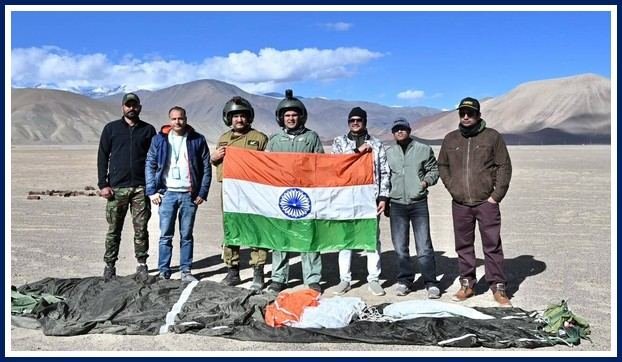
Why in News: DRDO conducted the maiden live jump of the Advanced High-Altitude Parachute (AHAP) at Nyoma (Mudh Drop Zone), Ladakh – one of the highest-altitude drop zones – proving its effectiveness in extremely high-altitude terrain.
Key Numbers
- Jump altitude: 16,000 ft AMSL.
- Parachute deployed at: 15,500 ft AMSL.
- Landing: Nyoma (Mudh DZ) at 13,700 ft.
- Operational altitude range: up to 18,000 ft.
About AHAP
- A static-line parachute system(meaning it opens automatically via a line attached to the aircraft, designed specifically to handle the thin air and rough terrain of high-altitude zones) for mass drop of paratroopers; offers various deployment modes and the safest rate of descent for high-altitude terrain.
- Designed and developed by: ADRDE, Agra.
- Manufactured by: Ordnance Parachute Factory (OPF), Kanpur.
Why are High-Altitude Jumps Risky?
- At high altitudes the air is thin, so parachutes face a very high opening shock and a faster rate of descent – making static-line jumps complex and dangerous.
Static-line vs Free-fall Jumps
- Static line: A cord attached to the aircraft opens the parachute automatically right after exit – used for mass troop drops.
- Free-fall (HALO/HAHO): Jumper opens the parachute manually – HALO (High Altitude, Low Opening) and HAHO (High Altitude, High Opening) are used by special forces.
⚠ Exam Trap: AHAP is a static-line parachute (opens automatically by a cord) – not free-fall like HALO/HAHO. It was designed by ADRDE, Agra but is made by the Ordnance Parachute Factory, Kanpur. Nyoma (Mudh DZ) is in Ladakh.
FSS-1 ‘Surya’ Launched; Keel of FSS-5 Laid at Hindustan Shipyard
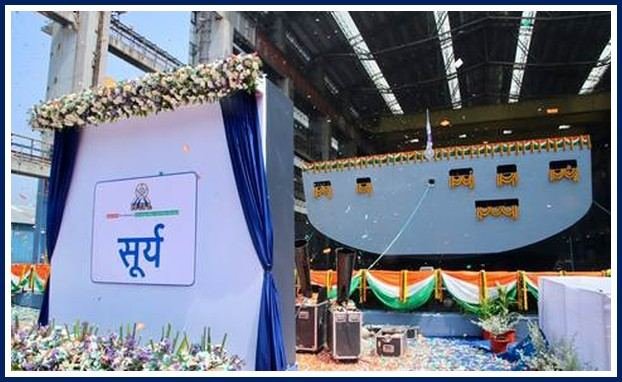
Why in News: Raksha Mantri Rajnath Singh launched the first Fleet Support Ship (FSS-1), laid the keel of FSS-5 and inaugurated the upgraded Slipway-4 and 300-tonne Goliath Crane at Hindustan Shipyard Limited (HSL), Visakhapatnam on 6 October 2026.
Key Highlights
- Name: FSS-1 has been named ‘Surya’; launched after traditional honours by Smt. Laila Swaminathan, President, Navy Wives Welfare Association (NWWA); the ship entered the Bay of Bengal.
- RM’s message: Launch of FSS-1 – a symbol of achievement; keel laying of FSS-5 – a symbol of resolve; new slipway – a symbol of growing capability.
- RM urged making HSL a benchmark for Quality, Productivity and Timely Delivery and developing Visakhapatnam as a major Maritime Industrial Hub.
- HSL attained Miniratna Category-I status in 2025 after coming under the Ministry of Defence.
- RM recalled ‘Jala Usha’ – the first ship built in independent India, launched at Visakhapatnam in 1948.
Features of the Fleet Support Ships
- Designed and built indigenously by HSL for the Indian Navy (5 ships in all).
- Enhanced cargo and fluid capacity for at-sea replenishment of warships.
- Onboard first-line maintenance workshops, a helicopter deck for Multi-Role Helicopter operations and self-defence systems.
- Strengthen the Navy’s reach, endurance and operational effectiveness in the Indian Ocean Region.
New Infrastructure at HSL
- Slipway-4: Extended and strengthened to build and launch ships of up to 45,000 DWT.
- 300-tonne Goliath Crane: Spans Slipways 3 and 4; designed and manufactured by L&T Geostructure with Konecranes under Make in India.
- Crane features: PLC controls, Variable Frequency Drives, tandem lifting, remote diagnostics and condition monitoring.
- Block construction: Ships are built as large pre-fabricated blocks joined together – the new crane allows faster handling of heavier blocks.
GS Facts: Miniratna Category-I
- CPSE must have made profit in the last 3 years continuously
- Pre-tax profit of ₹30 crore or more in at least one of these years
- Positive net worth
- Board can invest up to ₹500 crore (or equal to net worth, whichever is lower) without Government approval.
⚠ Exam Trap: ‘Jala Usha’ (1948) was a merchant (cargo) ship, not a warship. FSS-1 is named ‘Surya’; the ‘Miniratna Category-I’ status of HSL came in 2025.
★ Important One-liners
- SAREX-2026 – 12th NATIONAL MARITIME SEARCH & RESCUE EXERCISE: Raksha Rajya Mantri Sanjay Seth to inaugurate SAREX-2026 on 7 October 2026 and witness the SAR demo off Paradip coast (Odisha) on 8 October
- Organised by Indian Coast Guard (ICG)
- 32 observers from 30 countries
- ICG will also host the 24th National Maritime SAR (NMSAR) Board Meeting at Bhubaneswar
- ICG: set up 1977, Coast Guard Act, 1978;
- BrahMos FIRE CONTROL SYSTEM CONTRACT – ₹661.50 CRORE: Ministry of Defence signed a contract with BrahMos Aerospace Pvt Ltd (BAPL) on 6 October 2026 for BrahMos Fire Control System and Launchers for Indian Navy ships
- Category: Buy (Indian-IDDM)
- Minimum 68% indigenous content; involves MSMEs; employment over 3 years
- BrahMos: joint venture of DRDO and Russia’s NPO Mashinostroyeniya (1998); name from Brahmaputra
- Moskva rivers; supersonic cruise missile
- IDDM = Indigenously Designed, Developed and Manufactured – highest-priority category under DAP 2020.
- INDO-ARGENTINE ARMY MOUNTAINEERING EXPEDITION: Chief of the Army Staff General Dhiraj Seth flagged in the joint team in New Delhi after successful ascents of
Mt Abi Gamin (7,355 m) on 17 September and Mt Kamet (7,756 m) on 21 September 2026
- Mt Kamet – in Chamoli district, Uttarakhand; third-highest peak in India after Kanchenjunga and Nanda Devi
- Third joint expedition of the two Armies – earlier: Mt Aconcagua (6,962 m), Mendoza, Argentina (January 2025; highest peak of South America) and Mt Kun (7,077 m), Suru Valley, Ladakh (August 2025).
INFRASTRUCTURE
Cabinet Approves Integrated Transport & Logistics Authority (ITLA)
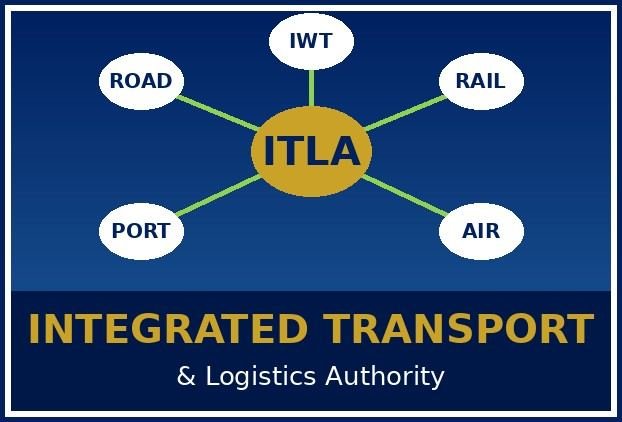
Why in News: The Union Cabinet approved setting up a Special Purpose Vehicle (SPV), the Integrated Transport & Logistics Authority (ITLA) – to strengthen research, planning, appraisal, monitoring and impact assessment in transport and logistics.
Why ITLA?
- Transport planning in India is fragmented across many Ministries – Road Transport & Highways, Railways, Ports, Shipping & Waterways, Civil Aviation and Housing & Urban Affairs (urban mobility).
- ITLA will bring coordination and multi-modal integration, making infrastructure development more efficient and sustainable.
- SPV (Special Purpose Vehicle): A separate legal entity created for a specific objective, with its own management and accounts.
Roles and Responsibilities
- National Apex Institution: For integrated transport and logistics planning, research, project appraisal, monitoring, policy support and data analytics.
- National Transport Master Plan: Planning horizon of 10 years or more, covering roads, railways, ports and shipping, civil aviation, inland waterways, coastal shipping, urban mobility and logistics.
- Integrated Planning: Evaluate 5-year sectoral plans and annual plans of transport Ministries for alignment with the Master Plan.
- Technical Appraisal: Of Government of India infrastructure projects costing ₹500 crore or more. Financial appraisal will continue through existing mechanisms.
- Monitoring and Impact Assessment: Monitor projects above ₹500 crore, resolve issues, and do post-implementation impact assessment.
- National Transport Data Repository (NTDR): Unified data from GSTN e-way bill, FASTag, Vahan, GPS-based systems, urban traffic management systems; analytics like Freight Flow / Origin–Destination (O-D) analysis.
- Policy support: Advise on review and updation of the National Logistics Policy (2022).
- Capacity building, training and skilling in logistics; promote research and innovation.
Related Initiatives
- PM GatiShakti National Master Plan (13 October 2021): GIS-based digital platform for integrated infrastructure planning.
- National Logistics Policy (17 September 2022): Aims to cut logistics costs to global benchmarks and place India among the top 25 in the Logistics Performance Index (LPI) by 2030.
- LPI 2023 (World Bank): India ranked 38th of 139 countries.
GS Facts: Logistics Initiatives
- ULIP – Unified Logistics Interface Platform (single window for logistics data)
- LEADS – Logistics Ease Across Different States (annual State ranking by Commerce Ministry)
- Dedicated Freight Corridors – Eastern (Ludhiana–Sonnagar) and Western (Dadri–JNPT).
⚠ Exam Trap: ITLA does technical appraisal of projects of ₹500 crore and above; financial appraisal stays with existing mechanisms. ITLA is a new SPV – not the same as PM GatiShakti.
✍ Mains Angle (UPSC)
Q. Fragmented transport planning raises India’s logistics costs. How can an integrated authority like ITLA address this?
Value points: Multimodal planning, data-driven O-D analytics, project appraisal and monitoring, Centre–State coordination.
INTERNATIONAL
Ganga Water Treaty ‘Flawed’, Needs Update: Bangladesh Expert
Why in News: Manjur A. Chowdhury, former Chairman of Bangladesh’s National River Conservation Commission (NRCC), said the 1996 India–Bangladesh Ganga Water Treaty is ‘flawed’ and should be replaced by a short-term three-year treaty when it expires in December 2026.
About the Ganga Water Treaty, 1996
- Signed: 12 December 1996, New Delhi, by PM H.D. Deve Gowda (India) and PM Sheikh Hasina (Bangladesh, her first tenure).
- Validity: 30 years – expires in December 2026 unless renewed.
- What it does: Shares Ganga water at the Farakka Barrage during the lean season (1 January – 31 May), in 10-day periods.
Sharing Formula at Farakka
| Flow at Farakka | India | Bangladesh |
|---|---|---|
| 70,000 cusecs or less | 50% | 50% |
| 70,000 – 75,000 cusecs | Balance | 35,000 cusecs |
| 75,000 cusecs or more | 40,000 cusecs | Balance |
- From 11 March to 10 May, each country is assured 35,000 cusecs in alternate three 10-day periods.
Criticisms Raised by Bangladesh Experts
- No guarantee clause for minimum flow; no ecological / environmental flow provisions.
- Ignores climate change impacts – it ‘simply divides the water’.
- Nepal factor: In lean months, the Ganga gets snowmelt from Nepal’s Ghaghara, Gandaki and Koshi rivers – so a trilateral treaty including Nepal is suggested.
- Proposal: A 3-year short-term treaty, followed by a research-based lasting treaty.
- Farooq Sobhan (former Foreign Secretary who negotiated the treaty): No arbitration clause; India’s promise to build a barrage on the Padma in Bangladesh (the quid pro quo) was never fulfilled.
About Farakka Barrage
- On the Ganga in Murshidabad district, West Bengal; commissioned in 1975.
- Diverts water through a feeder canal into the Bhagirathi–Hooghly to flush silt and keep Kolkata Port navigable.
- In Bangladesh, the Ganga is called the Padma; it joins the Jamuna (Brahmaputra) and then the Meghna before entering the Bay of Bengal.
Other India–Bangladesh Water Issues
- India and Bangladesh share 54 rivers; Joint Rivers Commission set up in 1972.
- Teesta water-sharing: still unresolved. Kushiyara interim water-sharing MoU (2022) – first since 1996.
GS Facts: River Ganga
- Rises from Gangotri Glacier (Gaumukh) as Bhagirathi
- Bhagirathi and Alaknanda meet at Devprayag to form Ganga
- Length about 2,525 km
- Declared National River in 2008
- Namami Gange (2014) implemented by National Mission for Clean Ganga (NMCG).
⚠ Exam Trap: The present treaty is of 1996 (30 years). The 1977 Farakka Agreement was an earlier 5-year arrangement. Ghaghara, Gandak, Kosi are left-bank tributaries from Nepal; Son is a right-bank tributary.
✍ Mains Angle (UPSC)
Q. Transboundary river treaties must move from ‘water division’ to ‘river health’. Discuss with reference to the Ganga Water Treaty.
Value points: e-flows, climate variability, basin-wide (Nepal) approach, dispute resolution, data sharing.
STATES
★ Important One-liners
- ARUNACHAL PRADESH – 14th INTERNATIONAL TOURISM MART (ITM), TAWANG: To be held in Tawang from
29 to 31 October 2026
- Co-organised by Union Ministry of Tourism and Government of Arunachal Pradesh
- Brings together domestic stakeholders, tour operators and influencers from 27 countries
- NAGALAND – SAMAVESHI AAJEEVIKA YOJANA (SAY-SOBLOK): Launched through an MoU between
Nagaland State Rural Livelihoods Mission (NSRLM) and
BRAC International
- 3-year MoU signed in Kohima by NSRLM Mission Director Moa Sangtam and BRAC International India Country Lead Shweta S. Banerjee
- Under DAY-NRLM; will support 4,000 extremely vulnerable households
APPOINTMENTS
★ Important One-liners
| Person | Appointed as | Remarks |
|---|---|---|
| Air Marshal Ashutosh Dixit | 29th Chief of the Air Staff (Air Chief Marshal) | From afternoon of 31 Oct 2026; succeeds ACM Amar Preet Singh |
- ASHUTOSH DIXIT – NEXT CHIEF OF THE AIR STAFF: Presently Vice Chief of the Air Staff
- Born 9 December 1966; commissioned in the fighter stream on 6 December 1986
- Earlier served as Chief of Integrated Defence Staff to the Chairman, Chiefs of Staff Committee (CISC) and AOC-in-C, Central Air Command
- Alumnus of NDA, Defence Services Staff College (Bangladesh) and National Defence College
- 3,500+ flying hours on Mirage-2000, MiG variants, Kiran, Jaguar, IL-78, Hawk, Tejas
- Experimental Test Pilot and Qualified Flying Instructor
- IAF: founded 8 October 1932 (Air Force Day); first Indian CAS – Air Marshal Subroto Mukerjee (1954); only five-star rank – Marshal of the IAF Arjan Singh.
AWARDS
Nobel Prize in Physics 2026: Francis Halzen for IceCube and Cosmic Neutrinos
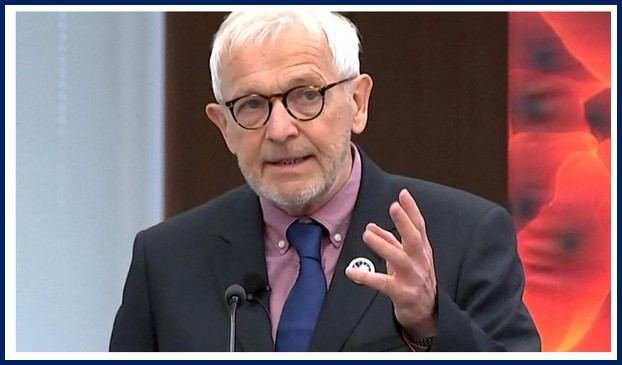
Why in News: The 2026 Nobel Prize in Physics was awarded to Francis Halzen for his contributions to IceCube, a neutrino observatory at the South Pole, and for the discovery of high-energy neutrinos of astrophysical origin.
Who is Francis Halzen?
- Belgian-born physicist at the University of Wisconsin–Madison (USA); principal investigator of IceCube.
- First presented his idea of capturing neutrinos in South Pole ice in 1988.
What are Neutrinos?
- Point-like particles with no measurable size and no electric charge – so they rarely interact with matter; nicknamed ‘ghost particles’.
- Trillions pass through the Earth – and our bodies – every moment.
- Analogy: If an atom were a cathedral, its nucleus would be the size of a fly – atoms are mostly empty space, so neutrinos pass through easily.
About IceCube
- Location: South Pole, Antarctica; completed in 2010.
- Size: Covers one cubic kilometre of ice (about 917 million litres of water equivalent).
- Sensors: 5,160 optical sensors that detect Cherenkov light.
- Why ice? Pure, undisturbed and transparent; free from interference; geologically stable with little seismic activity.
- Cherenkov light: The pale blue flash produced when a charged particle travels through a medium (water/ice) faster than light travels in that medium.
Key Discoveries
- 2013: First detection of high-energy cosmic neutrinos.
- 2018: Traced one neutrino to a blazar – a distant galaxy with a supermassive black hole firing a jet almost directly towards Earth.
- Opened a new kind of astronomy – ‘neutrino astronomy’ – to study violent cosmic events (Nobel Committee Chair Mark Pearce).
Neutrino – Basics for Exams
- Proposed by Wolfgang Pauli (1930); named by Enrico Fermi; first detected in 1956 (Cowan and Reines).
- Three flavours: electron, muon and tau neutrinos. Neutrino oscillation – Nobel 2015 (Kajita and McDonald).
India Connect
- India-based Neutrino Observatory (INO): Proposed underground lab at Bodi West Hills, Theni district, Tamil Nadu, with an Iron Calorimeter (ICAL) detector – stalled over environmental objections.
- Kolar Gold Fields (Karnataka): Site of the first detection of atmospheric neutrinos (1965).
- Cherenkov radiation is named after Pavel Cherenkov (Nobel 1958).
Other Nobel Facts
- 2026 Medicine: Hegemann, Nagel and Deisseroth (optogenetics).
- 2025 Physics: John Clarke, Michel H. Devoret, John M. Martinis – macroscopic quantum tunnelling in an electric circuit.
GS Facts: Nobel Prize in Physics
- Awarded by the Royal Swedish Academy of Sciences
- First awarded in 1901 to Wilhelm Röntgen (X-rays)
- Indian laureate: C.V. Raman (1930) – Raman Effect
- Indian-born: S. Chandrasekhar (1983) – structure and evolution of stars.
⚠ Exam Trap: IceCube is at the South Pole (Antarctica), not the Arctic. It detects Cherenkov light produced by neutrino collisions – not the neutrinos directly. Cherenkov light means faster than light in that medium, not in vacuum.
SPORTS
20th Asian Games 2026, Aichi–Nagoya: India Wins 85 Medals Including 21 Gold
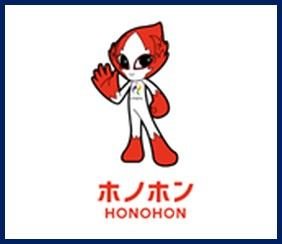
Why in News: The 20th Asian Games were held in Aichi–Nagoya, Japan from 19 September to 4 October 2026. India finished with 85 medals – 21 Gold, 27 Silver and 37 Bronze.
About the 2026 Games
- Asian Games (Asiad): Asia’s biggest multi-sport event, held every 4 years; organised by the Olympic Council of Asia (OCA); 45 participating countries/regions.
- Slogan: ‘Imagine One Asia’ | Duration: 16 days | 43 sports, 71 disciplines | 469 events, 1,407 medals.
- Third time Japan hosted – earlier Tokyo (1958) and Hiroshima (1994).
- Mascot – ‘HONOHON’: Represents the fiery passion of athletes; from the Japanese word ‘honoho’ (flame); inspired by the Shachihoko – guardian symbol of Nagoya Castle.
- Emblem: Purple – iris (Aichi’s prefectural flower); Gold – Kinshachi (golden tiger-fish ornaments of Nagoya Castle); Green – environmental consciousness (EXPO 2005 Aichi, COP10, UNESCO ESD conference); red sun – OCA symbol.
India’s Contingent
- 501 athletes across 36 disciplines – one of India’s largest; 300+ debutants.
- Send-off: New Delhi, 8 September 2026 – Union Sports Minister Dr Mansukh Mandaviya, IOA President Dr P.T. Usha, Chef de Mission Sahdev Yadav, Secretary (Sports) Hari Ranjan Rao.
- Flag-bearers (opening ceremony, 19 Sept): Manu Bhaker (double Olympic medallist) and Pawan Sehrawat (kabaddi).
India’s Gold Medal Highlights
- Archery – 5 gold (top); Shooting – 3; Boxing – 3.
Team sports ‘gold rush’: Cricket 2, Hockey 2, Kabaddi 2.
Men’s cricket beat Pakistan by 19 runs in the final.
Men’s hockey retained the continental title – 5–1 vs Malaysia.
Kabaddi – gold in both men’s and women’s events.
- Others: Wrestling 2, Athletics 1, Golf 1.
India’s Medal Tally – Sport-wise
| Sport | G | S | B | Total |
|---|---|---|---|---|
| Athletics | 1 | 9 | 14 | 24 |
| Shooting | 3 | 8 | 4 | 15 |
| Archery | 5 | 2 | 2 | 9 |
| Boxing | 3 | 0 | 3 | 6 |
| Wrestling | 2 | 2 | 2 | 6 |
| Squash | 0 | 2 | 3 | 5 |
| Sailing | 0 | 1 | 2 | 3 |
| Cricket | 2 | 0 | 0 | 2 |
| Hockey | 2 | 0 | 0 | 2 |
| Kabaddi | 2 | 0 | 0 | 2 |
| Golf | 1 | 1 | 0 | 2 |
| Weightlifting | 0 | 1 | 0 | 1 |
| Wushu | 0 | 1 | 0 | 1 |
| Badminton | 0 | 0 | 1 | 1 |
| Kurash | 0 | 0 | 1 | 1 |
| Mixed Martial Arts | 0 | 0 | 1 | 1 |
| Rowing | 0 | 0 | 1 | 1 |
| Sepak Takraw | 0 | 0 | 1 | 1 |
| Soft Tennis | 0 | 0 | 1 | 1 |
| Table Tennis | 0 | 0 | 1 | 1 |
| TOTAL | 21 | 27 | 37 | 85 |
- Comparison: India’s best-ever haul remains Hangzhou 2022 – 107 medals (28 G, 38 S, 41 B).
History: India’s Founding Role
- 1st Asian Games – New Delhi, March 1951: Idea of Prof. G.D. Sondhi (IOC member); proposed at the Asian Relations Conference, New Delhi (1947).
- Opened by President Rajendra Prasad at the National Stadium; 11 nations, 489 athletes, 6 sports; India finished 2nd behind Japan.
- India hosted again in 1982 (9th Asiad, New Delhi). Next hosts: Doha, Qatar (2030) and Riyadh, Saudi Arabia (2034).
5th Asian Para Games 2026
- 18–24 October 2026, Aichi–Nagoya – first time Japan hosts the Para Games; about 3,000 athletes, 45 NPCs, 18 para sports.
- India’s 5th appearance (via Paralympic Committee of India). Record at Hangzhou 2022: 111 medals (29 gold); women won 40 (36%). Earlier: 14 (2010), 33 (2014), 72 (2018).
India’s Sports Policy Push
- Khelo Bharat Niti (National Sports Policy) – launched 1 July 2025; aims at excellence by 2036 Olympics; links sports with NEP 2020; inclusion of women, tribals, PwDs.
- Budget 2026-27: Record ₹4,479.88 crore for Sports Ministry (vs ₹1,219 crore in 2013-14); ₹500 crore for sports goods manufacturing.
- Revamped Khelo India (2026-27 to 2030-31): Combined outlay with NSF support ₹36,441 crore; Khelo India got ₹924.35 crore for 2026-27 (earlier ₹3,790.50 crore for 2021-22 to 2025-26).
- Khelo India (July 2026): 1,067 Khelo India Centres; 349 infrastructure projects worth ₹3,176 crore; 2,745 Khelo India Athletes; 63,000+ athletes in KI Games since 2018.
- KIRTI: Talent identification for children aged 9–18 years; 174 Talent Assessment Centres.
- TOPS: Stipend ₹50,000/month (core), ₹25,000/month (development); April 2026 – 55 core, 62 para core, 140 development athletes + 67 hockey core athletes.
- National Sports University, Imphal (2018); Fit India Movement; National Sports Governance Act, 2025 (passed August 2025) – National Sports Board and National Sports Tribunal.
GS Facts: Olympic Council of Asia (OCA)
- Established 1982
- HQ: Kuwait City
- Motto: ‘Ever Onward’
- Indian Olympic Association founded 1927; President Dr P.T. Usha
- Next Summer Olympics: Los Angeles 2028.
⚠ Exam Trap: 2026 = 20th Asian Games and Japan’s 3rd hosting; the Para Games are the 5th edition and Japan’s first. India’s best tally is 2022 (107), not 2026 (85). Archery – not shooting – led India’s gold tally.
OBITUARIES
★ Important One-liners
- JEFFREY ARCHER (1940–2026): Renowned
British novelist and former Conservative Member of the British Parliament, passed away at 86; death confirmed by his publisher; cause not disclosed
- Sold more than 300 million books over a writing career spanning five decades
- Famous works: ‘Kane and Abel’ (1979), debut novel ‘Not a Penny More, Not a Penny Less’ (1976) and the Clifton Chronicles series
RAPID REVISION
| Topic | Key Fact to Remember |
|---|---|
| Form 6 | New voter enrolment; Registration of Electors Rules, 1960 |
| SME Growth Fund | ₹10,000 crore; AIF route; Budget 2026-27 Para 28 |
| World Bank FY27 | India growth forecast 7.1% (from 6.6%) |
| World Investor Week | 5–11 Oct 2026; 10th edition; IOSCO |
| HAPS (DRDO) | 21 km altitude; 20 km for 30+ min; ADRDE Agra |
| AHAP | Static-line parachute; jump 16,000 ft at Nyoma |
| FSS-1 | Named ‘Surya’; built by HSL Visakhapatnam |
| SAREX-2026 | 12th edition; off Paradip; 32 observers, 30 countries |
| BrahMos FCS deal | ₹661.50 crore; Buy (Indian-IDDM); 68% indigenous |
| Mt Kamet | 7,756 m; Chamoli, Uttarakhand |
| ITLA | Technical appraisal of projects ≥ ₹500 crore |
| Ganga Water Treaty | Signed 12 Dec 1996; 30 years; expires Dec 2026 |
| 14th ITM | Tawang, 29–31 Oct 2026 |
| SAY-SOBLOK | Nagaland + BRAC; 4,000 households |
| 29th Chief of Air Staff | Air Marshal Ashutosh Dixit (from 31 Oct 2026) |
| Nobel Physics 2026 | Francis Halzen – IceCube, cosmic neutrinos |
| Asian Games 2026 | Aichi–Nagoya; India 85 medals (21 G) |
| Asian Para Games 2026 | 5th edition; 18–24 Oct; Aichi–Nagoya |
TOP 5 QUIZ OF THE DAY
Q1. Consider the following statements:
1. Form 6 is prescribed under the Registration of Electors Rules, 1960.
2. Form 7 is used by overseas electors to register as voters.
3. Article 326 provides for elections on the basis of adult suffrage.
- (a) 1 and 2 only
- (b) 2 and 3 only
- (c) 1 and 3 only
- (d) 1, 2 and 3
Q2. With reference to the SME Growth Fund (SGF), consider the following statements:
1. It operates under an Alternative Investment Fund (AIF) framework.
2. It mainly targets early-stage micro enterprises.
3. Alternative Investment Funds in India are regulated by the RBI.
- (a) 1 only
- (b) 1 and 2 only
- (c) 2 and 3 only
- (d) 1 and 3 only
Q3. Which of the following tributaries join the Ganga from the left bank?
1. Gandak
2. Kosi
3. Son
4. Ghaghara
- (a) 1, 2 and 3 only
- (b) 1, 2 and 4 only
- (c) 2, 3 and 4 only
- (d) 1, 3 and 4 only
Q4. Consider the following statements:
1. Neutrinos carry no electric charge.
2. Cherenkov radiation is produced when a charged particle travels faster than the speed of light in vacuum.
3. The India-based Neutrino Observatory has been proposed in Theni district of Tamil Nadu.
- (a) 1 and 2 only
- (b) 1 and 3 only
- (c) 2 and 3 only
- (d) 1, 2 and 3
Q5. Consider the following statements:
1. The first Asian Games were held in New Delhi in 1951.
2. The 2026 Asian Games were the third hosted by Japan.
3. The headquarters of the Olympic Council of Asia is in Tokyo.
- (a) 1 only
- (b) 1 and 2 only
- (c) 2 and 3 only
- (d) 1, 2 and 3
ANSWER KEY & EXPLANATIONS
Q1 – (c): Overseas (NRI) electors use Form 6A; Form 7 is for objection/deletion. Statements 1 and 3 are correct.
Q2 – (a): SGF targets growth-stage SMEs, not early-stage micro units. AIFs are regulated by SEBI (AIF Regulations, 2012).
Q3 – (b): Answer: (b) Son rises in the Amarkantak plateau and joins the Ganga from the right bank; the others come from the Himalaya (Nepal) on the left.
Q4 – (b): Nothing travels faster than light in vacuum; Cherenkov light arises when a particle beats light’s speed in a medium like water or ice.
Q5 – (b): The OCA is headquartered in Kuwait City.
— Keep Reading, Keep Revising —
Free daily PDFs: ashiqcurrentaffairs.com