
How to use this material
Exam Tags & Source: Syllabus mapping for UPSC / TNPSC / SSC-RRB + clickable source link
Why in News: The news in 2–3 lines – read this first
▸ Sub-headings: Simple explanation + all facts, figures, names and years
GS Facts: Static GK linked to the news (blue box)
⚠ Exam Trap: Common confusions examiners use in options (orange box)
✍ Mains Angle: Probable Mains question with value points (purple box)
★ Important One-liners: Short news under each theme + Rapid Revision table. Highlighted = must-remember
✎ Top 5 Quiz: Day’s 5 most important MCQs at the end, with answer key
Here are the daily current affairs for 17, 18 and 19 October 2026 in English – exam-oriented notes for UPSC, TNPSC, SSC, RRB and Bank exams. Covers the Census (Amendment) Rules 2026, the Supreme Court ruling on children’s right to internet, Kufri Jamunia purple potato, Martian analogue sites in Tamil Nadu, JAXA’s MMX mission, FSSAI draft rules, Sheetal Devi’s world record and more – with GS Facts, Exam Traps, a Rapid Revision table and a Top 5 Quiz.
POLITY
Census (Amendment) Rules, 2026: Wider Pool of Enumerators
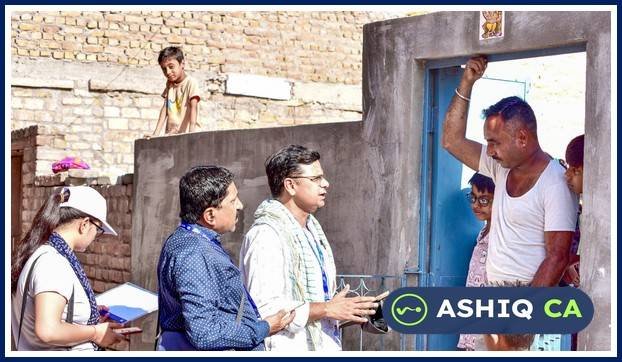
Why in News: The Ministry of Home Affairs on 16 October 2026 notified the Census (Amendment) Rules, 2026, expanding eligibility for appointment as enumerators – the officials who visit every household during the Census.
Who Can Now Be an Enumerator?
- Teachers from any government educational institution, local authority, aided or unaided private educational institutions, societies or trusts.
- Clerks or any official of the Central or State Government, local authority or establishment – including PSUs, statutory bodies, banks, companies, institutions, societies and trusts.
- Any other person whom the State/UT administration considers suitable.
- Aim: A broader pool of qualified enumerators and better representation for Census operations.
Role of an Enumerator
- Visits households, collects demographic, social and economic information, and ensures every individual is counted.
- Acts as the primary link between citizens and the Census administration; the data supports planning and policy-making.
Census in India – Key Facts
- Conducted once every 10 years under the Census Act, 1948; detailed procedures are in the Census Rules, 1990.
- Last Census: 2011 (15th Census). The 2021 Census was postponed due to Covid-19.
- Next Census (2027): Houselisting phase in 2026 and population enumeration with reference date 1 March 2027 (1 October 2026 for snow-bound areas) – India’s first digital Census, which will also enumerate caste.
- Census is in the Union List (Entry 69, Seventh Schedule); conducted by the Office of the Registrar General and Census Commissioner under the MHA.
GS Facts: History of Census
- First (non-synchronous) Census: 1872 (Lord Mayo)
- First synchronous Census: 1881 (Lord Ripon)
- 2011 Census: population 121.09 crore; sex ratio 943; literacy 74.04%
- Census data are confidential under the Census Act, 1948.
⚠ Exam Trap: The Census is held under the Census Act, 1948 (not 1951). The amendment is to the Census Rules, made by the Centre (MHA). Census is a Union List subject, though States help conduct it.
SC: Children Have a Fundamental Right to Access and Use the Internet

Why in News: A Supreme Court Bench of Justices J.B. Pardiwala and Vinod K. Chandran held that the right to access and use the internet is a fundamental right of every individual – including children – under Article 21 read with Article 19(1)(a).
Key Observations
- Denying children internet access would be like saying people below a certain age have no conscience worth protecting or free speech worth expressing.
- Safety and freedom are not opposed – ‘Our children are entitled to both‘.
- Intelligent restraints, not blanket bans: Children keep using the internet even if banned – but secretly, on unregulated and more unsafe platforms.
- Harsh restrictions may stop children from reporting online abuse to parents for fear of punishment – defeating the purpose of the POCSO Act.
- Blanket bans are ‘unproven measures of proven disproportionality’ – no country has shown children are safer because of them.
What the Court Suggested
- The Court is not against age-based restrictions; some safeguards are necessary.
- Greater emphasis on parental consent, guidance and supervision, and a dedicated “child mode” for children’s accounts.
- Measures must be proportionate to the goal of child safety; directions on protective mechanisms and grievance redressal.
Related Laws and Cases
- Anuradha Bhasin v. Union of India (2020): Freedom of speech and trade through the internet is protected under Article 19(1)(a) and 19(1)(g).
- Faheema Shirin v. State of Kerala (2019, Kerala HC): Right to internet access is part of the right to education and privacy.
- DPDP Act, 2023: Requires verifiable parental consent for processing personal data of children (below 18 years).
- POCSO Act, 2012: Protects children from sexual offences, including online abuse.
GS Facts: Article 21 – Expanding Scope
- Right to privacy (K.S. Puttaswamy, 2017)
- Right to clean environment
- Right to shelter, health, speedy trial
- Right to menstrual health (2026)
- Right to access the internet (with 19(1)(a))
- Article 21 applies to citizens and non-citizens alike.
⚠ Exam Trap: The Court linked the right to Article 21 read with Article 19(1)(a) – not Article 21A. It did not strike down age-based safeguards; it opposed blanket bans. The bench was Pardiwala and Vinod K. Chandran.
Menstrual Hygiene a Fundamental Right: SC Warns States of Contempt over Non-compliance
Why in News: The Supreme Court expressed displeasure that States and UTs have not told the Centre how they are implementing its judgment declaring menstrual hygiene/health a part of the fundamental right under Article 21. It warned of contempt notices to Chief Secretaries.
Background
- 30 January 2026: SC held that the right to life (Article 21) includes the right to menstrual health.
- The plea sought pan-India implementation of the Centre’s ‘Menstrual Hygiene Policy for School-going Girls’ in government and aided schools (Classes 6 to 12).
- Directions in the judgment: Every school – government or private, urban or rural – must have functional, gender-segregated toilets with water, and provide free sanitary napkins to girl students.
- 1 September 2026: States/UTs asked to address deficiencies and report back.
Latest Hearing (13 October 2026)
- Bench: Justices J.B. Pardiwala and R. Mahadevan; ASG Aishwarya Bhati said States/UTs had not responded to the Union.
- Court: ‘If what we have said in the judgment is only going to remain on paper, how will this fundamental right be given effect?’
- Direction: Centre to seek written reports from every State/UT; if any fail to respond, contempt notices to Chief Secretaries. Next hearing: 14 December.
- Progress reported: 30,458 gender-segregated toilets with washing facilities built in schools; 4,236 under construction.
- Why it matters: Lack of facilities makes many girls, especially in remote areas, drop out of school.
GS Facts: Menstrual Health in India
- Menstrual Hygiene Day: 28 May
- Swachh Bharat Mission and Samagra Shiksha fund school toilets
- Article 21A – free and compulsory education for children aged 6–14 (86th Amendment, 2002)
- Article 15(3) allows special provisions for women and children.
⚠ Exam Trap: The judgment was delivered on 30 January 2026; the 13 October hearing was about compliance. The right flows from Article 21 (right to life), not Article 21A. The warning is of contempt against Chief Secretaries.
✍ Mains Angle (UPSC)
Q. ‘The expanding interpretation of Article 21 brings rights closer to everyday life, but implementation remains the real test.’ Discuss with reference to recent judgments on menstrual health and internet access for children.
Value points: Judicial activism vs. executive capacity, federal compliance, budgets, monitoring, balancing safety and freedom.
ECONOMY
★ Important One-liners
- INDIA 3rd GLOBALLY IN CONTRACTED CLEAN HYDROGEN VOLUMES: India ranks third in the world in cumulative contracted clean hydrogen volumes, as per the Bloomberg New Economy Forum’s India Transition Factbook 2026, said MNRE Minister Pralhad Joshi
- India has binding contracts for 3 lakh tonnes per annum of clean hydrogen
- Major green ammonia export agreements cover more than 10 lakh tonnes per annum
- National Green Hydrogen Mission (2023; outlay ₹19,744 crore) targets 5 MMT green hydrogen per year by 2030; SIGHT programme gives incentives for electrolysers and green hydrogen production.
- ADB–JAPAN FINANCE AM GREEN AMMONIA PLANT: The Asian Development Bank (ADB) and the Government of Japan signed financing agreements with AM Green Ammonia (India) to help build one of the world’s largest renewable-energy-based ammonia plants in India
- Includes a $100 million loan from the Leading Asia’s Private Infrastructure Fund 2 (LEAP 2), financed by JICA and administered by ADB
- It is the first investment under ACCEL (Action for Creating Energy Security for Long-term Resilience), launched in May 2026 by ADB and Japan
- Green ammonia: made using green hydrogen (from renewable power) – used as fertiliser feedstock, shipping fuel and a hydrogen carrier
- ADB: est. 1966, HQ Manila.
AGRICULTURE
Kufri Jamunia: ICAR’s Biofortified Purple Potato to Fight Hidden Hunger
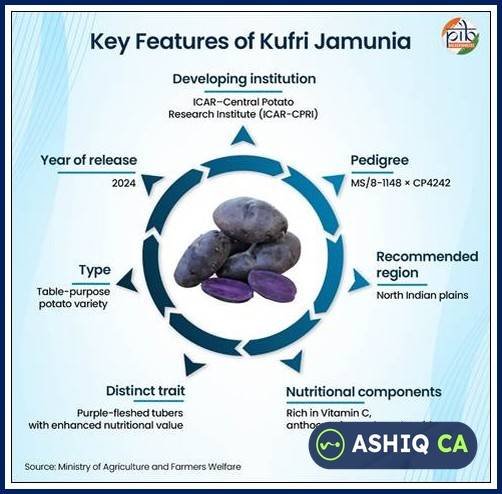
Why in News: ICAR–Central Potato Research Institute (CPRI) has developed nutrient-rich coloured potato varieties – Kufri Neelkanth, Kufri Manik and Kufri Jamunia – to tackle hidden hunger. Kufri Jamunia (2024) has the highest Vitamin C, anthocyanins and carotenoids among them.
Key Concepts (Simple Explanation)
- Hidden hunger: People eat enough calories but lack essential vitamins and minerals (iron, zinc, Vitamin A, etc.).
- Biofortification: Raising nutrient levels inside the crop through plant breeding.
- Food fortification: Adding nutrients during processing (e.g., iodised salt, fortified rice).
- Anthocyanins and carotenoids: Natural pigments that give red/purple/orange colours and act as antioxidants.
CPRI’s Coloured Potato Varieties
| VarietyVarietyVariety | YearYearYear | Key featureKey featureKey feature |
|---|---|---|
| Kufri Neelkanth | 2018 | First purple-skinned specialty potato; high antioxidants; for Punjab, Haryana, UP, Uttarakhand, Bihar, MP, Chhattisgarh |
| Kufri Manik | 2021 | Deep red tubers, yellow flesh; rich in anthocyanin, zinc and iron |
| Kufri Jamunia | 2024 | Purple skin and purple flesh; highest Vitamin C, anthocyanins, carotenoids |
Kufri Jamunia – Features
- Plant: Medium-maturing; 10–12 medium-to-large oblong tubers per plant; shallow eyes, mealy texture.
- Yield: 32–35 tonnes/hectare (recommended practices); about 49 t/ha in station trials at 90 days; marketable yield nearly 90%.
- Storage: Medium dormancy of 6–8 weeks (does not sprout quickly); low rotting and weight loss.
- Recommended for: North Indian plains.
Nutrition: Kufri Jamunia vs Common Potato (per 100 g)
| NutrientNutrientNutrient | Kufri JamuniaKufri JamuniaKufri Jamunia | Common potatoCommon potatoCommon potato |
|---|---|---|
| Vitamin C | 42.75 mg | 23.15 mg |
| Zinc | 2.28 mg | 0.28 mg |
| Iron | 3.22 mg | 0.57 mg |
- Anthocyanins: 42.05 mg/100 g (flesh) and 80.66 mg/100 g (skin); carotenoids about 161 µg/100 g.
- Uses: Curry, paratha, puri, raita, dosa/idli batter, halwa; potato flour for bakery, soups, cookies; anthocyanin-rich daliya, suji.
GS Facts: Potato & ICAR
- ICAR-CPRI is located at Shimla (est. 1949); ‘Kufri’ varieties are named after Kufri near Shimla
- India is the 2nd largest potato producer (after China); Uttar Pradesh is the top producing State
- In August 2024, the PM released 109 high-yielding, climate-resilient and biofortified crop varieties.
⚠ Exam Trap: Biofortification adds nutrients through breeding in the field; fortification adds them during processing. Kufri Neelkanth (2018) was the first purple-skinned variety; Kufri Jamunia (2024) has purple flesh too.
SCIENCE & TECH
Martian Analogue Sites Identified in Tamil Nadu and Chile’s Atacama Desert
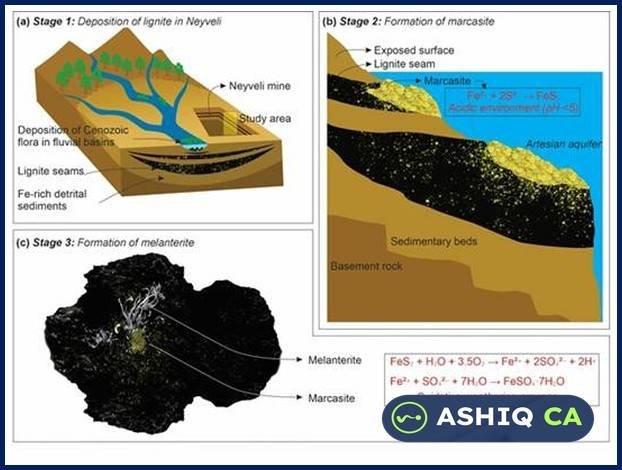
Why in News: A research team from the University of Kerala identified two hydrous sulphate minerals – melanterite in Neyveli (Tamil Nadu) and gypsum in the Atacama Desert (Chile) and the Tiruchirappalli Badlands (Tamil Nadu) – establishing these as Martian analogue sites.
What is a Martian Analogue Site?
- A place on Earth whose geological, chemical and physical conditions resemble Mars – used to understand Mars, since orbital data alone cannot fully identify Martian minerals.
Key Findings
- Melanterite (Neyveli): Formed from marcasite in the lignite layers through sulphide oxidation – shows short-lived wet, acidic and oxidising conditions, similar to processes on Mars.
- Gypsum (Atacama and Tiruchirappalli Badlands): Records past water activity and can preserve biosignatures (signs of past life) in its mineral structure.
- Both are hydrous sulphates – they record water–rock interactions.
- Tool used: Laser Raman Spectrometer (detects each mineral’s unique spectral fingerprint), funded under DST-FIST.
- Team lead: Dr. Sajin Kumar K.S., Project Coordinator, DST-FIST, Department of Geology, University of Kerala.
- Published in: Two papers in the Journal of Geophysical Research: Planets.
Significance
- Helps understand past water and habitability on Mars and guides future Mars missions to the most promising sites to search for life.
- Team is now studying rare analogue sites in extreme environments for astrobiology research.
GS Facts: Science Links
- DST-FIST = Fund for Improvement of S&T Infrastructure in Universities and Higher Educational Institutions
- Raman Effect discovered by C.V. Raman on 28 February 1928 (National Science Day)
- Neyveli has India’s major lignite deposits (NLC India Ltd.)
- Atacama (Chile) – the driest non-polar desert on Earth
- India’s Mangalyaan (MOM, 2013) reached Mars orbit in its first attempt.
⚠ Exam Trap: Melanterite was found in Neyveli; gypsum in Atacama and the Tiruchirappalli Badlands. The study was done by the University of Kerala, not ISRO. Raman spectroscopy (not X-ray) was used.
TDB Backs QNu Labs with ₹150 crore for Quantum Secure and Sensing Networks
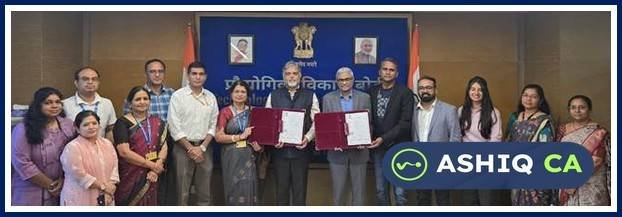
Why in News: The Technology Development Board (TDB), DST, signed an agreement with QNu Labs Pvt. Ltd., Bengaluru for ₹150 crore support under the Research Development and Innovation (RDI) Fund – for a ₹300 crore project to build an indigenous backbone for India’s Quantum Secure and Sensing Networks (IQSN).
Key Details
- Funding mode: Optionally Convertible Debt (OCD) – a loan that may be converted into equity later.
- Goal: Take technologies from TRL 4–5 to TRL 9 – a sovereign quantum-security and sensing technology stack.
Four Pillars of the Programme
- 1. Identity security: Quantum-secure Physical Unclonable Functions (PUFs) and quantum-safe Trusted Platform Modules (TPMs) – trusted device identity.
- 2. Location integrity: Quantum magnetometers to detect tampering/spoofing and enable GPS-denied navigation.
- 3. Network security: Chip-based and satellite-based Quantum Key Distribution (QKD), secure modules and encryption systems.
- 4. Time integrity: Indigenous atomic clocks and QKD-authenticated secure time synchronisation – vital for telecom, finance, power grids and defence.
Key Terms (Simple Explanation)
- QKD: Shares secret encryption keys using quantum particles (photons) – any eavesdropping disturbs them and is detected.
- Quantum sensing: Uses quantum effects to measure magnetic fields, time, motion with extreme precision.
- PUF: A unique physical ‘fingerprint’ of a chip that cannot be copied.
GS Facts: National Quantum Mission (NQM)
- Approved in April 2023; outlay ₹6,003.65 crore (2023-24 to 2030-31); under DST
- Four Thematic Hubs (T-Hubs): quantum computing (IISc Bengaluru), communication (IIT Madras), sensing & metrology (IIT Bombay), materials & devices (IIT Delhi)
- TDB – set up in 1996 under the TDB Act, 1995.
⚠ Exam Trap: Funding is via Optionally Convertible Debt from TDB (DST) – not a DRDO grant. The four pillars are identity, location, network and time – ‘computing’ is not one of them.
SPACE
Japan’s MMX: World’s First Mission to Bring Back Samples from Mars’ Moon Phobos
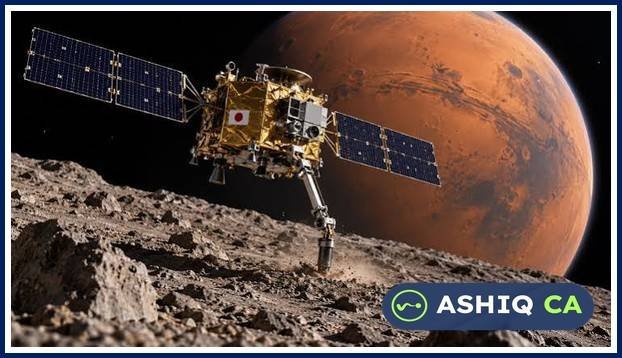
Why in News: The Japan Aerospace Exploration Agency (JAXA) is set to launch the Martian Moons eXploration (MMX) mission on its H3 rocket from Tanegashima Space Centre – the world’s first mission to bring back samples from Phobos, one of Mars’ two moons.
Mission Timeline
- Launch: October 2026 (H3 rocket) → Arrival near Mars around August 2027.
- 3 years around Phobos for data and sampling → Return to Earth in 2031; capsule to land in Australia.
- Flight distance: 500–600 million km (Mars is 55 million km away at its closest).
Spacecraft and Instruments
- Three modules: Propulsion, Exploration and Return – only the Return module comes back with samples.
- 13 instruments, including the French–German rover ‘Idefix’ (100-day mission on Phobos around 2029), a NASA sampling device and gamma-ray instrument, and ESA’s deep-space communication device.
- Sampling: At least 10 g of soil from two attempts – NASA’s device uses pressurised gas; JAXA’s coring tool digs about 2 cm deep.
- Phobos has only 1/2000th of Earth’s gravity – landing gear has shock absorbers to avoid bouncing.
Why Phobos?
- To find how Phobos and Deimos formed – from debris after a giant impact on Mars, or captured asteroids.
- Phobos is closer to Mars – about 0.1% of collected material may be from Mars itself; could hold traces of past Martian life.
- Could help plan a Martian moon base for future human missions.
About Phobos and Deimos
- Phobos: ~27 km across; orbits about 6,000 km above Mars, three times a day. Names mean ‘fear’ and ‘terror’ – sons of Ares (Greek god of war; Roman Mars).
- Discovered in 1877 by Asaph Hall. Earlier Russian attempts to land on Phobos (incl. 2011) failed.
GS Facts: Sample-Return Missions
- Japan’s Hayabusa (asteroid Itokawa, 2010) and Hayabusa2 (asteroid Ryugu, 2020)
- NASA’s OSIRIS-REx (asteroid Bennu, 2023)
- China’s Chang’e-6 brought samples from the Moon’s far side (2024)
- India’s Mangalyaan (2013) – first Asian nation to reach Mars orbit.
⚠ Exam Trap: MMX will sample Phobos (the larger, closer moon), not Deimos – it will only fly by Deimos. The rover Idefix is French–German, not American. Samples return in 2031, not 2027.
DEFENCE
★ Important One-liners
- NSG CELEBRATES 42nd RAISING DAY: The National Security Guard (NSG) – the ‘Black Cats’ – celebrated its 42nd Raising Day on 16 October 2026
- India’s premier federal counter-terrorism force; raised in 1984 after Operation Blue Star
- Philosophy: ‘swift and speedy strike, followed by immediate withdrawal’
- National Security Guard Act, 1986 received Presidential assent on 22 September 1986
- Works under the Ministry of Home Affairs; drawn from the Army (Special Action Group) and CAPFs/State Police (Special Ranger Groups); motto ‘Sarvatra Sarvottam Suraksha’.
HEALTH
FSSAI Proposes Ban on Added Sucrose and Fructose in Foods for Infants up to Six Months
Why in News: The Food Safety and Standards Authority of India (FSSAI) has proposed that sucrose and fructose shall not be added to food products for infants up to six months of age, through the draft FSS (Foods for Infant Nutrition) Amendment Regulations, 2026, published on 16 October 2026.
Key Points
- Present rules (2020 Regulations): Lactose and glucose polymers are the preferred carbohydrates; sucrose/fructose may be added within limits.
- Proposed change: A specific ban on adding sucrose and fructose for the first 6 months.
- Why? Early exposure to added sugars shapes dietary preferences and may lead to childhood obesity and related problems.
- Supports the WHO recommendation of exclusive breastfeeding for the first six months.
- Public consultation: Objections and suggestions within 60 days; becomes law only after final notification.
Simple Science
- Sucrose = table sugar (glucose + fructose); fructose = fruit sugar; lactose = milk sugar (glucose + galactose) – natural in breast milk.
GS Facts: FSSAI and Infant Feeding
- FSSAI – statutory body under the Food Safety and Standards Act, 2006; under the Ministry of Health and Family Welfare; HQ New Delhi
- IMS Act, 1992 (Infant Milk Substitutes, Feeding Bottles and Infant Foods Act) restricts promotion of infant formula
- MAA (Mothers’ Absolute Affection) programme promotes breastfeeding.
⚠ Exam Trap: The proposed ban is for infants up to 6 months – not up to 2 years. It is a draft (60-day consultation), not yet in force. Lactose and glucose polymers remain allowed.
FSSAI Proposes Revised Pesticide Residue Limits for Tea
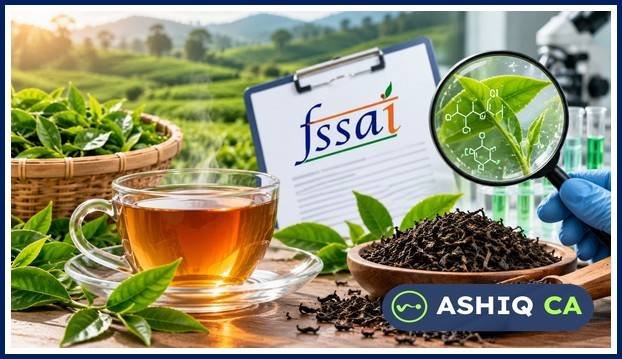
Why in News: The FSSAI has proposed revised Maximum Residue Limits (MRLs) for two pesticides – Acetamiprid and Imidacloprid – in tea, through the draft FSS (Contaminants, Toxins and Residues) Amendment Regulations, 2026, published on 16 October 2026.
Proposed Limits
| PesticidePesticidePesticide | Proposed MRL in teaProposed MRL in teaProposed MRL in tea | ComparisonComparisonComparison |
|---|---|---|
| Acetamiprid | 20 mg/kg (20 ppm) | Lower than Japan (30 ppm) and USA (50 ppm) |
| Imidacloprid | 50 mg/kg (50 ppm) | Based on international Codex standards |
Key Points
- MRL: The highest legally allowed concentration of a pesticide residue in food – based on residue data, dietary exposure and safety factors.
- India’s average pesticide use is less than 0.5 kg/hectare, far below the global average of 2.38 kg/ha.
- Earlier, the 2024 amendment revised residue limits, and 13 highly toxic pesticides were delisted.
- Gives regulatory clarity to tea growers, processors, labs and enforcement agencies; balances crop protection with consumer safety.
GS Facts: Tea and Pesticides
- India is the 2nd largest tea producer (after China); Assam is the top producing State
- Tea Board – set up in 1953, HQ Kolkata
- Codex Alimentarius Commission – set up by FAO and WHO in 1963, HQ Rome
- Acetamiprid and Imidacloprid are neonicotinoid insecticides – linked to harm to bees.
⚠ Exam Trap: The proposed Acetamiprid limit (20 ppm) is lower (stricter) than Japan’s and the USA’s. Both rules are drafts published on 16 October 2026. MRLs are set by FSSAI, not the Tea Board.
★ Important One-liners
- ‘AI AND AYURVEDA’ CONFERENCE AT ITRA, JAMNAGAR: A national conference on ‘AI and Ayurveda’ was held under ‘Ayu-Tech Navonmesh 2026’ on the 6th Foundation Day of the Institute of Teaching and Research in Ayurveda (ITRA), Jamnagar
- Discussed integrating Ayurveda with digital technology, AI in research and its responsible use in healthcare
- ITRA: declared an Institution of National Importance under the ITRA Act, 2020 – the first INI in the AYUSH sector
- Jamnagar also hosts the WHO Global Centre for Traditional Medicine (GCTM).
- WORLD MENOPAUSE DAY – 18 OCTOBER: The Ministry of Ayush called for greater awareness, open conversations and timely care around menopause
- Through the Central Council for Research in Ayurvedic Sciences (CCRAS), it is promoting preventive care and research on Ayurvedic approaches to menopausal health
- Menopause: natural stage marking the permanent end of menstruation due to loss of ovarian follicular activity; usually between 45 and 55 years.
INTERNATIONAL
★ Important One-liners
- IRAN GETS NEW DEFENCE MINISTER: Iran’s Parliament approved Mehrdad Akhlaqi Ketabchi as Defence Minister on 18 October 2026, ending months of interim leadership
- He replaces interim minister Majid Ebn al-Reza, who took over after then Defence Minister Aziz Nasirzadeh was killed in US–Israeli strikes in February
- A veteran of Iran’s aerospace and missile sectors; under US and EU sanctions
- Iran: capital Tehran; Parliament – Majlis; Supreme Leader is the highest authority.
TAMILNADU
★ Important One-liners
- PERIYAR ARIVULAGAM INAUGURATED IN COIMBATORE: Chief Minister C. Joseph Vijay on 16 October 2026 inaugurated Periyar Arivulagam – a library and science centre built at a cost of ₹301.71 crore at Gandhipuram, Coimbatore – and unveiled a statue of Thanthai Periyar
- Eight-storey building; built-up area 1.98 lakh sq ft on 6.98 acres (land of the Coimbatore Central Prison)
- Foundation stone laid on 6 November 2024
- Periyar E.V. Ramasamy (1879–1973): founder of the Self-Respect Movement (1925); led the Vaikom Satyagraha (1924)
- Other big libraries in TN: Anna Centenary Library (Chennai, 2010) and Kalaignar Centenary Library (Madurai, 2023).
- TIRUVANNAMALAI TEMPLE ELEPHANT NAMED ‘NAMASIVAYAM’: The elephant at the Arunachaleswarar Temple, Tiruvannamalai was named ‘Namasivayam’ by Ministers Aadhav Arjuna (Public Works and Sports Development) and Ramesh (HR&CE)
- The elephant, earlier called ‘Hiralal’, arrived from Assam on 24 September
- Arunachaleswarar Temple: one of the Pancha Bhoota Sthalams – representing fire (Agni); famous for the Karthigai Deepam festival.
SPORTS
★ Important One-liners
- SHEETAL DEVI EQUALS WORLD RECORD AT ASIAN PARA GAMES: Indian para-archer Sheetal Devi (19) equalled the world record and set a new Asian record with 704/720 in the women’s compound qualification round at the Asian Para Games, Okazaki (Aichi), Japan
- Beat the previous Asian record of 698 by 6 points
- Payal Nag scored 675 to finish joint fifth; she won gold at the 2026 World Archery Para Series, Bangkok
- Sheetal Devi: from Jammu & Kashmir; born without arms – shoots with her feet; won bronze in the mixed team compound at the Paris 2024 Paralympics; Arjuna Award (2023).
RAPID REVISION
| TopicTopicTopic | Key Fact to RememberKey Fact to RememberKey Fact to Remember |
|---|---|
| Census (Amendment) Rules, 2026 | Teachers, officials & any suitable person can be enumerators |
| Census Act | 1948; last Census 2011; next reference date 1 March 2027 |
| SC – internet for children | Fundamental right – Art. 21 r/w 19(1)(a); ‘child mode’ |
| SC – menstrual health | Part of Art. 21 (judgment 30 Jan 2026); contempt warning |
| School toilets | 30,458 built; 4,236 under construction |
| Kufri Jamunia | ICAR-CPRI (2024); purple flesh; Vitamin C 42.75 mg/100 g |
| Martian analogues | Melanterite – Neyveli; Gypsum – Atacama & Tiruchirappalli |
| QNu Labs | TDB ₹150 cr (OCD); IQSN; 4 pillars |
| MMX (JAXA) | Phobos sample return; H3 rocket; return 2031 |
| NSG | 42nd Raising Day; raised 1984; NSG Act 1986 |
| FSSAI – infants | No added sucrose/fructose up to 6 months (draft) |
| FSSAI – tea MRL | Acetamiprid 20 ppm; Imidacloprid 50 ppm |
| Clean hydrogen | India 3rd globally in contracted volumes |
| ACCEL | ADB–Japan; first investment – AM Green Ammonia |
| ITRA Jamnagar | 6th Foundation Day; ‘AI and Ayurveda’ |
| World Menopause Day | 18 October |
| Iran | New Defence Minister – Mehrdad Akhlaqi Ketabchi |
| Periyar Arivulagam | Coimbatore; ₹301.71 cr library & science centre |
| Temple elephant | ‘Namasivayam’ – Arunachaleswarar Temple, Tiruvannamalai |
| Sheetal Devi | 704/720 – equals world record (para archery) |
TOP 5 QUIZ OF THE DAY
✎ Test yourself – 5 most important MCQs of the day
Q1. Consider the following statements regarding the Census in India:
1. The Census is conducted under the Census Act, 1948.
2. Census is a subject in the Concurrent List of the Seventh Schedule.
3. The first synchronous Census in India was conducted in 1881.
Which of the statements given above is/are correct?
- (a) 1 only
- (b) 2 and 3 only
- (c) 1 and 3 only
- (d) 1, 2 and 3
Q2. With reference to the recent Supreme Court ruling on children and the internet, consider the following statements:
1. The Court held that the right to access and use the internet is a fundamental right under Article 21 read with Article 19(1)(a).
2. The Court held that all age-based restrictions on online access are unconstitutional.
3. The Court suggested a ‘child mode’ and parental consent mechanisms for social media accounts.
Which of the statements given above is/are correct?
- (a) 1 and 3 only
- (b) 1 only
- (c) 2 and 3 only
- (d) 1, 2 and 3
Q3. With reference to ‘Kufri Jamunia’, consider the following statements:
1. It is a biofortified potato variety developed by ICAR-CPRI.
2. It has purple skin as well as purple flesh.
3. It contains less Vitamin C than the common yellow-skinned potato.
Which of the statements given above is/are correct?
- (a) 1 only
- (b) 1, 2 and 3
- (c) 2 and 3 only
- (d) 1 and 2 only
Q4. With reference to India’s quantum technology initiatives, consider the following statements:
1. Quantum Key Distribution uses quantum properties of particles to detect eavesdropping.
2. The National Quantum Mission is implemented by the Department of Science and Technology.
3. TDB’s support to QNu Labs is in the form of a non-repayable grant.
Which of the statements given above is/are correct?
- (a) 1 only
- (b) 1 and 2 only
- (c) 2 and 3 only
- (d) 1, 2 and 3
Q5. With reference to JAXA’s MMX mission, consider the following statements:
1. It aims to bring back samples from Deimos, the larger moon of Mars.
2. It will carry a rover developed jointly by France and Germany.
3. The samples are expected to return to Earth in 2031.
Which of the statements given above is/are correct?
- (a) 2 and 3 only
- (b) 1 and 2 only
- (c) 1 only
- (d) 1, 2 and 3
ANSWER KEY & EXPLANATIONS
Q1 – (c): Census is in the Union List (Entry 69), not the Concurrent List.
Q2 – (a): The Court said it was not against age-based restrictions; it opposed blanket bans.
Q3 – (d): Kufri Jamunia has 42.75 mg/100 g Vitamin C – almost double the common potato (23.15 mg).
Q4 – (b): The support is through Optionally Convertible Debt (OCD) under the RDI Fund – not a grant.
Q5 – (a): MMX will collect samples from Phobos – the larger and closer moon; it will only fly by Deimos.
— Keep Reading, Keep Revising —
Free daily PDFs: ashiqcurrentaffairs.com