How to use this material
Exam Tags & Source: Syllabus mapping for UPSC / TNPSC / SSC-RRB + clickable source link
Why in News: The news in 2–3 lines – read this first
▸ Sub-headings: Simple explanation + all facts, figures, names and years
GS Facts: Static GK linked to the news (blue box)
⚠ Exam Trap: Common confusions examiners use in options (orange box)
✎ Top 5 Quiz: Day’s 5 most important MCQs at the end, with answer key
✍ Mains Angle: Probable Mains question with value points (purple box)
★ Important One-liners: Short news under each theme + Rapid Revision
Here are the daily current affairs of 19 November 2026 in English for UPSC, TNPSC, SSC, RRB and Bank exams: the Article 22(2) 24-hour rule, 11 States/UTs declared fully literate under ULLAS, the 162.5% duty on bulk Scotch, India’s first indigenous H5N1 vaccine for chickens, the Barak-1 upgrade deal and the US losing its measles elimination status. Each topic comes with exam tags, GS facts, exam traps, a Mains angle, a rapid revision table and a quiz – useful for UPSC, TNPSC, SSC, RRB and Bank exams.
Quick Answer – Top Current Affairs Today (19 Nov 2026)
- Article 22(2): SC held the 24-hour limit starts from detention (when liberty is curtailed), not from formal arrest; magistrate must record the real time.
- ULLAS: 11 States/UTs declared fully literate (95% literacy); India’s literacy rate is 81.1% (Census 2011: 74.04%).
- Economy: 162.5% effective duty on bulk Scotch is the first big test for the India–UK trade deal; Niryat Disha guidelines relaxed for MSME exporters.
- Agriculture: India’s first indigenous inactivated H5N1 vaccine for chickens, developed by ICAR-NIHSAD, Bhopal.
- Schemes: VB-G RAM G guidelines – one ombudsperson in every district to handle rural job grievances.
- Defence: ₹1,976.40 crore deal with Israel Aerospace Industries to upgrade Barak-1; Navy marks 50 years of LRMR (INAS 312 ‘Albatross’).
- Health: US, Mexico and Bolivia lose measles elimination status (PAHO, 17 Nov 2026).
POLITY
Supreme Court: 24-Hour Limit Under Article 22(2) Starts from Detention, Not Formal Arrest

Why in News: A Supreme Court Bench of Justices Ujjal Bhuyan and Atul S. Chandurkar held (5 November 2026) that the 24-hour limit under Article 22(2) for producing an arrested person before a magistrate begins the moment a person is detained and his liberty is curtailed – not from the time the police formally record the arrest.
What Article 22(2) says (in simple words)
- Rule: Every arrested person must be produced before the nearest magistrate within 24 hours, not counting travel time from the place of arrest to the court
- Limit: No one can be kept in custody beyond 24 hours without the magistrate’s order
The case
- Facts: NDPS case in Tripura – Customs officers stopped a truck going to Agartala at about 2 p.m. on 29 September; 60.79 kg of methamphetamine (Yaba) tablets were hidden in ginger (commercial quantity = 50 g)
- Delay: Formal arrest shown only at 11 a.m. the next day; produced before the magistrate at 4.45 p.m. – more than 24 hours after they were stopped
- Agency’s claim: They were only ‘intercepted’, not detained, until the formal arrest
What the Court held
- Same meaning: In Art 22(2), ‘arrested’ and ‘detained’ mean the same thing – the Constitution does not recognise detention without arrest
- Magistrate’s duty: The magistrate must record the actual date and time of detention and check the 24-hour rule; if it is broken, the person must be released at once
- Reasonable time: Even within 24 hours, detention must not exceed a reasonable period – Section 58 BNSS (old Section 57 CrPC)
- Custodial safeguards: Recalled D.K. Basu v. State of West Bengal (1997) and Shafhi Mohammad v. State of HP (2018) – CCTV in police stations, videography of crime scenes
- Result: High Court’s refusal of bail was set aside
GS Facts
- Article 22 – protection against arrest and detention: 22(1) right to know grounds of arrest and to consult a lawyer; 22(2) 24-hour rule; 22(3) these do not apply to enemy aliens and preventive detention; 22(4)–(7) preventive detention – max 3 months without an Advisory Board
- BNSS, 2023 replaced the CrPC from 1 July 2024
- NDPS Act, 1985.
⚠ Exam Trap
- The 24 hours count from when liberty is curtailed (detention), not from the arrest memo. Travel time to the magistrate is excluded. Article 22(1)–(2) does not apply to preventive detention or enemy aliens.
✍ Mains Angle
Q. “Procedural safeguards are the backbone of personal liberty.” Discuss with reference to the recent Supreme Court ruling on Article 22(2).
Value points: artificial gap between interception and arrest used to bypass 24-hour rule; magistrate to record real time of detention; D.K. Basu guidelines, CCTV (Paramvir Singh Saini, 2020); custodial violence; balance with investigation needs under NDPS; police reforms and training.
Supreme Court Notice to Lokpal: Is a Hearing Needed Before a Show-Cause Notice?

Why in News: A Bench of CJI Surya Kant and Justices Joymalya Bagchi and V. Mohana issued notice to the Lokpal of India on a plea by public servant Chinmoyjit Sen against a Delhi High Court verdict (15 April 2026). The HC had held that the Lokpal need not hear a public servant before issuing a show-cause notice. The SC refused to stay the Lokpal proceedings.
The legal point
- Section 20(2): Lokpal can order a preliminary inquiry – here done by the CBI (report on 27 January)
- Section 20(3): A Lokpal bench of at least 3 members reviews the report, hears the public servant, decides if a prima facie case exists and chooses further action
- HC view: The right to be heard applies before the final action under Section 20(3), not before the show-cause notice – so there was no violation of natural justice
Concept: natural justice
- Two rules: Audi alteram partem – hear the other side; Nemo judex in causa sua – no one should be a judge in his own case
GS Facts
- Lokpal and Lokayuktas Act, 2013 (in force 2014) – Lokpal = Chairperson
- up to 8 members, 50% judicial; selected by a committee of PM, Lok Sabha Speaker, Leader of Opposition, CJI (or nominee SC judge) and an eminent jurist
- first Lokpal – Justice P.C. Ghose (2019)
- probes corruption under the Prevention of Corruption Act, 1988
- idea of an ombudsman came from Sweden (1809); ARC-1 (1966) recommended Lokpal and Lokayukta.
⚠ Exam Trap
- The HC said hearing is required before final action, not before the show-cause notice. The preliminary inquiry here was done by the CBI on the Lokpal’s direction. Lokpal is a statutory body, not constitutional.
SOCIAL ISSUES
ULLAS: 11 States/UTs Declare Themselves ‘Fully Literate’; Literacy Rate Rises to 81.1%
Why in News: Ladakh, Mizoram, Goa, Tripura, Himachal Pradesh, Chandigarh, Andaman & Nicobar Islands, Sikkim, Uttarakhand, Jammu & Kashmir and Lakshadweep. India’s literacy rate has risen to 81.1% from 74.04% (Census 2011).
About ULLAS
- Aim: Make every non-literate adult (15+ years) able to read, write and do basic maths, and help them learn life and job skills
- Full form: ULLAS = Understanding of Lifelong Learning for All in Society; run since 2022-23 by the Department of School Education & Literacy, Ministry of Education, in line with NEP 2020
- Method: Volunteer-based, hybrid mode – uses schools, colleges (HEIs) and community; ULLAS mobile app
- 5 components: Foundational literacy & numeracy, critical life skills, basic education, vocational skills, continuing education
- ‘Fully literate’: 95% literacy is treated as fully literate (100% is not practical due to old age, disabilities)
How learners are tested
- FLNAT: Foundational Literacy and Numeracy Assessment Test – held twice a year; tests reading, writing and numeracy
- Certificate: Those who pass are certified ‘Literate’ by the National Institute of Open Schooling (NIOS)
| Indicator | Number |
|---|---|
| FLNAT takers 2026-27 (so far) | 90.96 lakh |
| Total FLNAT takers (34 States/UTs) | 4.15 crore – pass rate above 90% |
| Registered on ULLAS app | 4.17 crore learners + 52.89 lakh volunteer teachers |
| Top States (adult learners) | MP 20.43 lakh, Rajasthan 18.18 lakh, Odisha 12 lakh, Telangana 7.54 lakh, Maharashtra 6.5 lakh, TN 4.5 lakh |
GS Facts
- Ladakh was the first administrative unit declared fully literate (2024); Mizoram the first State (2025)
- Census 2011 literacy: 74.04% (male 82.14%, female 65.46%); highest Kerala, lowest Bihar
- International Literacy Day – 8 September (UNESCO)
- earlier programmes: National Literacy Mission (1988), Saakshar Bharat (2009), Padhna Likhna Abhiyan (2020).
⚠ Exam Trap
- ‘Fully literate’ under ULLAS means 95%, not 100%. Certification is by NIOS, not NCERT. ULLAS covers 15 years and above. MP has the most adult learners, not Rajasthan.
ECONOMY
India’s 162.5% Duty on Bulk Scotch: First Big Test for the India–UK Trade Deal
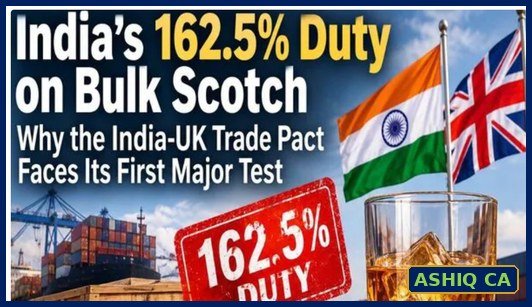
Why in News: India is charging an effective 162.5% import duty on bulk Scotch whisky, even though the India–UK trade agreement (in force from 15 July 2026) cut the tariff on Scotch from 150% to 75%. Over 80 containers of Pernod Ricard, Diageo and Bacardi are stuck at Indian ports. It is the first major trade dispute under the pact.
Why the dispute? (customs classification)
- India’s view: Bulk Scotch concentrate used to make blended whisky should fall under a new customs category (May 2026) – ‘compound alcoholic preparations’ – which attracts 150% duty; an extra consumption tax makes it 162.5%
- Companies’ view: Both bulk and bottled Scotch should get the 75% rate under the pact
- Interim arrangement: Pay 75% of goods’ value upfront + bank guarantees for the rest – strains working capital
Why it matters
- Bulk share: About 80% of Scotch imports by volume come in bulk, mostly used to make Indian-Made Foreign Liquor (IMFL)
- Indian firms affected: Radico Khaitan, Allied Blenders and Distillers, Tilaknagar Industries
- Size: India’s liquor market – about $65 billion; Scotch Whisky Association expects the pact to raise exports to India by $1.34 billion in 5 years
GS Facts
- India–UK Comprehensive Economic and Trade Agreement (CETA) – signed 24 July 2025 in London; whisky duty to fall 150% → 75% → 40% over 10 years
- Customs classification follows the Harmonized System (HS) of the World Customs Organization
- IMFL – liquor made in India in the style of foreign liquor.
⚠ Exam Trap
- The pact cut Scotch duty to 75%; the 162.5% comes from reclassifying bulk Scotch as ‘compound alcoholic preparations’ (150%) + consumption tax. The old tariff was 150%, so 162.5% is even higher than before the pact.
Export Promotion Mission: Guidelines Relaxed Under ‘Niryat Disha’ to Help MSME Exporters
Why in News: The Ministry of Commerce & Industry amended three interventions under the Niryat Disha sub-scheme of the Export Promotion Mission (EPM) to help exporters, especially MSMEs, reach new markets, meet global standards and cut logistics costs.
About EPM
- Aim: Boost India’s exports by giving exporters easier finance and non-financial support (market access, standards, logistics), especially MSMEs
- Approved: Union Cabinet, 12 November 2025; outlay ₹25,060 crore for 2025-26 to 2030-31
- Two sub-schemes: Niryat Protsahan (financial support) and Niryat Disha (non-financial support)
The three amended interventions
| Intervention | Key change |
|---|---|
| MAS – Market Access Support (trade fairs, buyer-seller meets) | Turnover limit for airfare refund ₹75 lakh → ₹50 crore; refund up to 95% (micro & small), 80% (others); EPC membership needed 6 → 3 months |
| TRACE – Trade Regulations, Accreditation & Compliance Enablement | Certificates eligible for refund 462 → 600 |
| LIFT – Logistics Interventions for Freight and Transport | Low export-intensity districts in 13 → 34 States/UTs; waterways added; LCS and ICPs included; air freight support for J&K and Ladakh (besides NE); minimum distance 200 → 100 km |
GS Facts
- Export Promotion Councils (EPCs) – industry bodies that promote exports of specific products
- ICP – Integrated Check Post (land border trade point, run by Land Ports Authority of India)
- LCS – Land Customs Station
- Foreign Trade Policy 2023 target: $2 trillion exports by 2030.
⚠ Exam Trap
- Niryat Disha = non-financial support; Niryat Protsahan = financial support. EPM outlay is ₹25,060 crore for six years (2025-26 to 2030-31). LIFT now covers J&K and Ladakh too.
AGRICULTURE
India’s First Indigenous H5N1 Bird Flu Vaccine for Chickens Developed by ICAR-NIHSAD, Bhopal
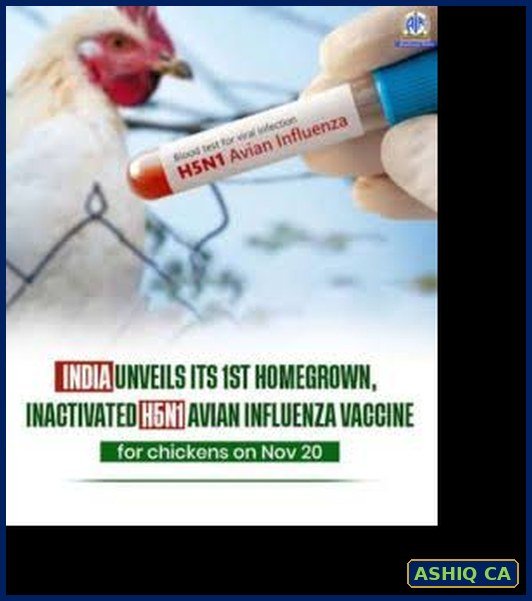
Why in News: Agriculture Minister Shivraj Singh Chouhan will dedicate India’s first indigenous inactivated H5N1 (Clade 2.3.2.1a) Highly Pathogenic Avian Influenza (HPAI) vaccine for chickens to the nation on 20 November 2026 at ICAR–National Institute of High Security Animal Diseases (NIHSAD), Bhopal, which developed it.
Concepts made easy
- Bird flu (HPAI): A serious viral disease of poultry; can kill nearly 100% of infected birds
- Inactivated vaccine: Contains a killed virus – it cannot multiply or cause disease but trains the chicken’s immune system to fight the real virus
- Clade 2.3.2.1a: The H5N1 strain behind most poultry outbreaks in India; also found in mammals and 3 human cases
- Zoonotic: A disease that can jump from animals to humans – mostly people in long contact with infected birds
Why the vaccine matters
| Impact of bird flu | Data |
|---|---|
| Outbreaks in India | First detected 2006; 500+ outbreaks of H5N1 and H5N8 |
| Economic loss | 2006 outbreak – ₹2,200–3,000 crore; Manipur outbreak – 0.5% of State GDP |
| Big outbreak risk | Could cut India’s GDP growth by up to 1.5%; 20%+ of poultry at risk |
| Human cases (WHO, since 2003) | 1,003 cases, 479 deaths in 25 countries (incl. India) |
GS Facts
- ICAR-NIHSAD, Bhopal – India’s high-security (BSL-3+) lab for exotic animal diseases like bird flu
- India’s bird flu control so far: culling of birds within 1 km of the outbreak (stamping out) under the National Action Plan for Avian Influenza
- H and N in H5N1 = Haemagglutinin and Neuraminidase (surface proteins of the virus)
- ICAR – est. 1929, under DARE.
⚠ Exam Trap
- The vaccine is inactivated (killed virus), not live. It is for chickens, not humans. Developed by ICAR-NIHSAD, Bhopal – not ICMR or NIV Pune. It targets H5N1 Clade 2.3.2.1a.
SCHEMES
VB-G RAM G: Centre Issues Guidelines for District Ombudspersons to Handle Rural Job Grievances
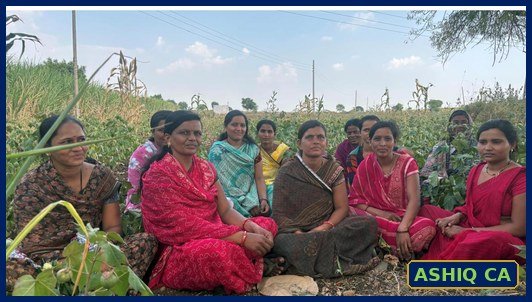
Why in News: The Ministry of Rural Development issued guidelines (18 November 2026) for ombudspersons and appellate authorities under the Viksit Bharat–Guarantee for Rozgar and Ajeevika Mission (Gramin) Act, 2025 (VB-G RAM G) – the law that replaced MGNREGA – to handle complaints and make the programme accountable.
About VB-G RAM G
- Aim: Guarantee wage employment to rural households and build durable village assets, with a grievance and accountability system
- Background: Replaced the Mahatma Gandhi NREGA (2005); State funding to follow the 16th Finance Commission formula and performance criteria
Key features of the new guidelines
- One per district: A dedicated ombudsperson in every district
- Complaints covered: Job cards, getting work, wage payment, delayed compensation, worksite facilities, muster rolls, denial of entitlements
- Who can be appointed: People with experience in rural development, public administration, law, academics, social work, management
- Digital platform: Online registration and tracking of complaints, records and awards
- Field checks: Geo-tagged and time-stamped photos during field visits
- Public hearings: Must attend at least 3 social audit hearings or gram sabha meetings every month
GS Facts
- Ombudsman – an independent officer who looks into public complaints against administration (idea from Sweden)
- Social audit – people of the village check records of a scheme in a public meeting (first legally mandated under MGNREGA, Sec 17)
- earlier rules (Nov 2026): grievances to be resolved in 15 days; FIR clause dropped.
⚠ Exam Trap
- VB-G RAM G replaced MGNREGA – it is a 2025 Act. There is one ombudsperson per district, not per block. Ombudspersons must attend at least 3 hearings a month.
★ Important One-liners
- UTTARAKHAND ANNOUNCES AID TO 5 LAKH WOMEN UNDER ‘BAINI-BHULI’ SCHEME: Uttarakhand CM Pushkar Singh Dhami announced financial aid for over 5 lakh women under the ‘Baini-Bhuli’ scheme, paid by DBT in two instalments (first in December 2026), at a Matrushakti Sammelan in Pipalkoti, Chamoli. Aim: direct cash support to make rural women self-reliant. Other State measures: 30% horizontal reservation for women in State jobs, 33% in cooperative societies; Nanda Gaura Yojana gives ₹11,000 at a girl’s birth and ₹51,000 after Class 12; Uttarakhand implemented the Uniform Civil Code. Static: The Chipko Movement (1973) began in Chamoli; Gaura Devi led women at Reni village (1974); UCC in Uttarakhand came into force on 27 January 2025 – first State after independence. Source: DD News
SCIENCE & TECH
★ Important One-liners
- IIT KANPUR LAUNCHES AI KAVACH – INDIA’S FIRST AI CYBERSECURITY AND ASSURANCE LAB: IIT Kanpur (through its Wadhwani School of AI and Intelligent Systems – WSAIS) and Bharat1.ai (Intellineuro Pvt Ltd) launched AI Kavach – India’s first AI Cybersecurity and Assurance Lab to secure AI used in banking, payments, lending, insurance and digital finance. Aim: make sure AI systems in finance are safe, tested and cannot be misused by hackers. Work: adversarial red-teaming (testing AI by attacking it like a hacker), sandboxing autonomous AI agents, research on traceability; train 300+ people a year; uses compute from the IndiaAI Mission. Static: IndiaAI Mission – approved 2024, ₹10,372 crore. Source: Economic Times
- CHINA’S LINESHINE STAYS WORLD’S FASTEST SUPERCOMPUTER; INDIA’S SHAKTI CLOUD RANKED 35TH: China’s LineShine kept the No. 1 spot in the Top500 list of supercomputers released at SC26, Chicago (16 November 2026). It did 2.198 quintillion calculations per second (~2.2 exaflops) – the first Top500 machine to cross 2 quintillion – using ~42 MW power. Built by Shenzhen Cloud Computing Centre for weather and ocean research, it uses China-made processors and the Kylin operating system. It is the first Chinese No. 1 since Sunway TaihuLight (2017). Top five: LineShine, El Capitan, Frontier, Aurora (USA), JUPITER Booster (Germany). India’s best: Shakti Cloud at No. 35. Only 27 newcomers (lowest ever); best newcomer HANGANG (South Korea, No. 12). Static: 1 exaflop = 10¹⁸ calculations per second; Top500 is released twice a year (June & November); India’s National Supercomputing Mission (2015). Source: The Hindu
- CAMBRIDGE DICTIONARY NAMES ‘HUMAN’ AS WORD OF THE YEAR 2026: The Cambridge Dictionary chose ‘human’ as its Word of the Year 2026, saying the spread of AI has made people value human creativity, connection and authenticity again; it often appears in terms like ‘human-written’, ‘human-made’. Shortlist: analogue, agent, wholesome, chic. Source: News on AIR
DEFENCE
Indian Navy Marks 50 Years of Long-Range Maritime Reconnaissance; INAS 312 ‘Albatross’ Turns 50
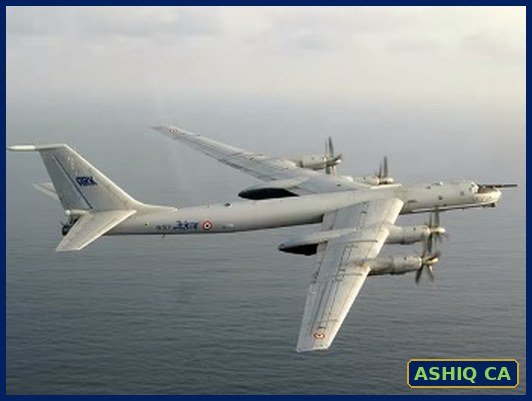
Why in News: The Indian Navy marked the Golden Jubilee of its Long-Range Maritime Reconnaissance (LRMR) operations on 18 November 2026, which is also the 50th anniversary of Indian Naval Air Squadron (INAS) 312 – ‘Albatross’.
What is LRMR?
- Simple meaning: ‘Eyes in the sky’ over the deep ocean – long-range aircraft from coastal bases watch thousands of km of the Indian Ocean Region: surveillance, anti-submarine warfare, search and rescue, anti-piracy
Fifty years in aircraft
| Year | Milestone |
|---|---|
| 18 Nov 1976 | INAS 312 commissioned at INS Hansa, Goa with 5 Lockheed Super Constellation aircraft from the IAF |
| 1977 | Ilyushin Il-38 inducted – maritime reconnaissance and anti-submarine warfare |
| 1988 | Tupolev Tu-142M – extended reach across the Indian Ocean |
| 2013 | Boeing P-8I at INS Rajali, Arakkonam (TN) – surveillance, anti-submarine warfare, maritime strike |
- Operations supported: Cactus (Maldives, 1988), Vijay (1999), Parakram (2001-02), Sindoor (2025), anti-piracy and search and rescue
- Today: P-8I of INAS 312 (INS Rajali, Arakkonam) and INAS 316 (INS Hansa, Goa)
- Why started: After the 1971 war, the Navy took over maritime reconnaissance from the IAF
GS Facts
- P-8I Neptune – Boeing (USA) maritime patrol aircraft; India’s version of the US Navy’s P-8A
- INS Rajali (Arakkonam, near Chennai) is one of the Navy’s largest air stations
- Quad plans a joint P-8/P-3C maritime patrol exercise in 2027.
⚠ Exam Trap
- INAS 312 was commissioned at INS Hansa, Goa (1976) but its P-8I now fly from INS Rajali, Arakkonam (TN). The first aircraft were Super Constellations from the IAF. Tu-142M came in 1988, P-8I in 2013.
Defence Ministry Signs ₹1,976 Crore Deal with Israel Aerospace Industries to Upgrade Navy’s Barak-1 Missile System

Why in News: The Ministry of Defence signed a ₹1,976.40 crore contract with Israel Aerospace Industries (IAI) on 18 November 2026 for the upgradation and obsolescence management of the Barak Point Defence Missile System (Barak-1) on Indian Navy ships, under the Other Capital Procurement procedure. The DAC had approved it in August 2025.
About Barak-1
- Type: Ship-borne, short-range surface-to-air missile (SAM), developed by IAI and Rafael (Israel)
- Role: Point defence – protects one ship from threats that get past outer defences: sea-skimming anti-ship missiles, aircraft, drones
- Design: Vertical launch from 8-cell modules – gives 360-degree coverage without turning the launcher
- Upgrade: Full hardware and software overhaul to replace ageing parts and extend service life
Concept: point defence vs area defence
- Point defence: Protects a single ship at short range (e.g. Barak-1)
- Area defence: Protects a whole fleet at longer range (e.g. Barak-8 / MRSAM, jointly developed by DRDO and IAI)
GS Facts
- Defence Acquisition Council (DAC) – headed by the Defence Minister; approves capital purchases
- Obsolescence management – replacing outdated parts so equipment stays usable
- Rafael also makes Israel’s Iron Dome.
⚠ Exam Trap
- This deal is for Barak-1 (short-range, point defence), not Barak-8/MRSAM. The contractor is Israel Aerospace Industries. Value: ₹1,976.40 crore.
ENVIRONMENT
Pallikaranai Marsh: Madras HC Asks Builders to Approach Supreme Court on Smaller ‘Zone of Influence’
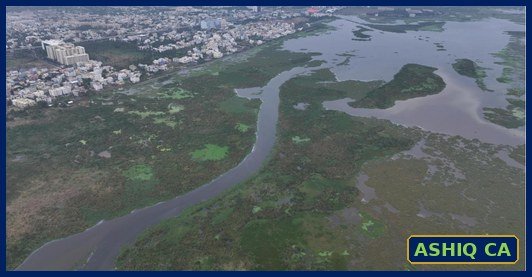
Why in News: The Madras High Court (CJ Sushrut Arvind Dharmadhikari and Justice G. Arul Murugan) disposed of cases (incl. CREDAI-Chennai) against the NGT’s construction ban within 1 km of the 1,247.54-hectare Pallikaranai marsh, Chennai. It said they must go to the Supreme Court, which is already hearing the issue of protecting wetlands nationwide.
Key terms made easy
- Zone of Influence (ZoI): The area around a wetland where activities can affect the wetland’s water flow and health – so they are regulated
- Ground truthing: Checking satellite map details on the ground before fixing final boundaries
The dispute
- NGT ban: No construction in 1 km around the marsh – affected about 3,474 hectares in south Chennai
- TNSWA proposal: TN State Wetlands Authority proposed a much smaller interim ZoI of 128.19 hectares in 36 survey numbers
- Regulate, not ban: Inside the ZoI: no blocking of inlets/outlets or drains, no waste dumping, no untreated sewage, no red-category industries; NOC from the district wetlands management committee for construction
- Final ZoI: Only after scientific mapping and ground truthing under the Wetlands (Conservation and Management) Rules, 2017
GS Facts
- Pallikaranai Marsh – one of Chennai’s last natural freshwater marshes; declared a Ramsar site in 2022; drains to the Bay of Bengal through the Okkiyam Madavu
- Ramsar Convention – signed 1971 at Ramsar, Iran; India joined 1982
- Tamil Nadu has the most Ramsar sites in India
- NGT – set up under the NGT Act, 2010.
⚠ Exam Trap
- The HC did not decide the ZoI – it sent parties to the Supreme Court. The NGT’s ban is 1 km; the TNSWA’s proposed interim ZoI is 128.19 ha. Wetland rules are of 2017 (under the Environment Protection Act, 1986).
★ Important One-liners
- ANDAMAN COBRA – INDIA’S ONLY ISLAND-DWELLING COBRA FACES CONSERVATION CHALLENGES: The Andaman cobra (Naja sagittifera) is the only cobra species in India that lives on islands – endemic to the Andaman Islands. It was first described in 1913 by herpetologist Frank Wall in the Journal of the Bombay Natural History Society. Threats: small isolated population (inbreeding), deforestation, people killing it out of fear – it is highly venomous and can spit venom. There is no commercial antivenom for it yet, which also limits field research. It eats rodents, frogs and lizards. Concern also linked to the Great Nicobar Island Development Project. Static: King cobra is a close relative but from a different genus (Ophiophagus); India’s polyvalent antivenom covers the ‘Big Four’ – Indian cobra, common krait, Russell’s viper, saw-scaled viper. Source: The Hindu
HEALTH
US Loses Measles Elimination Status After 26 Years; Mexico and Bolivia Too
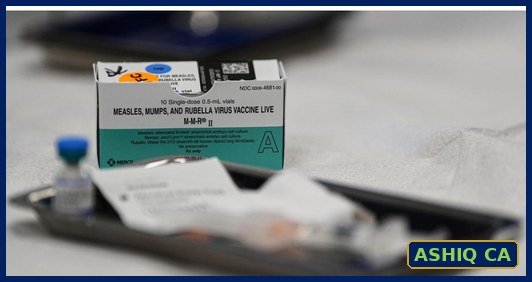
Why in News: On 17 November 2026, the Pan American Health Organization (PAHO) revoked the United States’ measles elimination status, held for 26 years, after 5,400+ cases in 2026 – the highest since 1989–91. Mexico and Bolivia also lost the status.
What is measles?
- Disease: A highly contagious viral disease, mostly of children; spreads through droplets from nose, mouth or throat
- Symptoms: After 10–12 days: high fever, runny nose, red eyes, tiny white spots inside the mouth, then a rash from face downwards
- Spread: One patient can infect 12–18 unprotected people
- Danger: No specific treatment; can cause blindness, encephalitis, pneumonia, death – especially in malnourished children
- Vaccine: 2 doses – first at 9 months (where measles is common), second at 15–18 months; 95% coverage is needed to stop spread (herd immunity)
Why the US lost the status
- Rule: A country loses ‘elimination’ if the same virus strain spreads non-stop for 12 months or more
- US timeline: Outbreak began January 2025, crossed 12 months in January 2026
- Causes: MMR coverage among kindergartners fell 95.2% (2019-20) → 92.7% (2023-24); vaccine hesitancy; weaker public health system
- Data: 96% of cases in unvaccinated people or unknown status; children 5–19 = 40% of cases
Global & India
- Others: Canada lost status in late 2025; UK and Spain in early 2026
- India: Among top countries for measles cases; 26,607 cases till July 2026 vs 18,000 in all of 2025
- UNICEF: Measles vaccine has saved nearly 59 million lives since 2000
GS Facts
- MMR = Measles, Mumps, Rubella vaccine; India’s routine schedule gives MR (Measles-Rubella) vaccine under Universal Immunisation Programme (UIP, 1985)
- Mission Indradhanush (2014) for full immunisation
- India’s target: eliminate measles and rubella by 2026
- PAHO – WHO’s regional office for the Americas, HQ Washington DC.
⚠ Exam Trap
- Elimination status is lost when the same strain spreads for 12+ months, not just because cases are high. Measles is viral. Herd immunity for measles needs 95% coverage – higher than most diseases.
★ Important One-liners
- WORLD AMR AWARENESS WEEK 2026 – ‘ONE HEALTH, ONE ACTION: PREVENT AMR NOW’: The Health Ministry began the national observance of World Antimicrobial Resistance (AMR) Awareness Week 2026 at Kartavya Bhawan, New Delhi. Theme: ‘One Health, One Action: Prevent AMR Now’. The week is observed every year from 18 to 24 November. Concept: AMR is when bacteria, viruses, fungi or parasites stop responding to medicines (antibiotics etc.), so infections become hard to treat – mainly due to overuse and misuse of antibiotics. One Health = human, animal and environmental health are linked. India’s National Action Plan on AMR 2.0 (2025–2029) was launched by J.P. Nadda in November 2025. Aim: cut misuse of antimicrobials and slow the spread of resistance. Static: NAP-AMR 1.0 – 2017; Kerala – first State action plan (KARSAP, 2018); ‘Red Line’ campaign marks antibiotic packs. Source: PIB
INTERNATIONAL
★ Important One-liners
- HAKEEM JEFFRIES NOMINATED BY DEMOCRATS FOR US HOUSE SPEAKER – SET TO BE FIRST BLACK SPEAKER: Democrats in the US House of Representatives nominated Hakeem Jeffries (New York) for Speaker, unopposed, after the party’s election win over Republicans. He is set to become the first Black American Speaker; the full House votes when the new Congress convenes on 3 January 2027. He has led House Democrats since 2023. Static: The Speaker is second in the US presidential line of succession (after the Vice-President). Source: Mint
- SECTION OF KERCH (CRIMEAN) BRIDGE COLLAPSES AFTER UKRAINIAN STRIKE: A section of the Kerch Bridge (Crimean Bridge) linking Russia with the occupied Crimean Peninsula collapsed after a Ukrainian strike; a parallel bridge remained standing. It is a key supply route for Russian troops, built after Russia annexed Crimea in 2014. Static: The bridge (~19 km, opened 2018) spans the Kerch Strait, which links the Black Sea and the Sea of Azov; it is Europe’s longest bridge. Source: Mint
TAMIL NADU
★ Important One-liners
- TAMIL NADU POLICE LAUNCH E-CSR FOR ONLINE COMPLAINTS: TN DGP Mahesh Kumar Aggarwal launched the e-CSR (electronic Community Service Register) facility. Aim: let people – especially senior citizens and women – file complaints about minor offences online without going to a police station, and get an e-CSR by SMS. Within 3 days, they can take it to the police station for a regular CSR or FIR. The e-FIR for cybercrime was launched last month; it will soon cover stolen mobile phones and two-wheelers. Murders (Jan–Nov) fell to 1,306 from a 5-year average of 1,421; 3,000 constables recruited, 1,200 SIs in progress, ~29,000 new posts sanctioned. Concept: CSR is a receipt for a complaint that may not need an FIR (usually non-cognisable/petty cases); an FIR is registered for cognisable offences (Section 173 BNSS). Source: The Hindu
SPORTS
★ Important One-liners
- INDIA BEAT PAKISTAN TO WIN RECORD 10TH SAFF CHAMPIONSHIP – A HAT-TRICK OF TITLES: India beat Pakistan 2-1 in the final at the National Stadium, Dhaka to win a record-extending 10th SAFF Championship and complete a hat-trick of consecutive titles (2021, 2023, 2026). Goals: Suhail Ahmad Bhat (60′) and Sandip Mandi (88′). India beat Bhutan 2-1 in the semi-final. Static: SAFF (South Asian Football Federation) – founded 1997, HQ Dhaka; first championship 1993; India’s men’s team is called the ‘Blue Tigers’. Source: News on AIR
RAPID REVISION
| Topic | Key fact to remember |
|---|---|
| Article 22(2) | SC: 24 hours start from detention (liberty curtailed), not formal arrest; travel time excluded; Sec 58 BNSS |
| Lokpal | SC notice on hearing before show-cause; Sec 20(3) – 3-member bench; Chair + up to 8 members (50% judicial) |
| ULLAS | 11 States/UTs fully literate (95%); literacy 81.1% (2011: 74.04%); FLNAT twice a year; certified by NIOS; MP most learners |
| Bulk Scotch | 162.5% effective duty (‘compound alcoholic preparations’ 150% + tax); India–UK CETA cut to 75% (in force 15 Jul 2026) |
| Export Promotion Mission | ₹25,060 cr (2025-31); Niryat Disha – MAS, TRACE (600 certificates), LIFT (34 States/UTs, J&K, Ladakh) |
| H5N1 vaccine | First indigenous inactivated bird flu vaccine for chickens; ICAR-NIHSAD Bhopal; Clade 2.3.2.1a; WHO: 1,003 cases, 479 deaths |
| VB-G RAM G | One ombudsperson per district; digital platform; geo-tagged photos; ≥3 social audit/gram sabha meetings a month |
| Baini-Bhuli | Uttarakhand; aid to 5 lakh women via DBT; Nanda Gaura – ₹11,000 at birth, ₹51,000 after Class 12 |
| AI Kavach | India’s first AI Cybersecurity & Assurance Lab – IIT Kanpur + Bharat1.ai; for financial AI |
| Top500 | LineShine (China) No. 1 – 2.198 exaflops; India’s Shakti Cloud No. 35 |
| Word of the Year | Cambridge – ‘human’ (2026) |
| LRMR 50 years | INAS 312 ‘Albatross’ – INS Hansa, Goa (18 Nov 1976); P-8I at INS Rajali, Arakkonam (2013) |
| Barak-1 | ₹1,976.40 cr upgrade with IAI; ship-borne short-range point defence SAM |
| Pallikaranai | Chennai marsh, 1,247.54 ha, Ramsar 2022; NGT 1-km ban; TNSWA interim ZoI 128.19 ha; HC → SC |
| Andaman cobra | Naja sagittifera; endemic; spits venom; no antivenom; described 1913 by Frank Wall |
| Measles – US | PAHO revoked elimination status (17 Nov 2026); 5,400+ cases; rule – same strain 12+ months; also Mexico, Bolivia |
| AMR Week | 18–24 Nov; ‘One Health, One Action: Prevent AMR Now’; NAP-AMR 2.0 (2025–29) |
| World | Hakeem Jeffries – likely first Black US House Speaker; Kerch Bridge section collapses |
| TN Police | e-CSR – online complaints for minor offences; e-FIR for cybercrime |
| SAFF Championship | India 10th title; beat Pakistan 2-1 in Dhaka; hat-trick |
TOP 5 QUIZ OF THE DAY
✎ Test yourself – 5 most important MCQs from the daily current affairs 19 November 2026. Tap a question to reveal the answer and explanation.
Q1. With reference to Article 22 of the Constitution, consider the following statements: 1. An arrested person must be produced before the nearest magistrate within 24 hours, excluding journey time. 2. According to the Supreme Court (Nov 2026), the 24 hours begin from the time of formal arrest. 3. Clauses (1) and (2) of Article 22 do not apply to a person arrested under a preventive detention law. Which of the statements given above are correct?
(a) 1 and 2 only (b) 2 and 3 only (c) 1 and 3 only (d) 1, 2 and 3
Answer: (c). The SC held the 24 hours begin from detention (when liberty is curtailed), not the formal arrest. Article 22(3) excludes enemy aliens and preventive detainees.
Q2. Under ULLAS – Nav Bharat Saaksharta Karyakram, learners who pass the Foundational Literacy and Numeracy Assessment Test (FLNAT) are certified by:
(a) NCERT (b) University Grants Commission (c) Central Board of Secondary Education (d) National Institute of Open Schooling
Answer: (d). NIOS certifies them as ‘Literate’. FLNAT is held twice a year; a State/UT reaching 95% literacy is treated as ‘fully literate’.
Q3. India’s first indigenous inactivated H5N1 bird flu vaccine for chickens has been developed by:
(a) ICMR–National Institute of Virology, Pune (b) ICAR–National Institute of High Security Animal Diseases, Bhopal (c) Indian Veterinary Research Institute, Izatnagar (d) National Dairy Development Board, Anand
Answer: (b). ICAR-NIHSAD, Bhopal. It targets H5N1 Clade 2.3.2.1a, the strain behind most poultry outbreaks in India.
Q4. Under WHO/PAHO criteria, a country loses its measles elimination status when:
(a) It reports more than 1,000 cases in a year (b) Vaccination coverage falls below 90% (c) The same virus strain circulates continuously for 12 months or more (d) A single measles death is recorded
Answer: (c). Continuous transmission of the same genotype/lineage for 12+ months (endemic transmission). The US lost the status on 17 Nov 2026.
Q5. The Pallikaranai marsh, recently in news over a ‘zone of influence’ dispute, is located in:
(a) Chennai (b) Kolkata (c) Kochi (d) Mumbai
Answer: (a). Chennai (1,247.54 ha; Ramsar site since 2022). The NGT banned construction within 1 km; TNSWA proposed a 128.19-ha interim zone.
FAQs – 19 NOVEMBER 2026
What are the most important current affairs for UPSC on 19 November 2026?
The top items are the Supreme Court ruling that the Article 22(2) 24-hour limit starts from detention, 11 States/UTs declared fully literate under ULLAS (literacy rate 81.1%), the 162.5% duty on bulk Scotch under the India–UK trade deal, India’s first indigenous H5N1 vaccine for chickens, VB-G RAM G district ombudspersons, the Barak-1 upgrade deal with IAI and the US losing its measles elimination status.
What did the Supreme Court say about Article 22(2)?
A Bench of Justices Ujjal Bhuyan and Atul S. Chandurkar held on 5 November 2026 that the 24 hours to produce an arrested person before a magistrate begin the moment the person is detained and liberty is curtailed, not from the formal arrest. The magistrate must record the actual time of detention, and if the limit is broken the person must be released at once.
Which States and UTs are fully literate under ULLAS?
Ladakh, Mizoram, Goa, Tripura, Himachal Pradesh, Chandigarh, Andaman & Nicobar Islands, Sikkim, Uttarakhand, Jammu & Kashmir and Lakshadweep. Under ULLAS, 95% literacy is treated as fully literate, and learners who pass FLNAT are certified by NIOS. India’s literacy rate is now 81.1%.
Why is India charging 162.5% duty on bulk Scotch whisky?
India treats bulk Scotch concentrate as ‘compound alcoholic preparations’ (a customs category from May 2026) with 150% duty, and an extra consumption tax takes it to 162.5%. Companies say the India–UK trade agreement, in force from 15 July 2026, cut the Scotch tariff from 150% to 75% for both bulk and bottled Scotch.
Which institute developed India’s first indigenous H5N1 vaccine for chickens?
ICAR–National Institute of High Security Animal Diseases (NIHSAD), Bhopal. It is an inactivated vaccine against H5N1 Clade 2.3.2.1a, to be dedicated to the nation by Agriculture Minister Shivraj Singh Chouhan on 20 November 2026.
Why did the US lose its measles elimination status?
On 17 November 2026 the Pan American Health Organization revoked the status because the same measles strain spread for 12 months or more (the outbreak began in January 2025). The US reported over 5,400 cases in 2026; Mexico and Bolivia also lost the status.
What are the VB-G RAM G ombudsperson guidelines?
Issued on 18 November 2026 under the VB-G RAM G Act, 2025 (which replaced MGNREGA), they provide one ombudsperson in every district for complaints on job cards, work, wages and worksite facilities, with a digital complaint platform, geo-tagged field photos and at least 3 social audit or gram sabha hearings a month.
What is the Barak-1 upgrade deal?
The Ministry of Defence signed a ₹1,976.40 crore contract with Israel Aerospace Industries on 18 November 2026 to upgrade and manage obsolescence of the Barak-1 point defence missile system on Indian Navy ships. Barak-1 is a ship-borne, short-range surface-to-air missile.
Where can I get daily current affairs PDFs for TNPSC, UPSC and SSC?
Free daily current affairs, quizzes and monthly revision PDFs are available at ashiqcurrentaffairs.com (ASHIQ Current Affairs, by Ashiq Sir CA).
— Keep Reading, Keep Revising —
That completes the daily current affairs 19 November 2026.
Previous edition: Daily Current Affairs 18 November 2026
All editions: Daily Current Affairs 2026
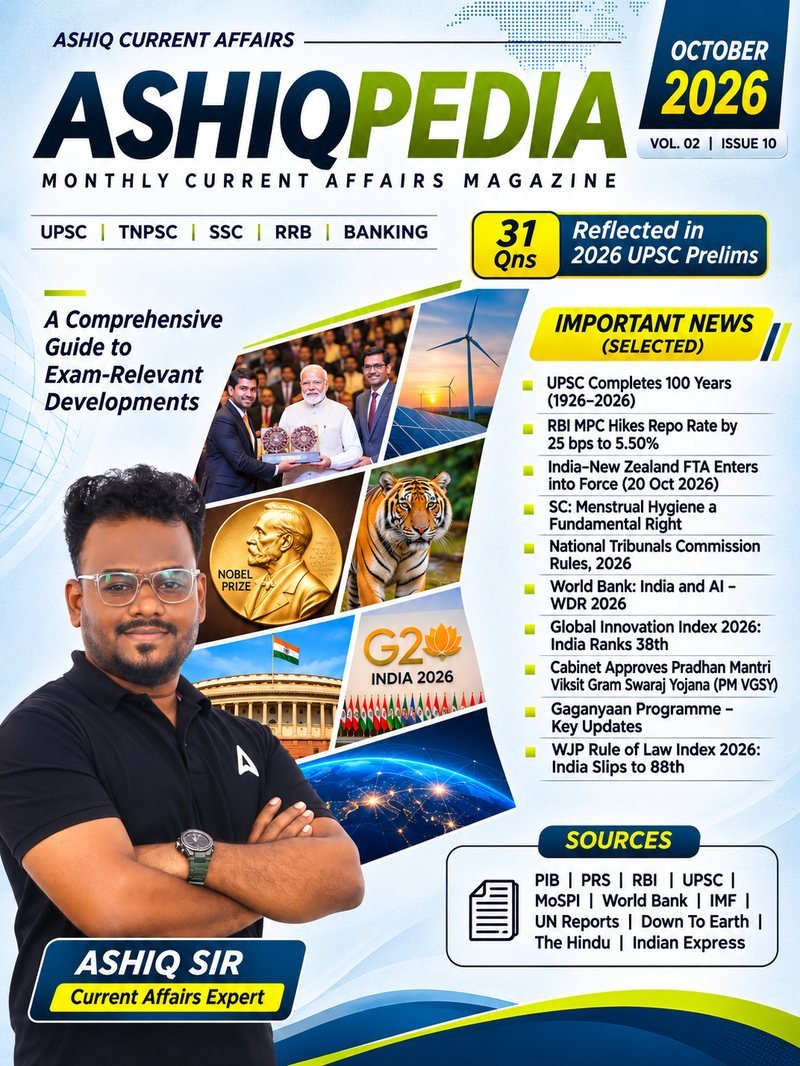
Monthly magazine: AshiqPedia October 2026 (free PDF)
Free daily PDFs: ashiqcurrentaffairs.com