
How to use this material
Exam Tags & Source: Syllabus mapping for UPSC / TNPSC / SSC-RRB + clickable source link
Why in News: The news in 2–3 lines – read this first
▸ Sub-headings: Simple explanation + all facts, figures, names and years
GS Facts: Static GK linked to the news (blue box)
⚠ Exam Trap: Common confusions examiners use in options (orange box)
✍ Mains Angle: Probable Mains question with value points (purple box)
★ Important One-liners: Short news under each theme + Rapid Revision table. Highlighted = must-remember
✎ Top 5 Quiz: Day’s 5 most important MCQs at the end, with answer key
Here are the daily current affairs for 22 October 2026 in English – the UNEP Emissions Gap Report 2026 (‘The Point of Return’), India’s planned 1% Sustainable Aviation Fuel (SAF) mandate under CORSIA, the ₹770 crore LLLR-I radar deal with BEL, an indigenous 20 mm gun for Rudra and LCH Prachand, SIMBEX-2026, the new concept of ‘heat storms’, the threatened Jeypore ground gecko, the Ipsos Quality of Care Index (India 3rd), the ‘Badr’ defence MoU, three Indian sites on the UNESCO Tentative List (Baratang, Andaman volcanoes, Sirpur), Khet Bachao Abhiyan and Police Commemoration Day – with GS Facts, Exam Traps, a Mains Angle, a Rapid Revision table and a Top 5 Quiz.
NATIONAL
★ Important One-liners
- POLICE COMMEMORATION DAY – 21 OCTOBER: PM Narendra Modi paid tributes to police personnel on Police Commemoration Day
- The day honours police personnel killed in the 1959 Chinese ambush at Hot Springs, Ladakh – a patrol of the CRPF was attacked on 21 October 1959, and 10 personnel were killed
- PM dedicated the National Police Memorial, Chanakyapuri, New Delhi to the nation in 2018
- Police and Public Order are State List subjects (Entry 1 & 2, Seventh Schedule).
AGRICULTURE
ICAR-CMFRI Launches Open-Sea Mussel Longline Farming Unit at Vizhinjam
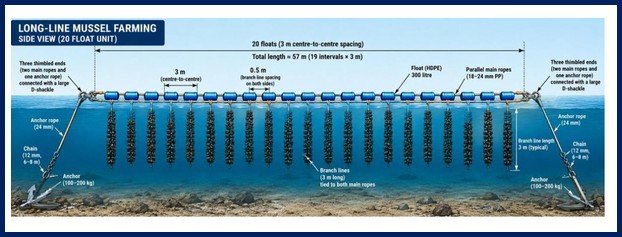
Why in News: The ICAR–Central Marine Fisheries Research Institute (CMFRI) unit at Vizhinjam (Thiruvananthapuram, Kerala) launched its first full-fledged open-sea mussel longline farming unit, to develop sustainable mussel farming and create livelihoods for coastal fishing communities.
Key Details
- Supported by: Department of Fisheries, GoI, under the project ‘Development of pilot-scale open-sea eco-mussel farms in India: a Blue Growth Project’.
- Launched by: Shashi Tharoor, MP; implemented with the local ‘Vizhinjam Mungal Thozhilali Kshema Sangom’ (traditional divers’ welfare society).
- Set-up: 20 specially designed 300-litre HDPE floats, parallel mainlines, suspended mussel culture ropes and an anchoring system.
- Background: Follows successful preliminary trials along the Kanyakumari coast (Tamil Nadu).
- Technology: CMFRI has developed mussel hatchery and micro-nursery technologies – large-scale seed production, less dependence on natural seed.
- Aim: Assess growth, production potential and economic viability under open-sea conditions, with participation of the traditional diving community.
Understanding the Terms
- Mussels: Bivalve molluscs (two shells) – filter feeders that clean water; India’s main farmed species is the green mussel (Perna viridis).
- Longline farming: Floats hold a long mainline on the surface, from which ropes with mussels hang down into the sea.
- Open-sea farming: Done away from the coast in deeper waters – less pollution and space conflict than estuarine farming.
GS Facts: Fisheries
- ICAR-CMFRI – set up in 1947; HQ Kochi
- PM Matsya Sampada Yojana (PMMSY) – launched 2020, outlay ₹20,050 crore
- India is the 2nd largest fish producer and a leading aquaculture nation
- Blue Revolution focuses on fisheries and aquaculture growth.
⚠ Exam Trap:
- This is open-sea longline farming – not estuarine rack farming.
- It is by ICAR-CMFRI (Kochi) – not CIFA (freshwater, Bhubaneswar).
- Mussels are bivalves, not crustaceans.
★ Important One-liners
- ‘KHET BACHAO ABHIYAN – RABI 2026’: The Ministry of Agriculture and Farmers Welfare is running the nationwide campaign from 22 October to 30 November 2026; launched by Union Agriculture Minister Shivraj Singh Chouhan from Karnal, Haryana
- Aims: balanced use of fertilisers based on soil testing, healthy soils, natural farming and sustainable agriculture
- Promotes crop diversification through the oilseed, pulse and horticulture missions; use of fallow fields after paddy harvest; proper crop residue management
- Implemented with State Governments and ICAR institutions
- Related: Soil Health Card Scheme (2015); National Mission on Edible Oils – Oilseeds (2024).
- AGRIVOLTAICS WORLD CONFERENCE 2026 – FIRST IN THE GLOBAL SOUTH: Inaugurated jointly by Union Agriculture Minister Shivraj Singh Chouhan and MNRE Minister Pralhad Joshi – a three-day conference
- Theme: “Powering the Global South”
- First time the conference is held in the Global South – highlights India’s push to make ‘Annadatas’ (food providers) into ‘Urjadatas’ (energy providers)
- Agrivoltaics: dual use of land – solar panels and crops on the same field
- The conference series was founded in 2020, with partners like Fraunhofer ISE (Germany)
- India link: PM-KUSUM (2019) supports solar pumps and solar plants on farmland.
SCIENCE & TECH
★ Important One-liners
- IIT MADRAS LAUNCHES ‘UDYOG’ FINISHING SCHOOL FOR BIOTECH: IIT Madras launched UDYOG (Upskilling and Development for Young Graduates) – an industry-oriented finishing school for biotechnology and biomanufacturing
- Aims to bridge the gap between academic education and industry needs – India’s biotech and biopharma sectors face a shortage of professionals with practical skills
- Three-stage training pathway; stage one – three months of online learning through IIT-M’s Centre for Outreach and Digital Education (CODE), with lectures by industry experts
- Related: BioE3 Policy (2024) – Biotechnology for Economy, Environment and Employment.
DEFENCE
MoD Signs ₹770 crore Deal with BEL for Improved Low Level Light Weight Radars
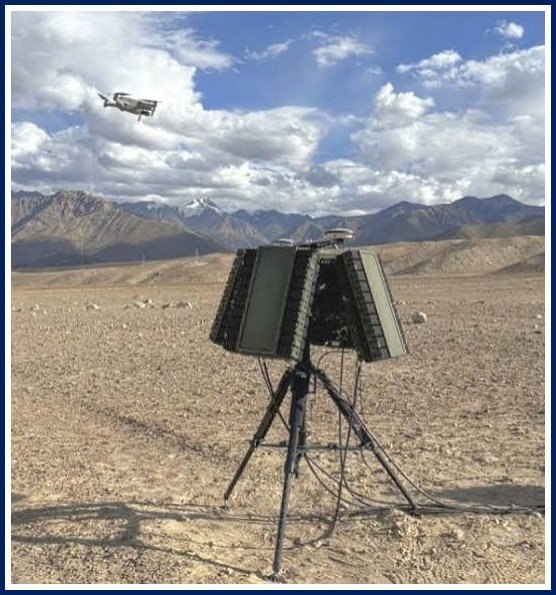
Why in News: The Ministry of Defence signed a contract with Bharat Electronics Limited (BEL) on 21 October 2026 to procure Improved Low Level Light Weight Radars (LLLR-I) for the Indian Army at about ₹770 crore, in the presence of Defence Secretary Rajesh Kumar Singh.
About LLLR-I
- Indigenous air defence surveillance radar made by BEL.
- Detects and tracks targets from fighter-sized aircraft to mini and micro drones.
- Target prioritisation: Helps operators instantly decide which incoming threat to neutralise first.
- Purpose: Strengthens the Army’s ability to counter Unmanned Aerial Systems (UAS) and low-flying aircraft.
Technology (Simple Explanation)
- Pulse-Doppler radar: Measures both distance and speed of a target using the Doppler effect – good at spotting moving targets against ground clutter.
- Software-defined: Functions can be upgraded through software.
- AESA antenna: Active Electronically Scanned Array – the beam is steered electronically (no moving dish), so it is faster and harder to jam.
- GaN amplifiers: Gallium Nitride chips give higher power and efficiency than older materials.
- Gives superior 3D processing, ground-clutter handling and multipath mitigation.
Significance
- Boosts indigenisation of air defence platforms; supports MSMEs and the defence manufacturing ecosystem – aligned with Viksit Bharat @2047.
- Drones have become a key threat in modern warfare – counter-drone capability is now essential.
GS Facts: BEL
- Bharat Electronics Limited – set up in 1954; HQ Bengaluru
- A Navratna DPSU under the Ministry of Defence
- Makes radars, Akash missile systems, electronic warfare and communication equipment
- Defence Secretary: Rajesh Kumar Singh.
⚠ Exam Trap:
- LLLR-I is a radar (surveillance) – not a missile or gun.
- It is for the Army, made by BEL (not BDL – BDL makes missiles). AESA means electronically steered beam, not mechanically rotated.
DRDO’s ARDE Shortlists SSS Defence and Kalyani Group to Develop Indigenous 20 mm Helicopter Gun
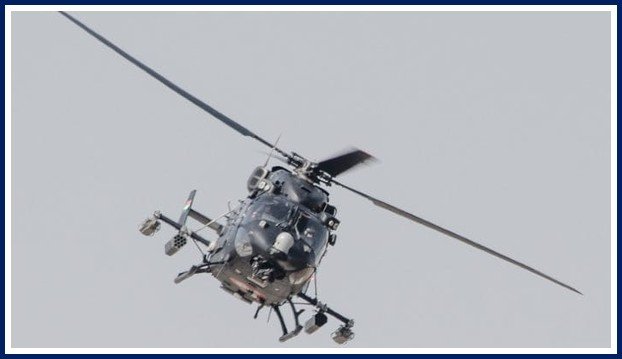
Why in News: SSS Defence and the Kalyani Group have been shortlisted as Development cum Production Partners (DcPP) for a project of DRDO’s Armament Research and Development Establishment (ARDE) to develop an indigenous 20 mm aviation gun and turret system for HAL’s armed helicopters.
Key Details
- For helicopters: ALH Mk-IV ‘Rudra’ (weaponised Dhruv) and Light Combat Helicopter (LCH) ‘Prachand’.
- Background: ARDE and HAL signed an MoU last year; bidding followed, won by SSS Defence and Kalyani.
- Timeline: Development phase of about 2 years; orders after the acceptance phase.
- Order split: Lowest bidder (L1) gets 60%, the other 40%.
- First-ever design and development of a medium-calibre aviation gun in India.
- Current status: The LCH now uses a 20 mm turret gun from the European company KNDS – the new gun will replace imports.
Why a Turret Gun Matters
- A 20 mm turret gun lets armed helicopters engage ground targets in support of troops; it is part of a weapon suite with 70 mm rockets and anti-tank guided missiles.
GS Facts: Attack Helicopters & DRDO
- LCH Prachand – world’s only attack helicopter able to land and take off at 5,000 m altitude; inducted into the IAF in 2022
- ALH Dhruv – HAL’s twin-engine utility helicopter
- ARDE – DRDO lab at Pune for conventional armaments and ammunition
- DcPP model – private/public industry co-develops with DRDO from the design stage.
⚠ Exam Trap:
- Rudra is the armed version of ALH Dhruv; Prachand is the LCH – don’t mix them.
- The gun is being developed by ARDE (Pune), a DRDO lab – not by HAL alone.
- The current LCH gun is from KNDS (Europe).
★ Important One-liners
- SIMBEX-2026 – 33rd EDITION AT VISAKHAPATNAM: The 33rd Singapore–India Maritime Bilateral Exercise (SIMBEX-2026) is being held at Visakhapatnam from 21 to 26 October 2026
- Singapore Navy ship RSS Supreme arrived; opening ceremony on board INS Nilgiri and INS Kamorta
- Began in 1994 as Exercise ‘Lion King’
- Harbour Phase (21–23 Oct): professional talks, subject-matter expert exchanges, cross-deck visits, sports; Sea Phase (24–26 Oct) in the Bay of Bengal
- INS Nilgiri – lead ship of Project 17A stealth frigates; INS Kamorta – anti-submarine warfare corvette (Project 28).
ENVIRONMENT
UNEP Emissions Gap Report 2026: ‘The Point of Return’
Why in News: The UN Environment Programme (UNEP) released the Emissions Gap Report 2026: ‘The Point of Return’. With global warming set to exceed 1.5°C, it says urgent and steep emission cuts are needed to keep the overshoot small and short, and bring temperatures back to 1.5°C by 2100.
Key Findings
- ‘Lowest possible overshoot’ pathway: Peak warming limited to 1.7–1.8°C around mid-century, then returned to 1.5°C or below by 2100 (about a 50% chance).
- Cuts needed (vs 2025 levels): 18% by 2030, 45% by 2035 and 69% by 2040.
- If current policies continue: warming of about 2.8°C this century, rising further.
- If all NDCs are delivered: about 2.6°C.
- Most optimistic (all NDCs + net-zero targets): about 2.1°C.
- New NDCs submitted since last year made a ‘negligible difference’ to projections.
Key Quotes (Paraphrased)
- UN Secretary-General António Guterres: ‘Overshoot is not surrender‘ – it can still be kept small and short.
- Inger Andersen (UNEP Executive Director): Every fraction of a degree above 1.5°C raises climate impacts and risks.
Key Terms (Simple Explanation)
- Emissions gap: The difference between where emissions are heading and where they need to be to meet Paris goals.
- Overshoot: Temporarily crossing a temperature limit (1.5°C) and later bringing it back down (via deep cuts and carbon removal).
- NDC (Nationally Determined Contribution): Each country’s climate action plan under the Paris Agreement – updated every 5 years, each more ambitious than the last.
GS Facts: UNEP
- Set up in 1972 after the Stockholm Conference; HQ Nairobi, Kenya
- Emissions Gap Report published annually since 2010
- Other UNEP reports: Adaptation Gap Report, Global Environment Outlook (GEO)
- Paris Agreement (2015): limit warming to well below 2°C, pursue 1.5°C.
⚠ Exam Trap:
- The Emissions Gap Report is by UNEP (Nairobi), not IPCC or WMO.
- Cuts are measured relative to 2025 levels.
- ‘Overshoot’ means going above 1.5°C temporarily – not staying below it.
India to Mandate 1% Sustainable Aviation Fuel (SAF) Blending for International Flights from 2027

Why in News: India is expected to mandate 1% blending of Sustainable Aviation Fuel (SAF) in jet fuel for international flights, as the mandatory phase of CORSIA begins in January 2027. Industry worries that a national SAF policy is still not ready.
Planned Blending Targets (International Flights)
| Year | SAF blending |
|---|---|
| 2027 | 1% |
| 2028 | 2% |
| 2030 | 5% |
What is CORSIA?
- Carbon Offsetting and Reduction Scheme for International Aviation – adopted by ICAO in 2016.
- Requires airlines to keep international-flight emissions below 85% of 2019 levels, using SAF or eligible carbon credits.
- Phases: Two voluntary phases (2021–2026) and a mandatory phase (2027–2035) for all international flights between ICAO member States.
Cost and Capacity
- Indian airlines face an offsetting liability of about 5 million tonnes of CO₂ a year – about $50–75 million a year at $10–15 per credit; Air India will bear a big share.
- ICAO feasibility study: India’s potential SAF production 14–33 million tonnes.
- Ready now: 30,000 tonnes capacity at Indian Oil’s Panipat Refinery – co-processes used cooking oil (UCO); an alcohol-to-jet (ATJ) unit is being developed.
- SAF costs 2–5 times normal ATF; oil companies seek subsidies and offtake guarantees; airlines want price parity.
Global SAF Mandates
- EU: 2% (2025) → 6% (2030). UK: 2% (2025) → 10% (2030). Singapore: 1% target from 1 January 2027, funded by a levy on departing flights.
What is SAF? (Simple Explanation)
- Jet fuel made from sustainable feedstocks – used cooking oil, agricultural residues, municipal waste, or via alcohol-to-jet – that can cut lifecycle emissions sharply and be blended with normal jet fuel without engine changes.
GS Facts: ICAO
- International Civil Aviation Organization – UN agency set up by the Chicago Convention (1944); HQ Montreal, Canada
- ATF = Aviation Turbine Fuel
- India’s ethanol blending target of 20% (E20) in petrol was achieved in 2025.
⚠ Exam Trap:
- CORSIA is an ICAO scheme (not UNFCCC).
- Its baseline is 85% of 2019 emissions.
- India’s planned SAF mandate is for international flights; the mandatory CORSIA phase starts in 2027, not 2026.
‘Heat Storms’: A New Name for Giant, Long-lasting Heat Waves

Why in News: After consulting about two dozen climate researchers and analysing hourly global temperatures since 1960, scientists have proposed a new concept – the heat storm – for today’s huge, cascading heat events that cover vast areas for months or even years.
What is a Heat Storm?
- A supersized, long-lasting heat event covering large parts of the planet – calling it a ‘heat wave’ would be like calling a monsoon a ‘rain shower’.
- Heat cascade: Heat storms occurring one after another, at the same time, or both.
- Duration has grown from about 2 months (1960s) to about 9 months (early 2000s).
- Largest on record – ‘Vera’: lasted 367 days (2023–24) and covered nearly 85% of the globe.
Why Name Them?
- Naming events helps people understand the danger – as done with cyclones – but heat waves are rarely named.
- Heat is estimated to kill almost half a million people a year.
- Heat waves are the link between global warming science (e.g., 2°C targets) and people’s daily experience.
India Connect – Heat Wave Criteria (IMD)
- Declared when max temperature is at least 40°C in plains, 37°C in coastal areas or 30°C in hills, and is 4.5–6.4°C above normal (severe: ≥ 6.5°C above normal); or actual max ≥ 45°C (severe ≥ 47°C).
- Heat Action Plans: first in India by Ahmedabad (2013); guided by the NDMA.
GS Facts: Heat & Climate
- IMD – India Meteorological Department, est. 1875, under Ministry of Earth Sciences
- Urban heat island – cities are hotter than surrounding areas
- 2024 was the warmest year on record globally.
⚠ Exam Trap:
- ‘Heat storm’ is a new scientific concept, not an official IMD category.
- The longest heat storm, ‘Vera’, lasted 367 days – not 367 hours.
- In India, the heat-wave threshold for hills is 30°C, not 40°C.
Bauxite Mining Plan Threatens Rare Jeypore Ground Gecko in Odisha
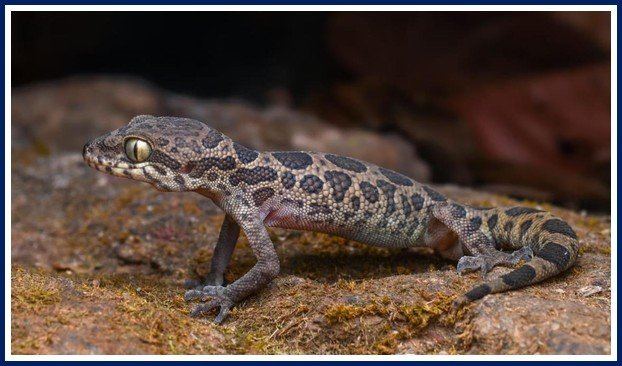
Why in News: The Jeypore ground gecko, an endangered reptile of the Eastern Ghats, presumed extinct for 130 years until its rediscovery in 2010, faces a new threat – a proposed bauxite mining project in Odisha’s Balda hills, where only four individuals were recorded in the past year.
About the Jeypore Ground Gecko
- Found in: Hills of the Eastern Ghats in Odisha and Andhra Pradesh – in crevices of boulders and under leaf litter.
- Features: Nocturnal; about 3.6 inches long; large head; striking yellow-orange patterned body.
- History: First described in 1878 by British naturalist Richard Henry Beddome; rediscovered in 2010 in Koraput district by Ishan Agarwal and Aniruddha Datta-Roy.
- Recent sightings: One in 2025, three in 2026 (including one this month).
- One of India’s least-studied reptiles – its behaviour and life cycle are still unknown.
Threats
- Habitat loss to coffee plantations, hydropower projects and mining.
- Its original habitat at Potangi (Odisha) has been lost to NALCO’s bauxite mining – the gecko is believed locally extinct there.
- New threat: An Adani-linked proposal for an opencast bauxite mine on 147 hectares of forest in the Balda hills, within the Nageswari Reserve Forest.
- Romulus Whitaker (herpetologist) called it a ‘flagship species’ of the area and strongly opposed the mining.
GS Facts: Eastern Ghats & Bauxite
- Odisha has India’s largest bauxite reserves (Koraput, Rayagada, Kalahandi)
- NALCO – National Aluminium Company, a Navratna PSU, HQ Bhubaneswar
- Deomali (Koraput) – highest peak of Odisha
- Romulus Whitaker founded the Madras Crocodile Bank (1976) near Mamallapuram, Tamil Nadu.
⚠ Exam Trap:
- The gecko lives in the Eastern Ghats (Odisha–AP), not the Western Ghats.
- It was rediscovered in 2010 after 130 years – described first in 1878.
- Its first habitat Potangi was lost to NALCO mining, not the Adani project.
✍ Mains Angle (UPSC)
Q. ‘Climate overshoot is now inevitable; the question is how high and how long.’ Discuss the implications for India with reference to UNEP’s Emissions Gap Report 2026 and rising heat extremes.
Value points: NDC ambition gap, finance and technology, heat action plans, aviation decarbonisation (SAF), adaptation priorities.
HEALTH
Ipsos Quality of Care Perception Index: India Ranks 3rd

Why in News: Market research firm Ipsos released its Quality of Care Perception Index, ranking 32 countries on how people perceive the quality of their healthcare. Malaysia ranked 1st, Singapore 2nd and India 3rd.
Top 10 Countries
| Rank | Country | Rank | Country |
|---|---|---|---|
| 1 | Malaysia | 6 | Netherlands |
| 2 | Singapore | 7 | Thailand |
| 3 | India | 8 | South Korea |
| 4 | Vietnam | 9 | Spain |
| 5 | Australia | 10 | South Africa |
India’s Results
- 68% of Indians rate their healthcare quality positively; 64% trust the quality of care they receive.
- India stands out for high trust, perceived accessibility and optimism.
- Biggest challenge: Affordability.
Methodology
- Online survey of 22,528 adults in 32 countries between 13 July and 7 August 2026.
- About 1,000 people per country in larger markets (incl. India) and 500 in others.
- It measures perception (what people feel), not actual health outcomes.
GS Facts: Health Schemes
- Ayushman Bharat PM-JAY (2018) – health cover of ₹5 lakh per family per year; extended to all citizens aged 70+ (2024)
- National Health Policy 2017 target: public health spending of 2.5% of GDP
- Health is a State List subject (Entry 6).
⚠ Exam Trap:
- This index is by Ipsos (a private market research firm) – not the WHO or World Bank.
- It measures perceptions, not actual quality.
- India ranked 3rd, behind Malaysia and Singapore.
★ Important One-liners
- WORLD IODINE DEFICIENCY DAY – 21 OCTOBER: Also called Global Iodine Deficiency Disorders (IDD) Prevention Day – raises awareness of iodine’s role in thyroid function, brain development and growth
- Promotes universal salt iodisation
- Iodine helps the thyroid regulate heart rate, metabolism, body temperature and muscle contractions; deficiency causes goitre, mental retardation and stunted growth
- Rooted in the World Summit for Children (1990)
- India: National Goitre Control Programme (1962), renamed National Iodine Deficiency Disorders Control Programme (NIDDCP) in 1992; iodised salt must have at least 15 ppm iodine at consumer level.
INTERNATIONAL
Pakistan, Türkiye, Qatar and Indonesia Sign ‘Badr’ Defence Pact
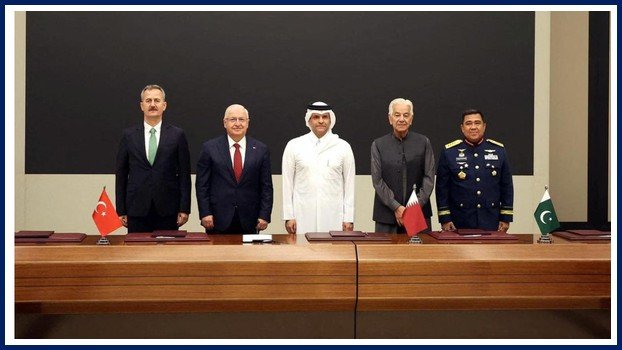
Why in News: Pakistan, Türkiye, Qatar and Indonesia signed the Badr Memorandum of Understanding in Doha (Qatar) on 21 October 2026 to strengthen defence cooperation and defence capabilities.
Signatories
- Pakistan: Defence Minister Khawaja Asif; Türkiye: Defence Minister Yaşar Güler; Qatar: Deputy PM and Minister of State for Defence Sheikh Saud bin Abdulrahman; Indonesia: Deputy Defence Minister Yusuf Jauhari.
Scope of the Pact
- Cooperation in defence manufacturing; enhancing defence capabilities.
- Collaboration in technical defence training and research and development (R&D).
- Integration of defence industries to meet the needs of allied and friendly nations – also of economic importance.
- Name: Appears to be named after the Battle of Badr (624 CE) – the first major battle of the early Muslims, near Madinah in present-day Saudi Arabia.
Context
- Comes months after the Makkah Joint Defence Agreement (August 2026) among Pakistan, Saudi Arabia and Türkiye, under which an attack on one is an attack on all.
- Earlier, Pakistan and Saudi Arabia signed a Strategic Mutual Defence Agreement (September 2025).
- Signed amid rising Gulf tensions and signs of possible renewed US–Iran fighting.
Why it Matters for India
- Shows Pakistan building a network of defence partnerships with Muslim-majority countries – relevant to India’s security calculus.
- India has close ties with Qatar and Indonesia (e.g., BrahMos talks with Indonesia, LNG from Qatar) – so the pact needs careful watching.
GS Facts: Signatory Countries
- Qatar: capital Doha; world’s leading LNG exporter; India’s top LNG supplier
- Indonesia: capital Jakarta (new capital Nusantara under construction); world’s largest Muslim-majority country
- Türkiye: capital Ankara; a NATO member since 1952.
⚠ Exam Trap:
- The Badr MoU (Oct 2026, Doha) is about defence cooperation and industry – it is not a mutual-defence treaty.
- The ‘attack on one = attack on all’ clause is in the Makkah Joint Defence Agreement (Pakistan–Saudi Arabia–Türkiye). Saudi Arabia is not a Badr signatory.
★ Important One-liners
- NORTH KOREA TESTS AI-GUIDED TORPEDO ‘ZAM-2.0’: North Korea tested a new high-speed, precision-guided torpedo, the Zam-2.0, equipped with artificial intelligence to detect and guide itself towards targets
- Tested underwater; reported as a success by the state-run Korean Central News Agency (KCNA) – shows upgrades in propulsion technology
- Part of Pyongyang’s push to strengthen its naval capabilities against South Korea and the US
- North Korea: capital Pyongyang; separated from South Korea by the 38th parallel / DMZ.
ART & CULTURE
Three Indian Sites Added to UNESCO World Heritage Tentative List
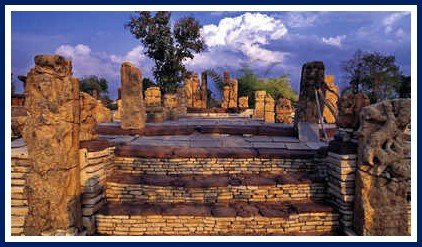
Why in News: Three Indian sites – the Karst-Mud Volcano Complex of Baratang and the Andaman Subduction Volcanoes (Andaman & Nicobar Islands), and the Sirpur Cultural and Archaeological Landscape (Chhattisgarh) – have been added to India’s Tentative List under the UNESCO World Heritage Convention, the Permanent Delegation of India to UNESCO (Paris) announced on 20 October 2026.
The Three Sites
- Baratang Karst–Mud Volcano Complex (A&N): Limestone caves and rare mud volcanoes (locally ‘Jalki’) that throw out gas, water and mud due to underground tectonic pressure.
- Andaman Subduction Volcanoes (A&N): Rare, active volcanic formations created by subduction (one plate sliding under another) – include Barren Island, India’s only active volcano.
- Sirpur (Chhattisgarh): On the Mahanadi river in Mahasamund district; an early medieval multi-religious urban site with 5th–12th century Hindu temples (e.g., the brick-built Lakshmana Temple), Buddhist monasteries and Jain structures.
What is the Tentative List?
- A country’s list of sites it intends to nominate in future – inclusion is a prerequisite for nomination to the World Heritage List.
- The Archaeological Survey of India (ASI) handles India’s nominations.
India’s World Heritage Sites
- India now has 45 World Heritage Sites – 37 cultural, 7 natural, 1 mixed – after the inscription of the ancient Buddhist site of Sarnath in July 2026.
- India’s only mixed site: Khangchendzonga National Park (Sikkim).
GS Facts: UNESCO World Heritage
- World Heritage Convention adopted in 1972; India ratified it in 1977
- First Indian sites inscribed (1983): Ajanta, Ellora, Agra Fort, Taj Mahal
- UNESCO HQ: Paris
- Barren Island (A&N) – India’s only active volcano; Narcondam – a dormant volcano.
⚠ Exam Trap:
- These sites are on the Tentative List – they are not yet World Heritage Sites. Sirpur is in Chhattisgarh (Mahasamund), on the Mahanadi.
- India’s total World Heritage Sites is 45 (including Sarnath, 2026).
RAPID REVISION
| Topic | Key fact |
|---|---|
| LLLR-I radar | BEL; ₹770 cr; detects fighters to micro drones; AESA + GaN |
| 20 mm aviation gun | ARDE (DRDO); SSS Defence & Kalyani; for Rudra & LCH |
| SIMBEX-2026 | 33rd edition; Visakhapatnam; began 1994 as ‘Lion King’ |
| UNEP EGR 2026 | ‘The Point of Return’; cuts 18% (2030), 45% (2035), 69% (2040) |
| Warming projections | Current policies 2.8°C; all NDCs 2.6°C; NDCs + net zero 2.1°C |
| SAF mandate (planned) | 1% (2027), 2% (2028), 5% (2030) – international flights |
| CORSIA | ICAO 2016; 85% of 2019 levels; mandatory 2027–35 |
| Heat storm ‘Vera’ | 367 days (2023–24); ~85% of globe |
| Jeypore ground gecko | Eastern Ghats; rediscovered 2010; Balda hills mining threat |
| Mussel farming | ICAR-CMFRI; Vizhinjam; open-sea longline |
| Khet Bachao Abhiyan | Rabi 2026; 22 Oct – 30 Nov; launched from Karnal |
| AgriVoltaics World Conference | First in Global South; ‘Powering the Global South’ |
| Ipsos Quality of Care Index | Malaysia 1st, Singapore 2nd, India 3rd |
| World Iodine Deficiency Day | 21 October |
| Police Commemoration Day | 21 October – Hot Springs, Ladakh (1959) |
| Badr MoU | Pakistan, Türkiye, Qatar, Indonesia – Doha |
| Zam-2.0 | North Korea’s AI-guided torpedo |
| UNESCO Tentative List | Baratang mud volcanoes, Andaman volcanoes, Sirpur |
| India’s World Heritage Sites | 45 (37 cultural, 7 natural, 1 mixed) |
| UDYOG | IIT Madras biotech finishing school |
TOP 5 QUIZ OF THE DAY
✎ Test yourself – 5 most important MCQs of the day
Q1. Consider the following statements regarding UNEP’s Emissions Gap Report 2026:
1. It says emissions must fall by 45% by 2035 compared to 2025 levels to stay on the lowest-overshoot pathway.
2. If all NDCs are delivered, warming will be limited to 1.5°C by the end of the century.
3. UNEP is headquartered in Nairobi, Kenya.
Which of the statements given above is/are correct?
- (a) 1 only
- (b) 1, 2 and 3
- (c) 2 and 3 only
- (d) 1 and 3 only
Q2. With reference to CORSIA, consider the following statements:
1. It was adopted by the International Civil Aviation Organization in 2016.
2. Its mandatory phase covers the period 2027–2035.
3. It applies only to domestic flights within each country.
Which of the statements given above is/are correct?
- (a) 1 only
- (b) 2 and 3 only
- (c) 1 and 2 only
- (d) 1, 2 and 3
Q3. Consider the following pairs (Defence item – Developer/Maker):
1. Improved Low Level Light Weight Radar (LLLR-I) – Bharat Electronics Limited
2. Indigenous 20 mm aviation gun – Armament Research and Development Establishment
3. Light Combat Helicopter ‘Prachand’ – Hindustan Aeronautics Limited
How many of the pairs given above are correctly matched?
- (a) Only one
- (b) Only two
- (c) All three
- (d) None
Q4. Which of the following countries are signatories to the ‘Badr Memorandum of Understanding’ signed in Doha in October 2026?
1. Pakistan
2. Saudi Arabia
3. Qatar
4. Indonesia
Select the correct answer using the code given below:
- (a) 1, 3 and 4 only
- (b) 1, 2 and 3 only
- (c) 2, 3 and 4 only
- (d) 1, 2, 3 and 4
Q5. With reference to the sites recently added to India’s UNESCO World Heritage Tentative List, consider the following statements:
1. The Sirpur Cultural and Archaeological Landscape lies on the Mahanadi river in Chhattisgarh.
2. The mud volcanoes of Baratang are locally known as ‘Jalki’.
3. Inclusion in the Tentative List makes a site a World Heritage Site.
Which of the statements given above is/are correct?
- (a) 1 only
- (b) 1 and 2 only
- (c) 2 and 3 only
- (d) 1, 2 and 3
ANSWER KEY & EXPLANATIONS
Q1 – (d): Even if all NDCs are delivered, warming would be about 2.6°C; with all NDCs plus net-zero pledges, about 2.1°C.
Q2 – (c): CORSIA applies to international flights between ICAO member States.
Q3 – (c): All three are correctly matched.
Q4 – (a): The four signatories are Pakistan, Türkiye, Qatar and Indonesia; Saudi Arabia is part of the separate Makkah agreement.
Q5 – (b): The Tentative List is only a prerequisite for nomination; sites become World Heritage Sites only after inscription by the World Heritage Committee.
— Keep Reading, Keep Revising —
Free daily PDFs: ashiqcurrentaffairs.com